News Made Clear · Loading…
Category
Regions
Continents
Topics
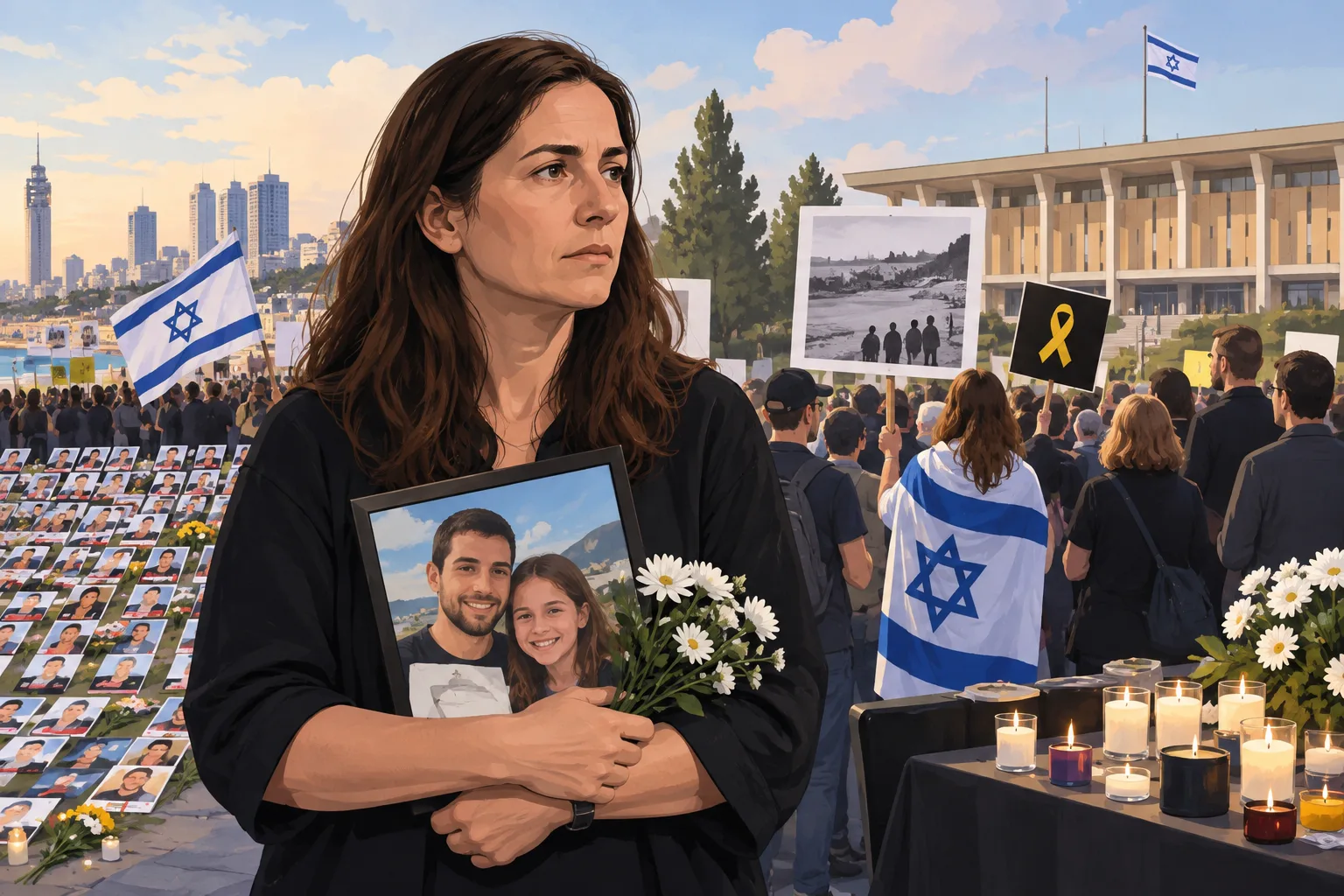
Israelis renew call for state inquiry three years after 7 October attacks
Loading statistics…
Anniversary protests have renewed calls for a state commission into the 2023 attacks. An internal military inquiry exists, but the proposed national investigation remains disputed and unestablished.
Israelis marked the third anniversary of the 7 October attacks on Wednesday with memorial events and protests calling for accountability. Demonstrations took place outside the Knesset in Jerusalem and at sites in Tel Aviv. Yet no independent state commission of inquiry into the failures surrounding the attack has been established. [1] [2]
Inbar Goldstein, whose brother and niece were killed in Kfar Aza and whose four other relatives were abducted, told the BBC she wanted her country to take responsibility. The October Council, which brings together people affected by the attacks, called for a state commission to investigate and draw lessons. The Hamas-led attack on southern Israel in 2023 killed about 1,200 people and saw 251 taken hostage. [1] [2]
The dispute is not over whether any investigation has taken place. The Israeli military published an operational inquiry into the attack on Kibbutz Be’eri in 2024, concluding that it had failed to protect residents. Campaigners seeking a state commission want a different kind of investigation, with powers to compel witnesses and documents. Under the usual statutory route, the government sets a state commission’s mandate and the president of the Supreme Court appoints its members. [8] [4]
Prime Minister Benjamin Netanyahu has opposed that appointment route, arguing that a panel appointed by the Supreme Court would be biased against his government. A proposed alternative would give politicians a role in choosing investigators. The Times of Israel reports that the bill passed the first of three readings by 59 votes to none while opposition lawmakers boycotted the vote; it has not completed the legislative process. [6] [5]
Affected families do not all favour the same model. Members of two bereaved-family forums called for a national inquiry on Tuesday, while one member, Orly Cohen, opposed having a Supreme Court judge appoint its members. Their position does not diminish the anniversary protests, but it shows why the choice of investigators remains contested.
How do we know?
9 listed sources · explore evidence, limitations and provenance.
Sign in to give this article a thumbs up or down.
About this discussion and AI questions
Private test discussion. Comments are readers’ views and are not yet automatically fact-checked. Editing is available for 60 seconds after posting.
Sign in with a confirmed reader account and choose a username to read comments and participate.
Sorting applies to top-level comments; replies remain oldest first. New comments and likes can change the order. Refresh for the current ranking.
Loading comments…