News Made Clear · Loading…
Category
Regions
Continents
Topics
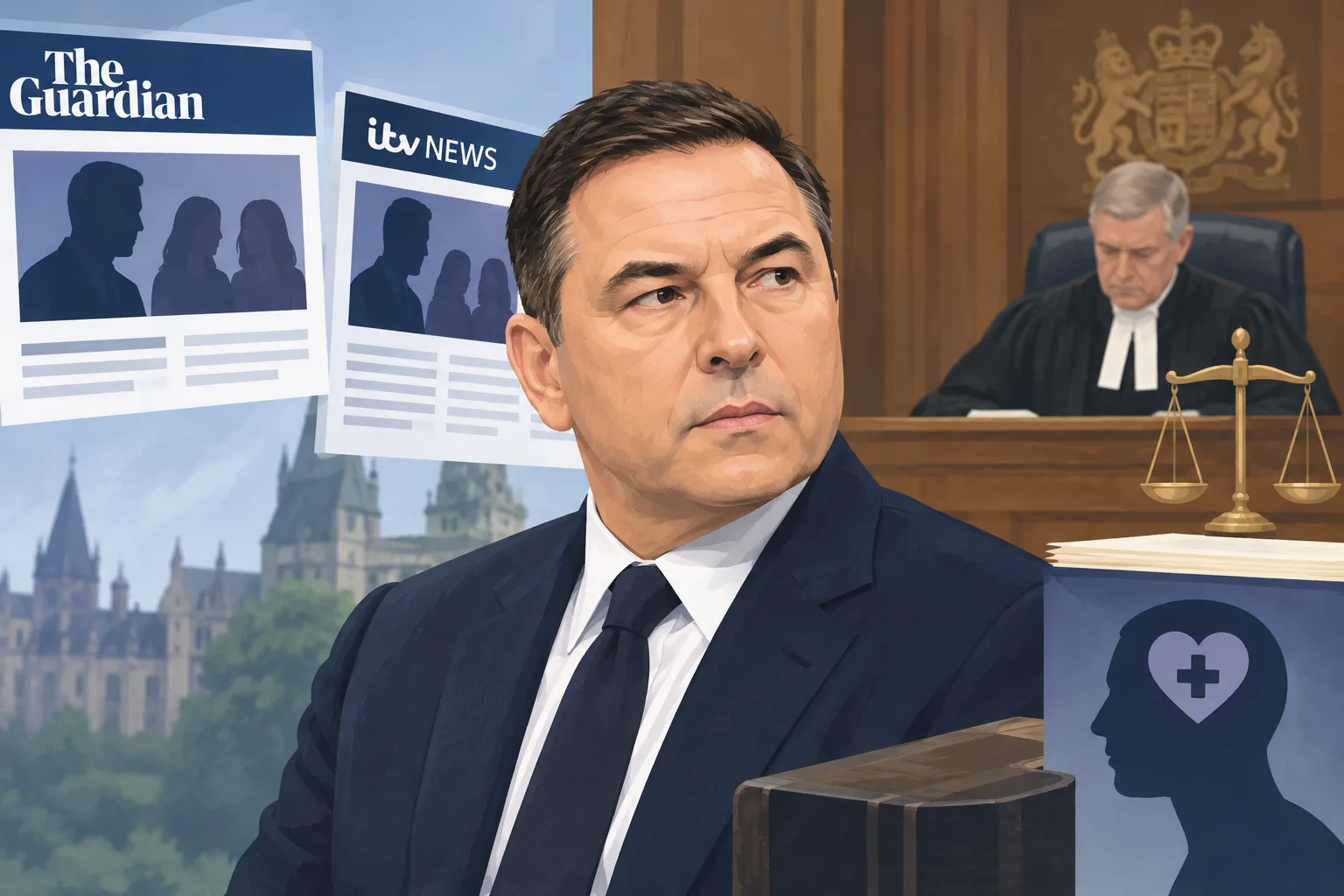
Why David Walliams lost his bid to block allegations
Loading statistics…
The High Court rejected the comedian’s attempt to prevent reporting of allegations against him, finding that his psychiatric care was the responsibility of health services rather than the court. Walliams denies wrongdoing.
Review information is loading.
Walliams, a comedian and children’s author, sought a permanent injunction against Guardian News & Media and ITN. His lawyers argued that publication would put his life at risk and that human rights law required the court to prevent it.
The Guardian and ITV News have since reported that several women accused him of using his celebrity status to pursue young women for sex. Two women said they had first met him when they were 15 and that he had groomed them.
Walliams denies wrongdoing. In a letter to the journalists, he said: “I am not a sexual predator. I have not broken the law.” He also said that, looking back, he realised he had at times behaved thoughtlessly towards people with whom he had casual sexual relationships.
The court did not decide whether the allegations were true. Dismissing the claim did not amount to approval of any subsequent publication, the judge said.
Why the injunction failed
Mr Justice Nicklin found that an adverse decision and publication would each cause a very substantial increase in Walliams’ risk of suicide. He said the risk was genuine and grave, while accepting expert evidence that inpatient psychiatric care could significantly reduce it, though not eliminate it.
The judge ruled that the hospital and mental-health services had assumed responsibility for Walliams’ treatment and immediate safety; the court had not. He also found that Walliams had not established a legal basis for an injunction against the publishers. He had not brought a claim for misuse of private information, defamation or another recognised domestic cause of action.
Nicklin said the proposed journalism concerned matters of substantial public interest. A potentially indefinite ban would seriously interfere with the rights of the publishers, their sources and the public, he found, while recognising the grave consequences publication could have for Walliams.
The judge kept Walliams anonymous in the judgment and maintained reporting restrictions during the period allowed for seeking permission to appeal. That temporary protection was separate from the permanent ban he had sought on publication of the allegations.
The BBC reported that Walliams was given until 4.30pm on 9 November to submit grounds for an appeal and that no papers were filed. The Guardian said his lawyers confirmed that he would not appeal, allowing the news organisations to publish.
How do we know?
4 listed sources · explore evidence, limitations and provenance.
Sign in to give this article a thumbs up or down.
About this discussion and AI questions
Private test discussion. Comments are readers’ views and are not yet automatically fact-checked. Editing is available for 60 seconds after posting.
Sign in with a confirmed reader account and choose a username to read comments and participate.
Sorting applies to top-level comments; replies remain oldest first. New comments and likes can change the order. Refresh for the current ranking.
Loading comments…