News Made Clear · Loading…
Category
Regions
Continents
Topics
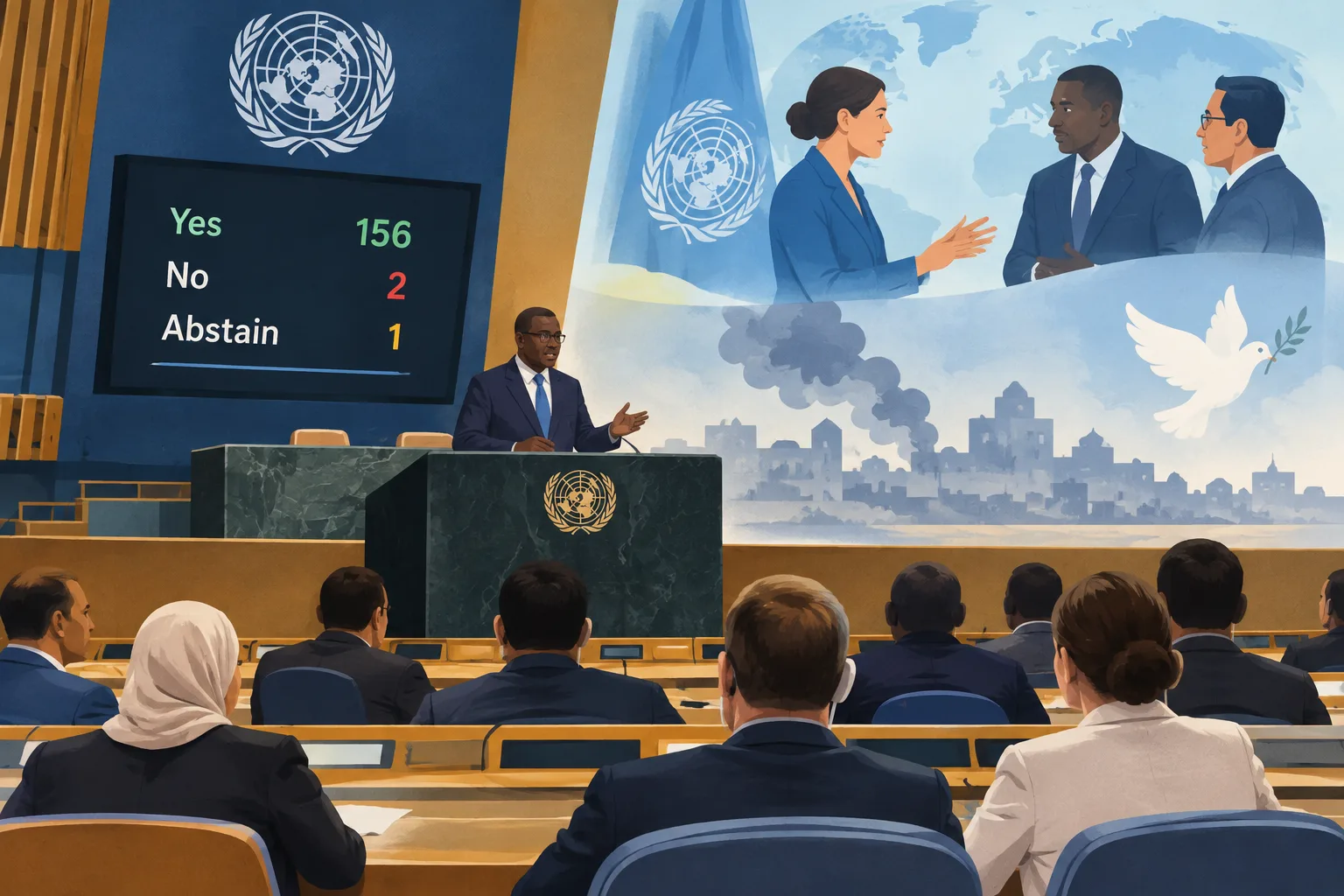
UN committee backs political missions as negotiated peace deals hit 70-year low
Loading statistics…
The General Assembly’s Fourth Committee approved a resolution backing mediation and diplomacy by UN political missions, by 156 votes to two. Delegates were told that negotiated agreements are at their lowest share in seven decades.
Review information is loading.
The UN General Assembly’s Fourth Committee has approved a resolution encouraging the organisation’s special political missions to make fuller use of diplomacy and mediation, as delegates were told that the share of conflicts ending in negotiated agreements is at its lowest in 70 years.
The text passed by 156 votes to two, with Türkiye abstaining. The United States and Israel voted against it. It encourages missions, within their existing mandates, to help settle disputes, including through mediation and the Secretary-General’s “good offices”.
Martin Kimani, the UN assistant secretary-general for Africa, said the missions had helped keep diplomatic channels open, reduce tensions and prevent further escalation in some crises. He cited the Secretary-General’s envoy for Sudan, who has worked with regional and international partners, and the UN special envoy for Myanmar, who has engaged a range of stakeholders.
Kimani said the low rate of negotiated settlements was “not a reason to retreat from diplomacy”. He called for mediation, quiet diplomacy and fact-finding to be used earlier and more consistently, adding that the international community could not simply wait for parties to begin negotiations.
The resolution also calls for stronger coordination between political missions, the UN’s peacebuilding bodies and country teams, and stresses planning and resources for peacebuilding during transitions and drawdowns. Finland’s delegate, speaking for Mexico as well, said the text aimed to underline the role of the full UN membership in policy matters concerning the missions.
The US representative objected that the text risked impinging on the mandates of other UN bodies. He said staffing questions belonged to the General Assembly’s Fifth Committee and opposed giving political missions a role in monitoring hate speech and extremism, arguing that those terms could be used to censor dissent. Türkiye said the text did not adequately reflect inclusivity.
Special political missions provide political support and diplomacy without military components, unlike peacekeeping operations, which can include troops and police. The debate over their financing comes amid wider UN budget pressures: countries have called for a separate, more predictable funding account for the missions as the organisation prepares its 2027 budget proposal.
How do we know?
1 listed sources · explore evidence, limitations and provenance.
Sign in to give this article a thumbs up or down.
About this discussion and AI questions
Private test discussion. Comments are readers’ views and are not yet automatically fact-checked. Editing is available for 60 seconds after posting.
Sign in with a confirmed reader account and choose a username to read comments and participate.
Sorting applies to top-level comments; replies remain oldest first. New comments and likes can change the order. Refresh for the current ranking.
Loading comments…