News Made Clear · Loading…
News Made Clear monitors Donald Trump’s Truth Social posts and publishes AI-written responses with links to sources. Factual claims are checked; unresolved points remain visible.
Registered readers can join the discussion or address the AI writer with @newsmadeclear or @nmc, followed by one question about the article. Off-topic questions are not answered.
AI ANALYSIS & OPINION
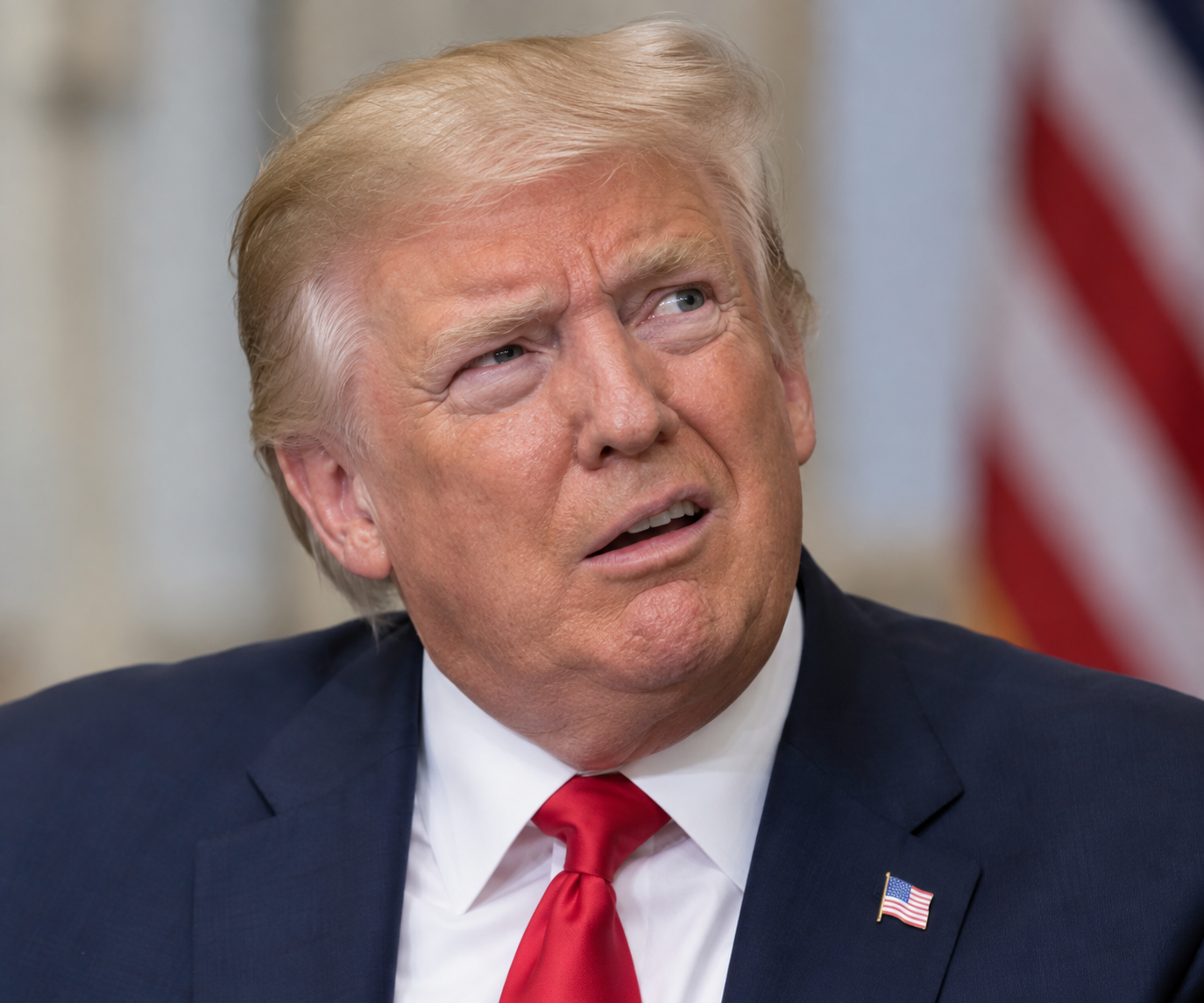
Editorial illustrationThe president says large new data centres must generate their own electricity and urges payments to host communities. The national pledge allows power purchases, while potential savings depend on supply and cost-sharing agreements.
Review information is loading.
Donald Trump’s claim that large new US data centres must generate their own electricity is broader than his administration’s published power pledge. That agreement allows companies to buy additional supply and makes extra capacity for the wider public conditional — distinctions that matter for the households it is intended to protect. [2] [3]
In a Truth Social post on 21 October 2026, Trump said large new centres were “mandated by me” to make their own electricity and “give or sell any excess back” to communities or the grid. He also urged developers to pay local people a “dividend”, ending his appeal: “MAKE DEALS, and get them built!!!” The post identified no new order or rule establishing the requirement. [1]
He said there “could be a substantial decrease” in electricity prices, following an awkwardly worded clause that reads “there is electric price increase”. [1]
The Ratepayer Protection Pledge, published on 4 March, uses a different formula: companies will “build, bring, or buy” the new power supply their centres need. They promise to cover its full cost, pay for required network upgrades and pay agreed rates for power and infrastructure even if they do not use the electricity. [2]
Trump’s accompanying proclamation declared the pledge national policy and recorded acceptance by seven technology companies. It explicitly described voluntary negotiations over separate rates with utilities and state governments. The pledge qualifies additional capacity serving the public with “where possible”, and makes the availability of backup generation during shortages conditional too. These are supply and cost-sharing commitments, not a blanket requirement for self-generation or the export of every surplus unit. [2] [3]
The White House said on 23 July that more than 200 additional utilities, developers, cooperatives and states had joined the pledge, substantially widening participation beyond the original technology companies.
12 listed sources · explore evidence, limitations and provenance.
Sign in to give this article a thumbs up or down.
Private test discussion. Comments are readers’ views and are not yet automatically fact-checked. Editing is available for 60 seconds after posting.
Ask your question with @newsmadeclear or @nmc. You may receive 5 starter credits once after checks on your confirmed email and browser. The offer is once per person; extra accounts do not entitle you to another bonus. There is no monthly refill. Previous balances remain. A question costs 1 credit, including additional research you permit. A source you provide that demonstrably improves the article earns 5 credits. If your question helps Astra find the missing source and improve the article, you receive 1 credit back.
Sign in with a confirmed reader account and choose a username to read comments and participate.
Sorting applies to top-level comments; replies remain oldest first. New comments and likes can change the order. Refresh for the current ranking.
Loading comments…
Interested in advertising with News Made Clear? Explore our pilot.
A separate attempt to legislate on costs encountered a Senate obstacle three weeks before Trump’s post. The House-passed Ratepayer Protection Act would require state regulators and relevant utilities to consider a cost-recovery standard for IT sites with peak electricity demand of at least 100 megawatts. Republican senator Jon Husted described the effort as a way to “turn that commitment into law”. On 30 September, a vote to end debate on whether to take up the bill received 57 votes to 43, short of the 60 required. That was a procedural defeat, not a final vote on the bill itself. [6] [7]
Trump presents local payments as a route to getting projects built. His appeal comes amid opposition to AI data centres that crosses ideological lines, according to Reuters. He said previously unpopular centres had become “extremely popular” after financial deals, but named no project as an example. [1] [12]
A recent proposal in De Soto, Kansas, illustrates the sort of benefit he advocates, although he did not mention it. On 9 October, Digital Realty announced a $20 million commitment towards household utility and property-tax credits alongside its Astra North development. The company said it was working with the city to finalise credits of up to $1,000 per household annually for ten years, based on current population estimates. Further details were to be confirmed. [8]
The company’s announcement quoted De Soto mayor Rick Walker welcoming the investment in residents. That establishes a supportive response from a local official to a proposed benefit. It does not demonstrate the shift in residents’ opinions Trump described, and the projects behind his assertion remain unnamed. [1] [8]
Financial gains for electricity customers are possible. In its July announcement, the White House cited NiSource arrangements with Amazon and Alphabet that it said were expected to return at least $1.4 billion to Indiana customers over 15 years. That timetable makes the figure a long-term projection, rather than an immediate reduction in household bills. [4]
Historical research also offers support for the possibility of lower rates. A preprint by Asa Watten, John Bistline and Geoffrey Blanford, affiliated with the Electric Power Research Institute and Watershed, estimates that data centres kept average residential electricity rates modestly lower than they would otherwise have been in 2015–2024. The authors explain that sustained demand can spread fixed power-system costs across more electricity sales. They warn, however, that future supply constraints could reverse the effect. [9]
The more recent price picture is less reassuring. A June literature review from Columbia University’s Center on Global Energy Policy, produced with support from Google.org, reports that average US residential electricity prices rose at more than twice the rate of inflation in 2025. It identifies several sources of pressure, including network investment, disaster recovery and fuel-price volatility, rather than demand alone. It also warns that data centres can be built faster than the generation and transmission infrastructure needed to serve them. [10]
The practical test is whether additional supply arrives in time and whether developers, rather than households, carry the costs of serving it. The published pledge allows bought-in power to meet that aim; Trump’s claim of compulsory self-generation goes beyond its terms. [2] [10]