News Made Clear · Loading…
Category
Regions
Continents
Dossiers
White House’s Mississippi jobs claim rests on an earlier tax forecast
Loading statistics…
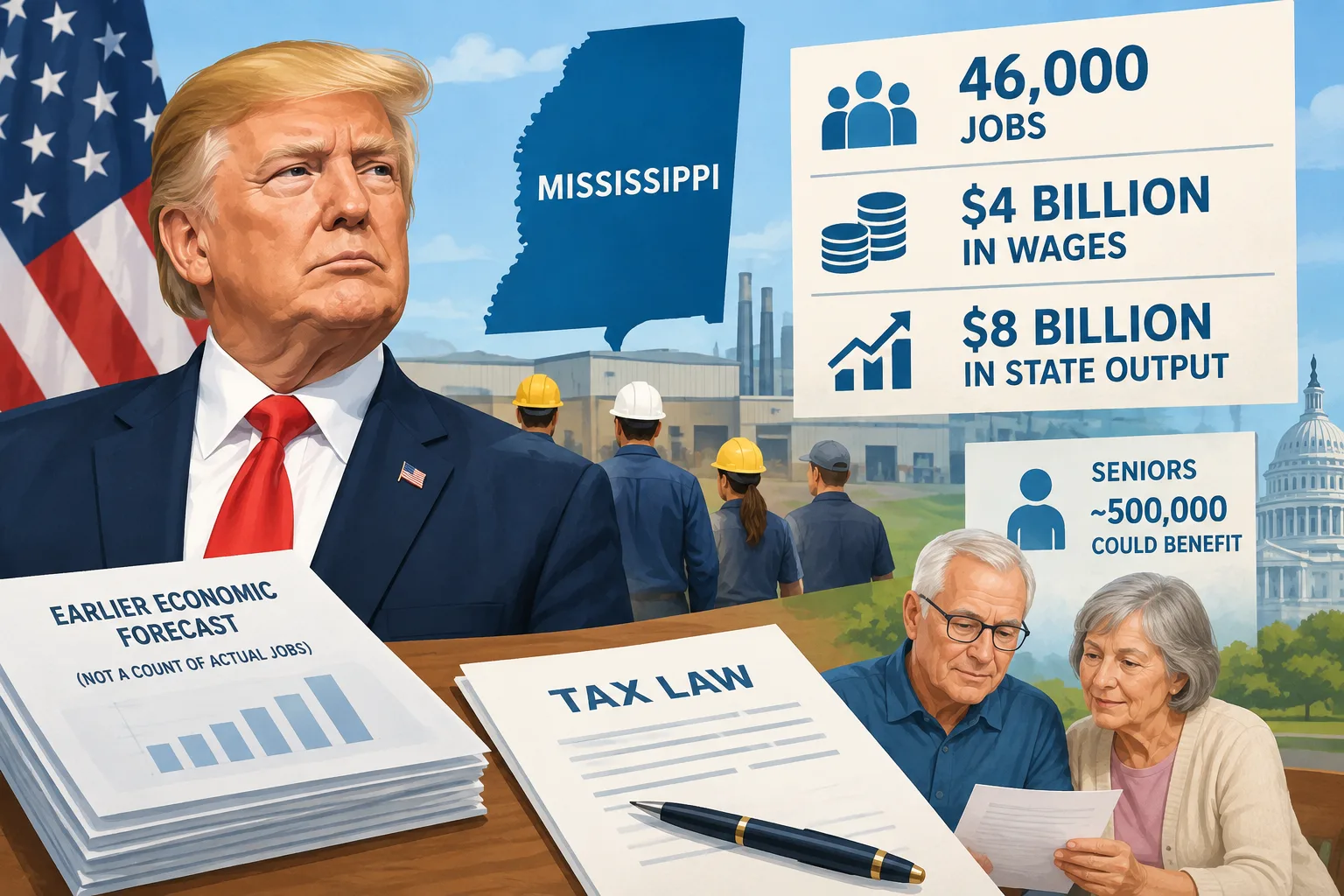
The White House credits Trump’s tax law with safeguarding 46,000 Mississippi jobs, but the figure comes from an earlier estimate of what might be at risk without the tax provisions—not a count of jobs saved.
Review information is loading.
The White House said on 26 October that Donald Trump’s tax law had safeguarded 46,000 jobs in Mississippi. The figure is not a count of jobs retained: it appeared in an economic forecast drawn up before the law was passed.
The statement, issued as Trump was due to campaign in the state ahead of the 3 November midterm elections, also credited the law with preserving $4 billion in workers’ wages and $8 billion in state economic output. All three rounded figures match a January 2025 study prepared by EY for the National Association of Manufacturers. That study estimated what could be at risk if a set of tax provisions expired or phased out, compared with a scenario in which they remained in place.
In July 2026, the manufacturers’ association described those Mississippi estimates as jobs “protected” and wages and output “saved”. The White House linked to that publication in its statement. It is not a separate measurement of what happened after the tax law took effect. EY also said the method used for its state figures did not account for economic activity shifting between industries, so the 46,000 figure should not be read as a measured net employment gain.
The statement makes a similar shift in its claim about older residents. It says approximately 500,000 Mississippi seniors benefit from a new tax deduction. A July 2025 estimate from the White House’s Council of Economic Advisers said around 500,000 *could* benefit; it was not a count of people who had claimed the deduction.
The relief itself is real but conditional. The Internal Revenue Service says eligible people aged 65 or over can claim an additional deduction of up to $6,000 for tax years 2025 to 2028, with the amount phased out above specified income thresholds. The difference between that deduction and a tax exemption for Social Security benefits matters: benefits can still be included in taxable income, although the deduction may reduce or eliminate an individual’s final tax bill.
The White House said it expected the average senior to pay no federal income tax on Social Security benefits. That is a forecast, not a change to the rules taxing those benefits. The statement offers no count of Mississippi residents who have received a tax saving, just as its jobs figure does not establish how many jobs the law preserved.
How do we know?
7 listed sources · explore evidence, limitations and provenance.
Sign in to give this article a thumbs up or down.
About this discussion and AI questions
Private test discussion. Comments are readers’ views and are not yet automatically fact-checked. Editing is available for 60 seconds after posting.
Sign in with a confirmed reader account and choose a username to read comments and participate.
Sorting applies to top-level comments; replies remain oldest first. New comments and likes can change the order. Refresh for the current ranking.
Loading comments…