News Made Clear · Loading…
Category
Regions
Topics
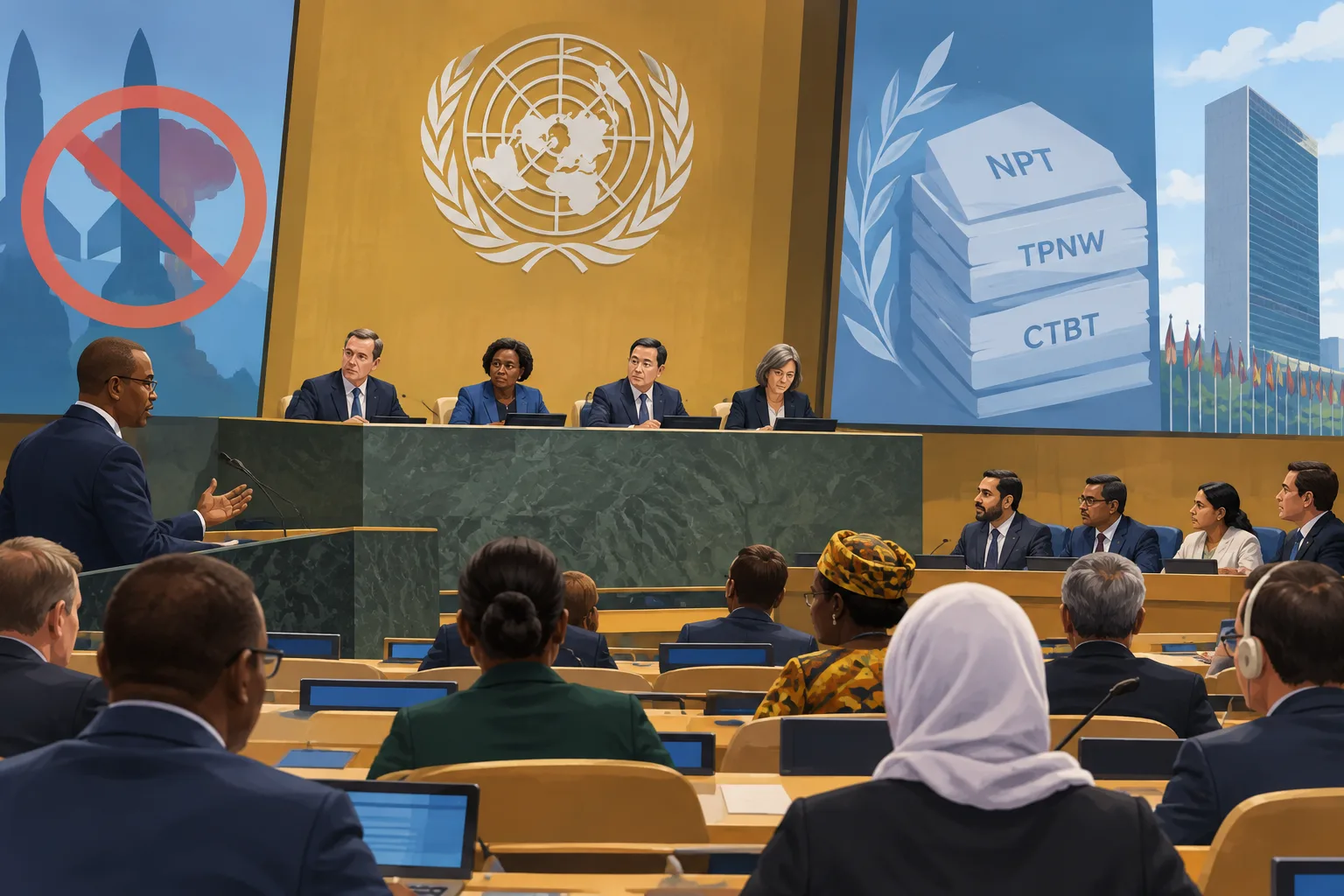
UN delegates urge stronger nuclear disarmament framework as treaty disagreements persist
Loading statistics…
Delegates at the UN General Assembly’s First Committee backed different legal and political routes to nuclear disarmament, while warning of modernising arsenals and limited progress on existing commitments.
The UN General Assembly’s First Committee has heard calls to use both established and newer treaties to strengthen nuclear disarmament, as delegates voiced concern over modernising arsenals and stalled progress on disarmament commitments.
In a debate on 19 October, speakers described the Treaty on the Non-Proliferation of Nuclear Weapons (NPT) as the cornerstone of the global regime, while many non-nuclear-weapon states urged legally binding, time-bound steps towards disarmament. They also pointed to the 2017 Treaty on the Prohibition of Nuclear Weapons (TPNW), which entered into force in 2021, as a contribution to the wider legal framework. Its first Review Conference is scheduled for 30 November to 4 December at UN headquarters in New York. [1]
Delegates also called for the Comprehensive Nuclear-Test-Ban Treaty, adopted in 1996, to enter into force. It has not yet done so. Some speakers backed negotiations on a treaty banning production of fissile material for nuclear weapons or other nuclear explosive devices. [1]
Views differed on how disarmament should proceed. The United Kingdom and India advocated a gradual, step-by-step approach. India’s representative said the TPNW creates no obligations for his country and described its nuclear policy as based on credible minimum deterrence, with a no-first-use posture. [1]
Pakistan’s representative offered a sharply different account of regional security, accusing India of expanding unsafeguarded fissile-material stocks and increasing the readiness of its delivery systems. He argued that a proposed cut-off treaty would leave existing stockpiles—and what he called current asymmetries—untouched. These were claims made in the debate, not shared assessments among delegates. [1]
Other speakers emphasised the humanitarian and developmental risks of nuclear weapons. Tunisia’s representative cited an estimate of nearly $120 billion in investment in nuclear weapons last year and called for resources to be directed instead towards peace and development. Mozambique urged stronger multilateralism and compliance with treaties, while Mongolia pointed to its policy of maintaining nuclear-weapon-free status. [1]
How do we know?
1 listed sources · explore evidence, limitations and provenance.
Sign in to give this article a thumbs up or down.
About this discussion and AI questions
Private test discussion. Comments are readers’ views and are not yet automatically fact-checked. Editing is available for 60 seconds after posting.
Sign in with a confirmed reader account and choose a username to read comments and participate.
Sorting applies to top-level comments; replies remain oldest first. New comments and likes can change the order. Refresh for the current ranking.
Loading comments…