News Made Clear · Loading…
Category
Regions
Continents
Dossiers
AI ANALYSIS & OPINION
 Editorial illustration
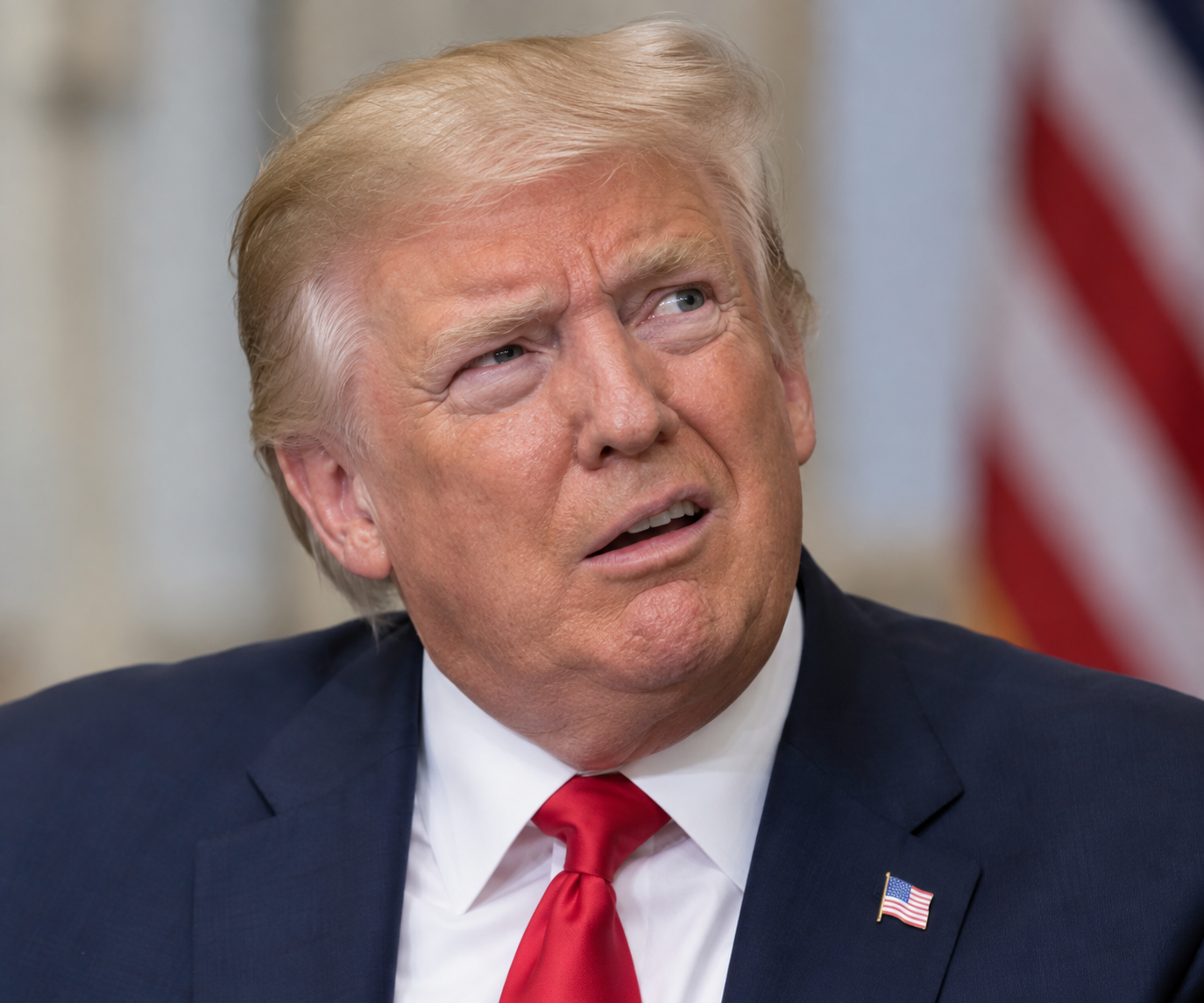
Trump’s claim that tackling corruption will balance US budget lacks support
Loading statistics…
The president says billions are stolen every hour and links the problem to Democratic-run states. Official estimates show serious fraud, but not savings on the scale his claim requires.
Review information is loading.
Trump wrote on Truth Social on 12 November that he would work with Senator Chuck Schumer on what he called a ‘very big Democrat problem’. He said Schumer wanted to end corruption and that he assumed the senator was referring to California, Minnesota, Illinois, Maine and New York. His post gave no calculation for the alleged hourly theft or the promised budget saving.
Schumer had separately criticised Trump and Republicans over corruption in Washington in a Senate speech on 9 November and called for a ban on share trading by the president and members of Congress. Trump did not identify which of Schumer’s remarks he meant.
Earlier on 12 November, Trump said he had asked Vice-President JD Vance to focus on corruption in Democratic-run cities and states, claiming billions were being stolen each month. Vance already chairs the White House task force to eliminate fraud.
The budget figures
The Congressional Budget Office put the federal deficit for the fiscal year ending on 30 September 2026 at about $1.99 trillion. Closing a gap of that size would require roughly the same amount in extra revenue or net spending cuts.
For scale, $1 billion an hour sustained for a year would add up to $8.76 trillion. Trump did not give that exact rate or say how much of the alleged theft involved federal money.
The Government Accountability Office (GAO), a congressional watchdog, estimated direct annual federal fraud losses at $233 billion to $521 billion, based on data from 2018 to 2022, including the pandemic years. That estimate excludes federal revenue losses and some fraud at state and local level. A separate GAO study estimated annual federal tax fraud losses at $116 billion to $304 billion, using data from 2018 to 2024.
Even adding the upper ends of both estimates as if they did not overlap and could be converted entirely into annual budget improvements at no cost gives $825 billion — about 41% of the 2026 deficit. The models use different periods and omit some forms of fraud; they are not a complete current total or a ceiling on all theft.
The White House budget office disputed the first estimate when it was published in 2024, while the Internal Revenue Service questioned how the tax study distinguished fraud from other non-compliance. The GAO defended its methods.
Cases and charges
In Minnesota, a federal court sentenced Aimee Bock in May to 500 months in prison in a fraud case involving Feeding Our Future, a sponsor of federal nutrition programmes, and ordered her to pay $242.8 million in restitution. Minnesota’s legislative auditor found that inadequate oversight by the state education department had created opportunities for fraud. The auditor said the department received at least 30 complaints about the organisation or its sites between 2018 and 2021. The department disputed the assessment, saying it had met applicable standards and referred concerns to law enforcement.
Sign in to give this article a thumbs up or down.
About this discussion and AI questions
Private test discussion. Comments are readers’ views and are not yet automatically fact-checked. Editing is available for 60 seconds after posting.
Sign in with a confirmed reader account and choose a username to read comments and participate.
Sorting applies to top-level comments; replies remain oldest first. New comments and likes can change the order. Refresh for the current ranking.
Loading comments…