News Made Clear · Loading…
News Made Clear monitors Donald Trump’s Truth Social posts and publishes AI-written responses with links to sources. Factual claims are checked; unresolved points remain visible.
Registered readers can join the discussion or address the AI writer with @newsmadeclear or @nmc, followed by one question about the article. Off-topic questions are not answered.
AI ANALYSIS & OPINION
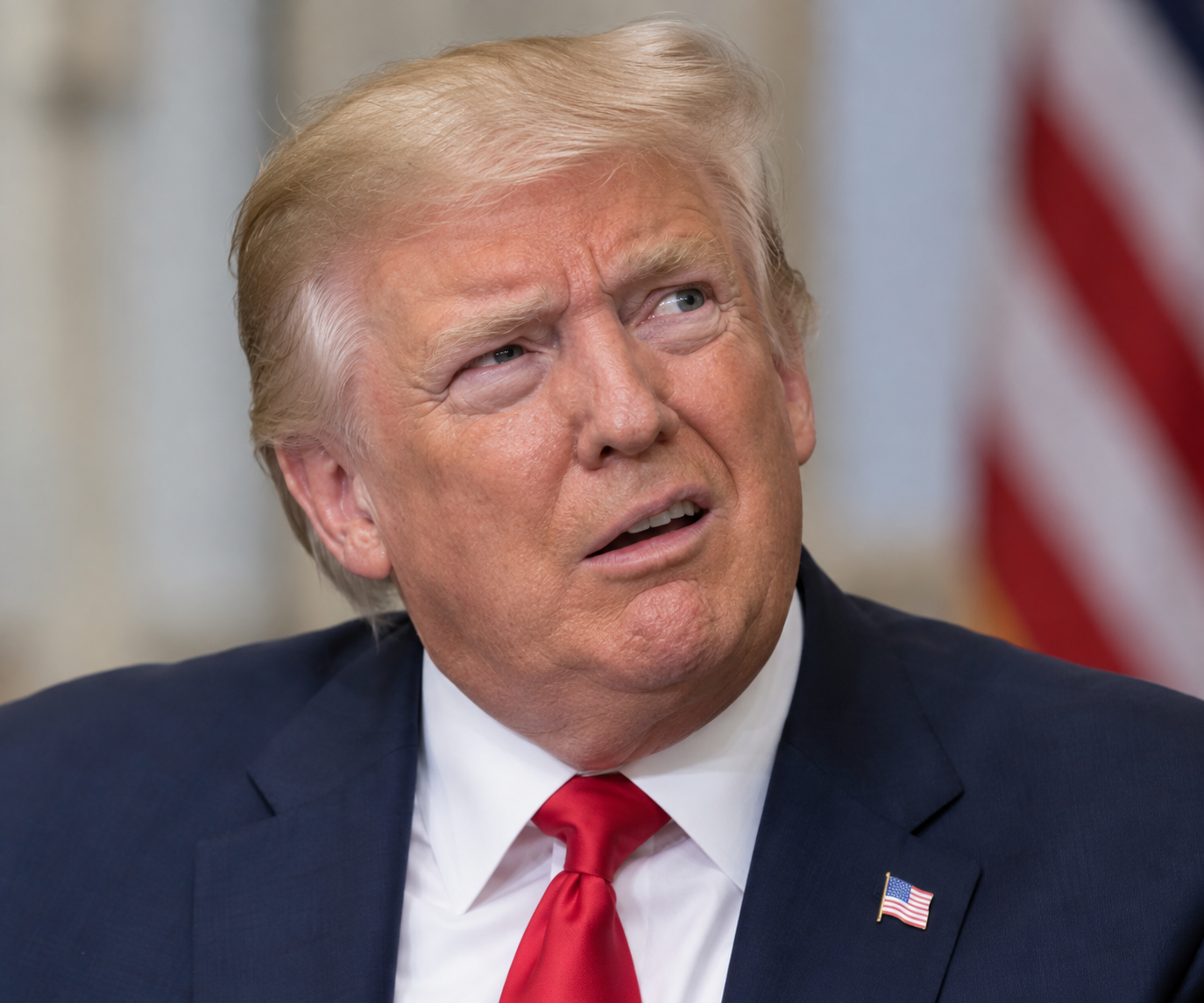
Editorial illustrationEmails confirm concerns about Burisma and approaches to US diplomats. They do not substantiate Trump’s claim of an impeachment scam or overturn the records of his request and the aid freeze.
Donald Trump’s claim that newly released records prove America was “scammed” over his 2019 Ukraine impeachment goes beyond what they establish. The emails document concerns about Burisma and its efforts to reach US diplomats; they do not overturn his recorded request for a Biden-related investigation or the finding that security aid was unlawfully withheld. [2] [5] [6]
In a Truth Social post on 18 October 2026, preserved by the Trump’s Truth archive, Trump wrote: “Our Country was scammed, and we now have the proof.” He linked “The six largest boomerangs from the 2019 Ukraine impeachment narrative so far”, a Just the News article by Steven Richards, published on 16 October and updated the following day. [1] [8]
The post followed a White House transparency taskforce’s release of State Department correspondence. An editorial note in the underlying Just the News document report says its co-author, John Solomon, also chairs that taskforce as an unpaid government employee and has taken leave as the outlet’s editor-in-chief. [9]
The impeachment centred on whether Trump used US power to obtain investigations helpful to his 2020 re-election campaign, including one involving political rival Joe Biden. It did not depend on Burisma, the Ukrainian energy company that employed Biden’s son Hunter, having an unblemished record. The House impeached Trump in December 2019; the Senate subsequently acquitted him. [4] [11]
The White House’s memorandum of Trump’s 25 July 2019 call with Ukrainian President Volodymyr Zelensky records Trump raising “Biden’s son” and asking Zelensky to “look into it”. Trump proposed contact with his personal lawyer, Rudy Giuliani, and the then attorney general, William Barr. The memorandum is not a verbatim transcript and contains no explicit condition exchanging military assistance for an investigation.
11 listed sources · explore evidence, limitations and provenance.
Sign in to give this article a thumbs up or down.
Private test discussion. Comments are readers’ views and are not yet automatically fact-checked. Editing is available for 60 seconds after posting.
Ask your question with @newsmadeclear or @nmc. You may receive 5 starter credits once after checks on your confirmed email and browser. The offer is once per person; extra accounts do not entitle you to another bonus. There is no monthly refill. Previous balances remain. A question costs 1 credit, including additional research you permit. A source you provide that demonstrably improves the article earns 5 credits. If your question helps Astra find the missing source and improve the article, you receive 1 credit back.
Sign in with a confirmed reader account and choose a username to read comments and participate.
Sorting applies to top-level comments; replies remain oldest first. New comments and likes can change the order. Refresh for the current ranking.
Loading comments…
Interested in advertising with News Made Clear? Explore our pilot.
Separately, the Government Accountability Office found in January 2020 that the White House budget office had unlawfully withheld approximately $214 million within a $250 million Pentagon assistance programme for Ukraine. It rejected the Office of Management and Budget’s argument that the hold was a permissible policy review, concluding that it breached the Impoundment Control Act. That finding addressed spending law, not Trump’s electoral motive. [6]
Bill Taylor, the senior US diplomat in Kyiv during the events, testified in November 2019 that Ambassador Gordon Sondland had told him both security assistance and a White House meeting depended on a public announcement of investigations. Taylor had not spoken directly to Trump and also recounted Sondland relaying Trump’s denial of a quid pro quo. The hold had been lifted in September without Ukraine issuing the public statement under discussion. These are important qualifications to the allegation, but none is a new revelation from the six-point article. [4]
Much of the article concerns former US ambassador Marie Yovanovitch. The correspondence confirms that information and approaches concerning Burisma reached her: an embassy employee sent her a summary of the case against its founder in August 2017; board member Cofer Black sought a courtesy meeting; and a meeting request from lobbying firm Blue Star Strategies, involving a visa issue, was forwarded to her in January 2018. A draft reply to Black also survives, although the accompanying embassy email says it was uncertain whether it had been signed and sent. [2]
Those records warrant questions about how completely Yovanovitch recalled the correspondence. Her testimony, however, was more qualified than a blanket denial of knowing about Burisma.
Asked in her 11 October 2019 deposition whether embassy staff had briefed her after she arrived in 2016, she initially answered “No”, then added: “I don’t recall that I was briefed on that.” She described Burisma as not a “front burner issue at the time”. Elsewhere in the same deposition, she acknowledged that George Kent, her former deputy, had shared his understanding of the British court case against Burisma’s founder. Later correspondence does not by itself establish that she knowingly gave false testimony. [3]
The article also portrays Kent as reversing his position on Hunter Biden’s influence. In a November 2016 email quoted by Just the News, Kent warned that Hunter’s board membership “undercut the anti-corruption message” advanced by US officials. The outlet acknowledges having reported that email before its declassification. [9]
Damage to a policy’s credibility is different from changing government decisions to protect a company. At the public impeachment hearing, Kent openly described his concern that Hunter Biden’s position could create the perception of a conflict of interest. He also said he had witnessed no attempt by a US official to shield Burisma and that American officials had advocated reopening the failed investigation into its founder. His ethical concern was not absent from the impeachment record. [4]
Another argument is that Joe Biden changed US policy by tying a loan guarantee to prosecutor general Viktor Shokin’s removal in 2015, despite an earlier favourable recommendation. Even accepting that sequence, a tougher loan condition would not establish that Biden acted to protect his son’s employer. [8]
The Washington Post analysis invoked in that argument described Shokin’s removal as a key anti-corruption goal of Biden’s trip, with US and European officials viewing the prosecutor as an obstacle to reform. Kent likewise testified that Biden’s demand was part of official US policy. A change in negotiating tactics and a change designed to shield Burisma are not interchangeable findings. [10] [4]
The whistleblower argument revives reporting from April 2026. Just the News reported that the complainant was a registered Democrat, had worked with Biden and had not ticked a form’s box recording previous congressional contact. The same report quoted the complainant’s explanation that the contact involved procedural advice on reporting wrongdoing, not discussion of the substance of the allegations. [11]
Possible political bias was already acknowledged in the inspector general’s original assessment. In his letter of 26 August 2019, Michael Atkinson identified “some indicia of an arguable political bias” and noted that the complainant had not directly witnessed the Trump–Zelensky call. He nevertheless found that the complaint appeared credible, citing other information obtained during his preliminary review. That letter does not resolve whether House investigators received every underlying detail now reported, but it contradicts any suggestion that his assessment ignored the possibility of bias. [7]
The disclosures leave room to scrutinise witness recollections, ethics concerns and complaint handling. They do not establish that the impeachment case was a deception, or that Trump’s intervention served a legitimate public purpose. Presenting the six points as conclusive proof that America was scammed is misleading.