News Made Clear · Loading…
Category
Regions
Continents
Dossiers
Trump changes Canada tariff list, lifting some 50% duties and adding others
Loading statistics…
Some Canadian imports are set to escape an additional 50% US tariff from 30 October, while others will face it for the first time under Trump’s latest change.
Review information is loading.
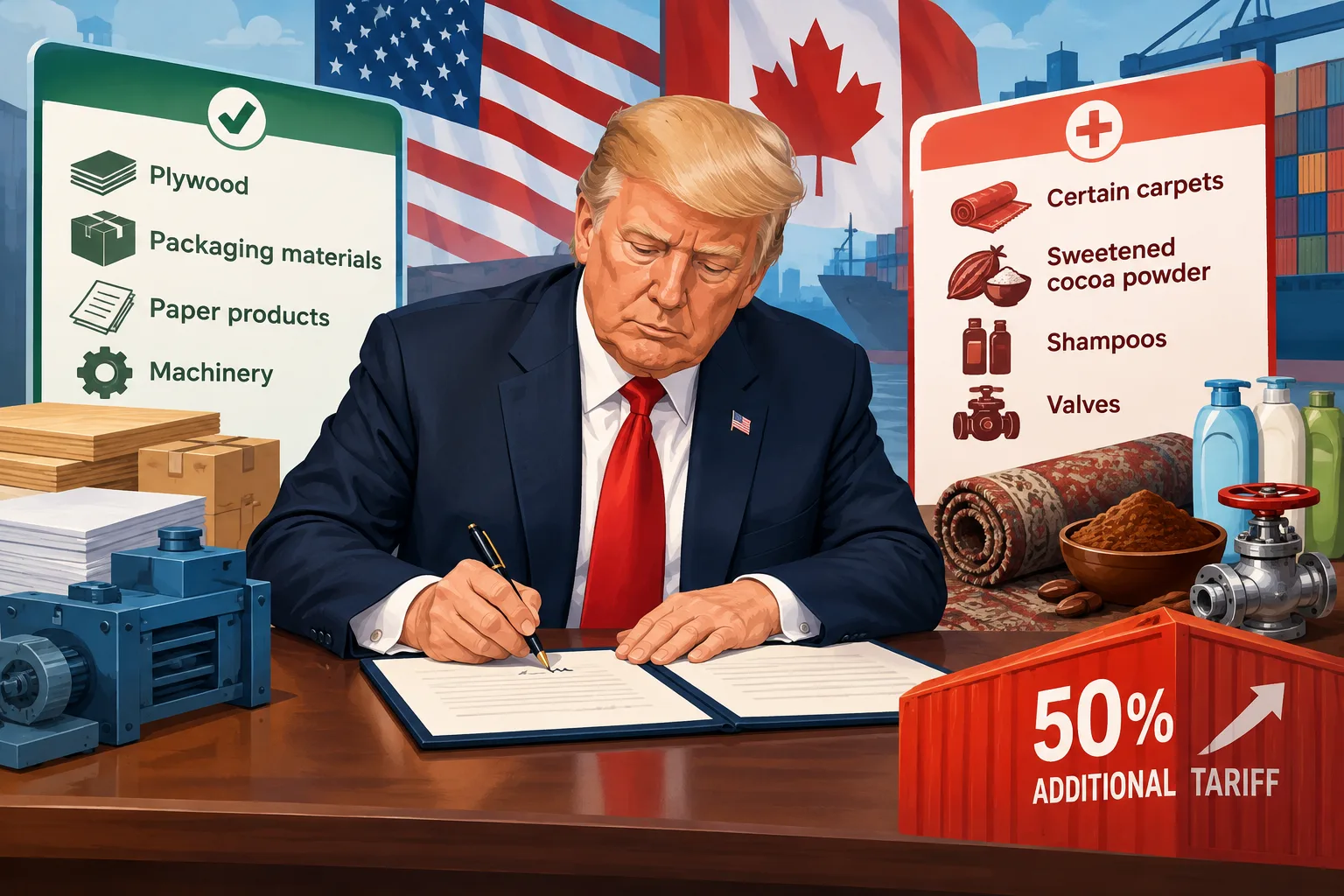
President Donald Trump signed a proclamation on 23 October changing which Canadian goods face an additional 50% US tariff. It removes some products from the tariff but adds others, so it is a reshuffle rather than a general withdrawal of the levy.
From 30 October, specified plywood, packaging materials, paper products and machinery will no longer face the additional charge. The newly covered tariff lines include certain carpets, sweetened cocoa powder, shampoos and valves. The annexes define the changes by tariff classification; those examples are not a complete list.
The changes apply to goods entered for use in the United States, or withdrawn from a customs warehouse for that purpose, from 12:01 a.m. Eastern Time on 30 October. The 50% is an *additional* duty, not necessarily the total tariff on an import. The proclamation says it can apply on top of duties imposed under a separate US trade law, while the White House says qualifying under the US–Mexico–Canada trade agreement does not itself exempt a covered product. An exception in the annex applies to eligible civil aircraft and parts.
The decision follows an earlier change to the tariff’s product coverage in September. It comes shortly before the 3 November US midterm elections. Maine senator Susan Collins, who is seeking re-election, said she had pressed administration officials for relief on imports used by the state’s farmers and growers. Her office identified nine categories it said would benefit, including packaging and agricultural machinery. Democratic challenger Troy Jackson criticised the move, saying it did not undo the harm caused by Trump’s tariffs.
The White House presents the tariffs as a response to what it calls Canadian discrimination against US commerce. It also says Canada walked away from a nearly completed trade agreement. Canada gave a different account in August: it said it suspended negotiations because the terms proposed by the US were unacceptable, and announced counter-tariffs in response to US measures.
The proclamation establishes which products are to be added and removed. It does not show whether the value of imports newly facing the 50% duty will exceed the value of those gaining relief.
How do we know?
9 listed sources · explore evidence, limitations and provenance.
Sign in to give this article a thumbs up or down.
About this discussion and AI questions
Private test discussion. Comments are readers’ views and are not yet automatically fact-checked. Editing is available for 60 seconds after posting.
Sign in with a confirmed reader account and choose a username to read comments and participate.
Sorting applies to top-level comments; replies remain oldest first. New comments and likes can change the order. Refresh for the current ranking.
Loading comments…