News Made Clear · Loading…
Category
Regions
Continents
Topics
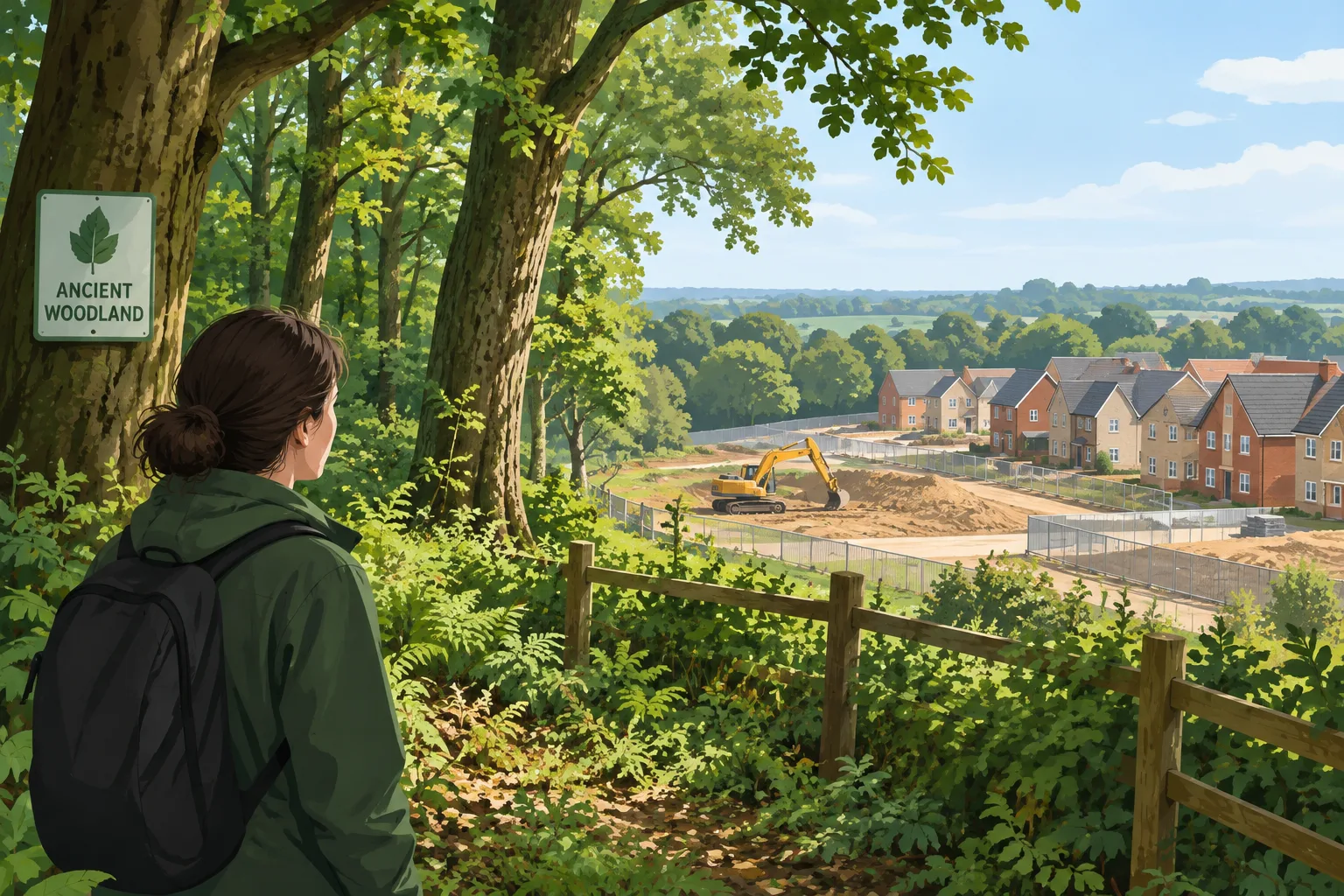
Campaigners warn housing drive is putting ancient woodlands under pressure
Loading statistics…
Campaigners warn that England’s housing drive is putting pressure on ancient woodlands, with dozens of proposed developments identified beside protected sites. The government says planning rules require damaging schemes to be refused, except in very limited circumstances.
Review information is loading.
Campaigners say England’s drive to build 1.5 million homes by the end of 2029 is increasing pressure on ancient woodlands, as plans for housing emerge beside protected sites. The government says national planning rules require developments that would damage or destroy ancient woodland to be refused, subject to very limited exceptions.
The BBC identified dozens of sites with planned developments immediately beside woodland. They include approved plans for 450 homes within yards of Hook Wood in Kent, and proposals for about 150 homes near Chaddesden Wood in Derby. Derby City Council refused the Chaddesden plans in 2025; residents said they feared the developer would return with amended proposals after surveyors were seen at the site over the summer.
Ancient woodland is defined as land continuously wooded since at least 1600. Ancient Woodland UK chairwoman Lucy Graebe-Watson said the group had seen more concerns and alerts from local campaigners since recent planning reforms. She said existing protections were already struggling in some cases.
The government’s housing target and its “grey belt” policy are central to campaigners’ concerns. Grey belt refers to poorer-quality open land that may be considered for development. Graebe-Watson said the policy could make it more likely that land next to ancient woodland, previously protected under green belt rules, would be developed.
The Royal Society for the Protection of Birds says protections for irreplaceable habitats have improved under recent changes to planning policy, but remain inadequate. Its head of nature policy, Carl Bunnage, argued that allowing development in “wholly exceptional circumstances” could create a loophole, particularly in areas with housing shortages.
The government says the planning framework allows development affecting ancient woodland only in very limited circumstances, including some nationally significant infrastructure projects, and requires compensation in those cases. It also says a revised planning framework published in August gives clearer guidance on proposals affecting irreplaceable habitats.
Campaigners and ecologists say effects can extend beyond the removal of trees. They warn that construction could damage woodland roots, alter drainage, dry out soils, or bring noise and light that disturb wildlife. These are concerns raised about proposed developments, rather than findings that every nearby scheme would cause such harm.
At Littleworth Lane in South Yorkshire, plans for about 120 homes are under consideration, with part of the site close to ancient woodland. The developer, Albemarle Homes, said the woodland was not included in the original site and that any future plans would have to comply with environmental rules. At Chaddesden, JGP Properties said its assessments showed there would be no loss or deterioration of the ancient woodland and veteran trees.
How do we know?
1 listed sources · explore evidence, limitations and provenance.
Sign in to give this article a thumbs up or down.
About this discussion and AI questions
Private test discussion. Comments are readers’ views and are not yet automatically fact-checked. Editing is available for 60 seconds after posting.
Sign in with a confirmed reader account and choose a username to read comments and participate.
Sorting applies to top-level comments; replies remain oldest first. New comments and likes can change the order. Refresh for the current ranking.
Loading comments…