News Made Clear · Loading…
Category
Regions
Continents
UN General Assembly condemns threats to International Criminal Court
Loading statistics…
The court’s president warned that sanctions and criminal convictions against its judges threaten judicial independence, as the Assembly backed a resolution condemning interference.
Review information is loading.
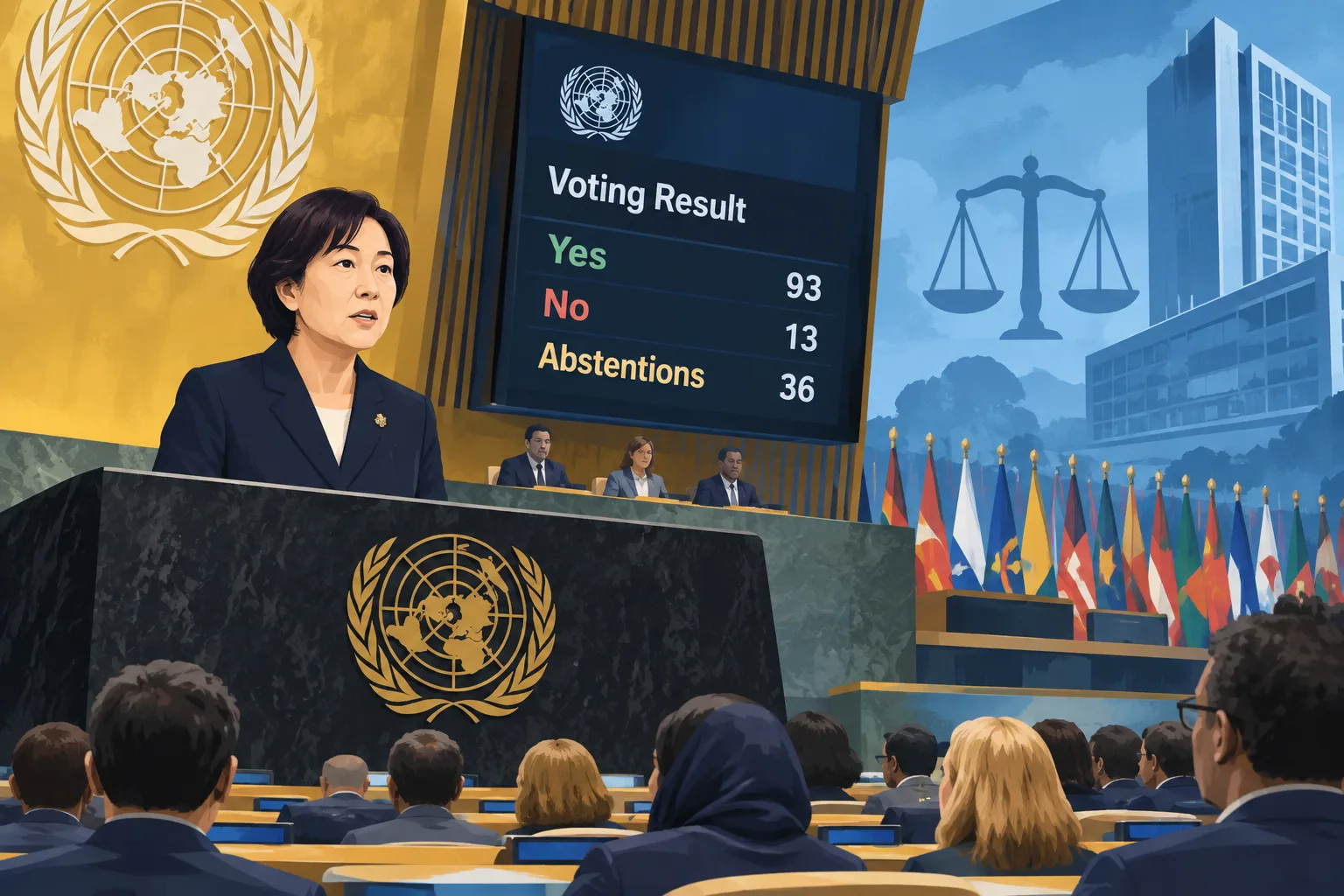
The UN General Assembly adopted the resolution on 2 November by 93 votes to 13, with 36 abstentions. It also welcomed the court’s annual report and called on states to cooperate with it, including by arresting and surrendering suspects.
ICC President Tomoko Akane presented the report in a pre-recorded address, citing exceptional circumstances and referring to US sanctions against the court and its officials, including herself. The United States placed the court on its sanctions list on 9 October.
“When judges are punished for their decisions, whether through sanctions or through criminal convictions, it is not only those judges who are targeted, but judicial independence itself,” Akane said. She also cited prison sentences handed down in absentia against nine court officials by a Moscow court in December 2025.
Akane said the court would continue to carry out its mandate independently and impartially, and urged UN members to take concrete action in its defence. She said 32 publicly known arrest warrants remained unexecuted at the end of the reporting period in July.
The vote followed a debate that exposed deep differences over the court’s authority. The United States said it would vote against the resolution, arguing that ICC action against nationals of countries that had not accepted its jurisdiction threatened state sovereignty. Israel also accused the court of politicisation and overreach.
The European Union called for sanctions to be lifted, while the Palestinian representative argued that sovereignty should not shield those responsible for grave crimes from accountability. The ICC prosecutes individuals for serious international crimes and is intended to complement national courts when states are unwilling or unable genuinely to act.
How do we know?
4 listed sources · explore evidence, limitations and provenance.
Sign in to give this article a thumbs up or down.
About this discussion and AI questions
Private test discussion. Comments are readers’ views and are not yet automatically fact-checked. Editing is available for 60 seconds after posting.
Sign in with a confirmed reader account and choose a username to read comments and participate.
Sorting applies to top-level comments; replies remain oldest first. New comments and likes can change the order. Refresh for the current ranking.
Loading comments…