News Made Clear · Loading…
Category
Regions
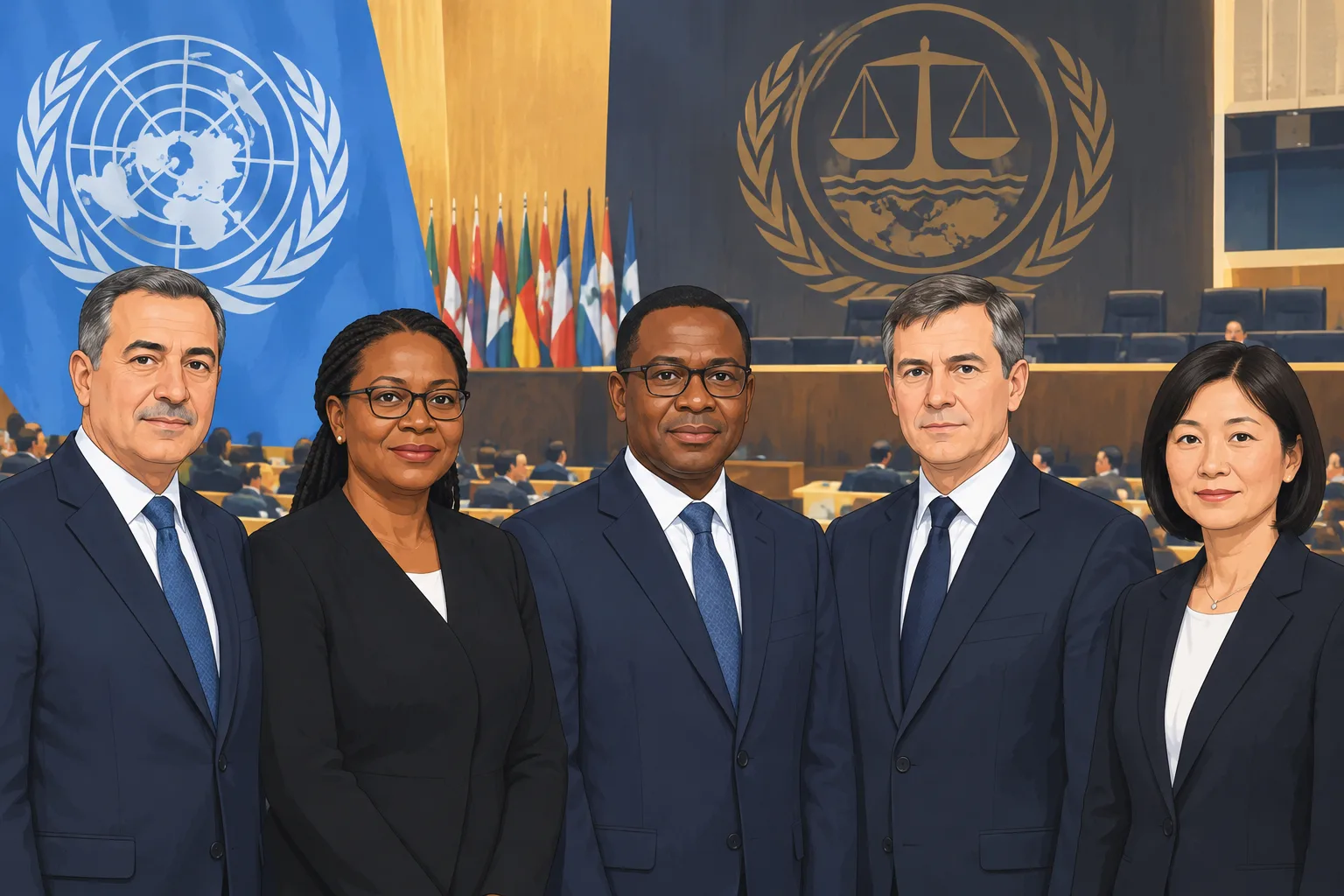
UN Assembly elects five judges to International Court of Justice
Loading statistics…
The General Assembly elected five judges to the International Court of Justice for terms beginning in February 2027, with Kenyan judge Phoebe Okowa securing the final seat after a third round of voting.
Review information is loading.
The UN General Assembly has elected five judges to the International Court of Justice, completing a contested ballot after three rounds and agreeing the Court’s membership for the seats whose terms begin in February 2027.
Re-elected were Mahmoud Daifallah Hmoud of Jordan and Phoebe N. Okowa of Kenya. The Assembly also elected Dapo Akande of the United Kingdom, François Alabrune of France and Rena Lee of Singapore. All five will serve nine-year terms starting on 6 February 2027.
The Court has 15 members, and five seats are filled every three years. The three newly elected judges will replace Ronny Abraham of France, Dalveer Bhandari of India and Leonardo Nemer Caldeira Brant of Brazil, whose terms end on 5 February 2027. Hmoud and Okowa were elected in 2025 to fill seats vacated by judges who resigned; they have now secured longer terms.
The process required support from both the General Assembly and the Security Council. In the first Assembly ballot, all five eventual winners passed the required threshold of 97 votes, but the result did not match the Security Council’s choices for all five seats. Four candidates were elected after the first round; Okowa needed another ballot to secure a majority in both bodies.
In the second round, Okowa received 89 votes, below the 97-vote threshold. Before the third ballot, Sierra Leone, Ecuador and South Korea withdrew their candidates. Okowa then won 183 votes in the Assembly, and the Council’s president notified delegates that she had also secured a majority there. The Assembly announced her election, completing the five-member slate.
The ICJ is the United Nations’ principal judicial organ. Its statute calls for the Court as a whole to reflect the world’s main forms of civilisation and principal legal systems.
How do we know?
1 listed sources · explore evidence, limitations and provenance.
Sign in to give this article a thumbs up or down.
About this discussion and AI questions
Private test discussion. Comments are readers’ views and are not yet automatically fact-checked. Editing is available for 60 seconds after posting.
Sign in with a confirmed reader account and choose a username to read comments and participate.
Sorting applies to top-level comments; replies remain oldest first. New comments and likes can change the order. Refresh for the current ranking.
Loading comments…