News Made Clear · Loading…
Category
Regions
Continents
England’s Right to Buy reforms near final parliamentary stages
Loading statistics…
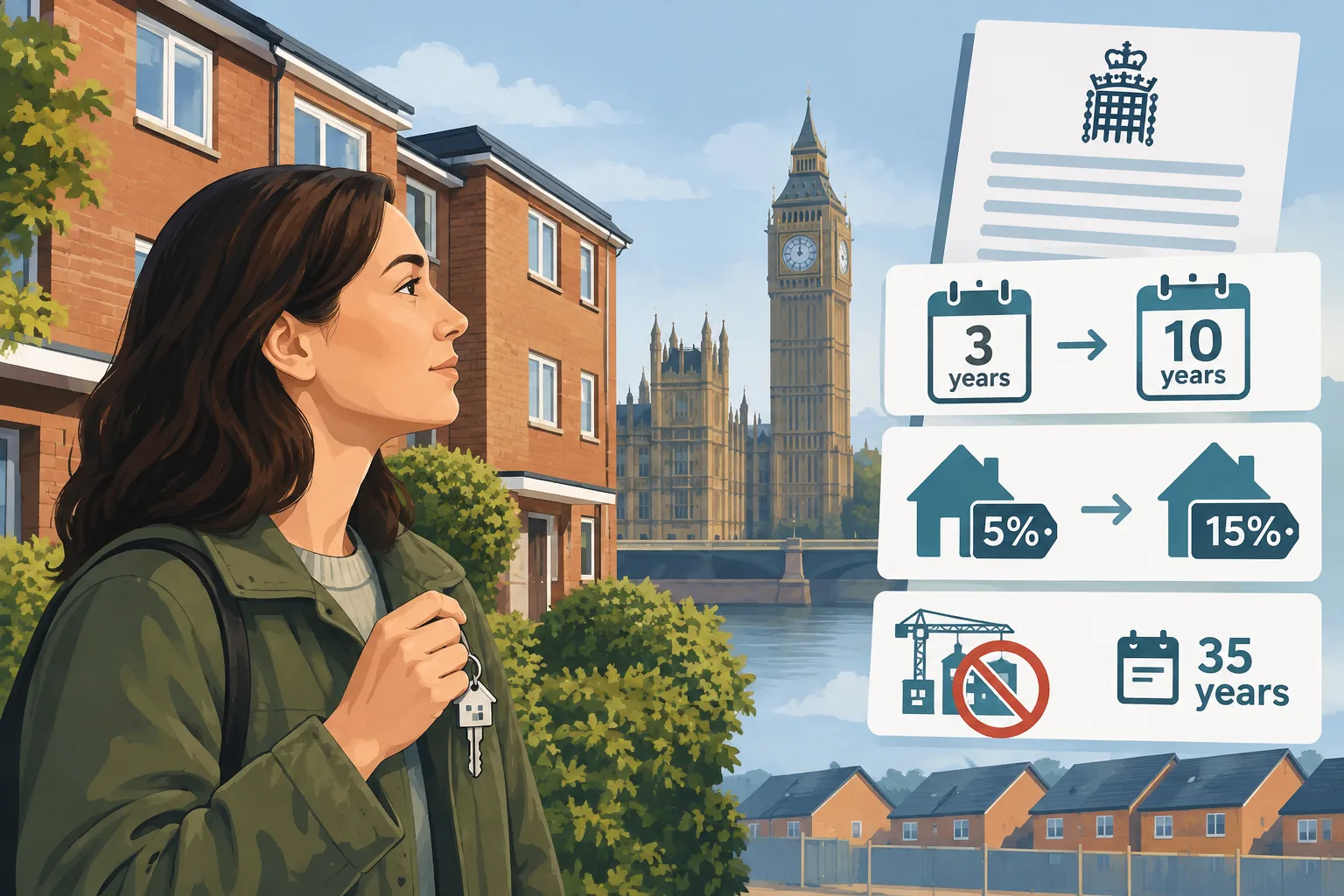
Proposed Right to Buy changes in England are nearing the final stages of Parliament but are not yet law. They would raise the qualifying tenancy period to 10 years, reduce discounts and protect newly built social homes from sale for 35 years.
Review information is loading.
The Right to Buy reforms that could sharply restrict the sale of council homes in England are nearing the final stages of Parliament, but are not yet in force. The proposals would lengthen the time tenants must wait before buying, cut discounts and keep newly built social homes out of the scheme for 35 years.
The changes are part of the Social Housing Bill. They will take effect only if the bill completes its parliamentary passage and receives Royal Assent, according to government guidance published on 3 November. The date for Royal Assent is not yet known.
Under the proposed rules, the qualifying tenancy period would rise from three years to 10. Discounts would start at 5% of a home’s value and rise by one percentage point for each further year of tenancy, capped at 15% or the applicable cash limit, whichever is lower. Newly built social homes would not be eligible for purchase until 35 years after construction. The bill would also exclude some rural homes and council homes let at market rents.
The government says the reforms are intended to protect social housing while retaining a route to home ownership for long-standing tenants. In a Commons committee debate on 29 October, Housing Minister Matthew Pennycook said the government’s impact assessment projected a net gain of 18,000 social rented homes over 2026–36, compared with a projected net loss of 26,000 under the earlier baseline.
That is a projection, not a count of homes already delivered. MPs disputed what the forecast gain would mean for people waiting for a home. One Conservative MP argued that retained homes would not be newly available to tenants on waiting lists and said the bill would mean fewer new homes being built. Pennycook said the estimate covered the net change in social homes and defended the reforms as a way to stop stock being sold without replacement.
The debate reflects the long-running divide over Right to Buy. More than two million homes have been sold through the scheme in England since its introduction in 1980, according to the BBC. Supporters point to the chance it gave tenants to own a home and build wealth; critics argue that too few sold homes were replaced, reducing the supply of social housing.
The proposed changes would not abolish the scheme for existing eligible homes. They would narrow who can use it and which properties can be bought, while Parliament continues to consider the bill.
How do we know?
3 listed sources · explore evidence, limitations and provenance.
Sign in to give this article a thumbs up or down.
About this discussion and AI questions
Private test discussion. Comments are readers’ views and are not yet automatically fact-checked. Editing is available for 60 seconds after posting.
Sign in with a confirmed reader account and choose a username to read comments and participate.
Sorting applies to top-level comments; replies remain oldest first. New comments and likes can change the order. Refresh for the current ranking.
Loading comments…