News Made Clear · Loading…
Category
Regions
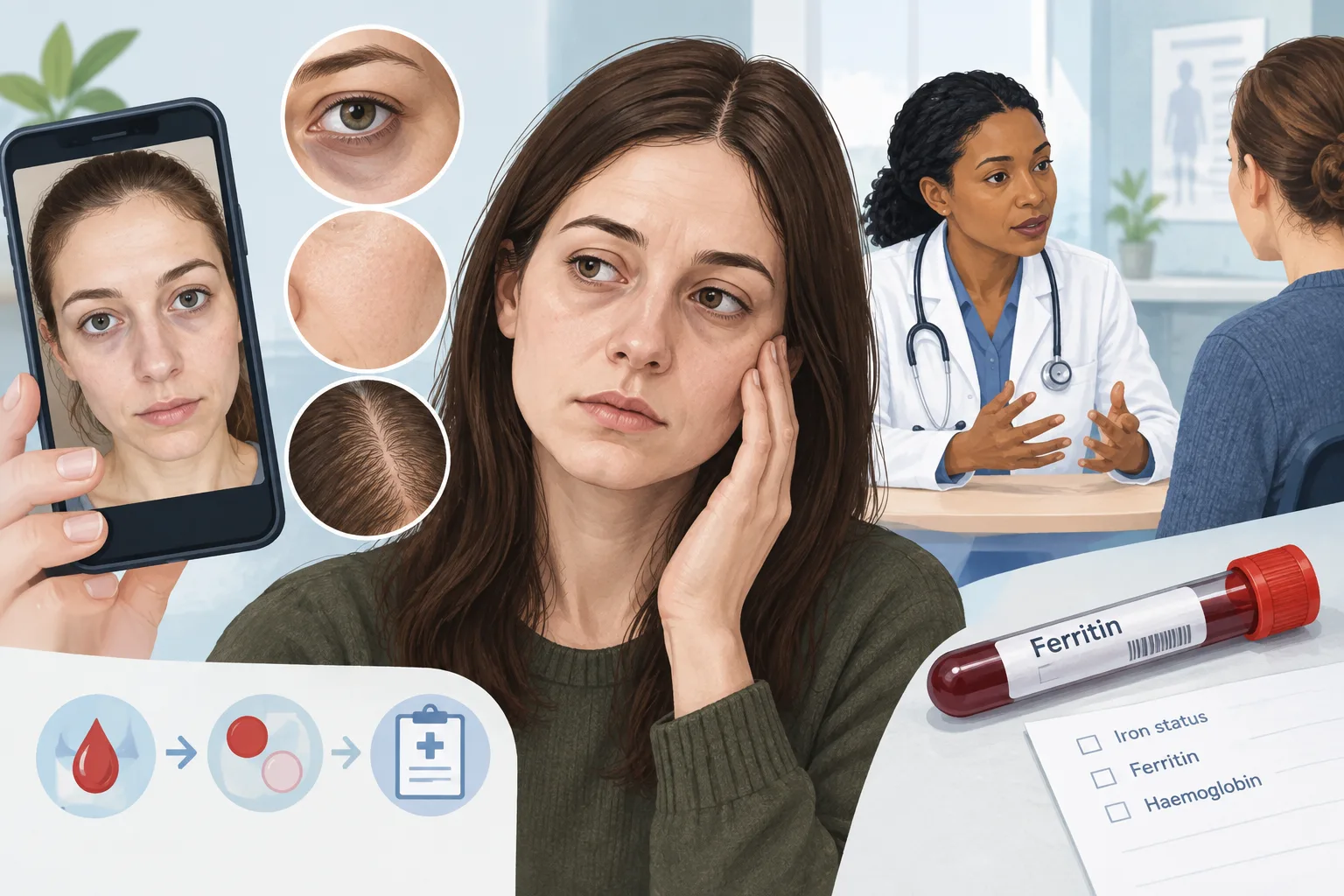
‘Ferritin face’ may be a clue, but a selfie cannot diagnose low iron
Loading statistics…
Paler skin and hair loss can accompany iron-deficiency anaemia, but they cannot diagnose low iron from a selfie.
Review information is loading.
Videos about “ferritin face” are circulating on TikTok and Instagram, with users pointing to dark circles, pale skin and thinning hair as signs of low iron. Doctors say those changes may prompt a conversation about health, but a face or photograph cannot reveal someone’s ferritin level — a measure of stored iron.
“Ferritin face is not a medical diagnosis,” GP Aziza Sesay told the BBC. The NHS lists paler skin and hair loss among possible symptoms of iron-deficiency anaemia, but Sesay said such changes can have other causes. Haematologist Drew Provan said it was impossible to determine a person’s ferritin level from their face.
The distinction matters because iron stores can run low before a person becomes anaemic. British Society of Gastroenterology guidance says iron deficiency should be confirmed through blood tests for iron status: a normal haemoglobin result alone does not rule out depleted stores. Ferritin results also need interpretation in context, because inflammation can make them appear normal despite iron deficiency.
Lucy M, 32, told the BBC she noticed changes in her skin and hair alongside fatigue and hair loss. She said a later test showed a ferritin level of 12 micrograms per litre, after earlier blood tests had been described to her as normal. Her experience shows why symptoms are worth raising with a clinician; her photographs cannot, by themselves, establish what caused the changes she noticed.
Visible pallor is not meaningless. In a study of 390 hospital patients aged 12 and over, examining the tongue helped researchers assess severe anaemia, although agreement between observers was poor. The study measured haemoglobin, not ferritin, and involved in-person examinations rather than selfies. The NHS advises people who think they may have iron-deficiency anaemia to see a GP, who can arrange testing and consider what is causing their symptoms.
How do we know?
5 listed sources · explore evidence, limitations and provenance.
Sign in to give this article a thumbs up or down.
About this discussion and AI questions
Private test discussion. Comments are readers’ views and are not yet automatically fact-checked. Editing is available for 60 seconds after posting.
Sign in with a confirmed reader account and choose a username to read comments and participate.
Sorting applies to top-level comments; replies remain oldest first. New comments and likes can change the order. Refresh for the current ranking.
Loading comments…