News Made Clear · Loading…
Category
Regions
Continents
Dossiers
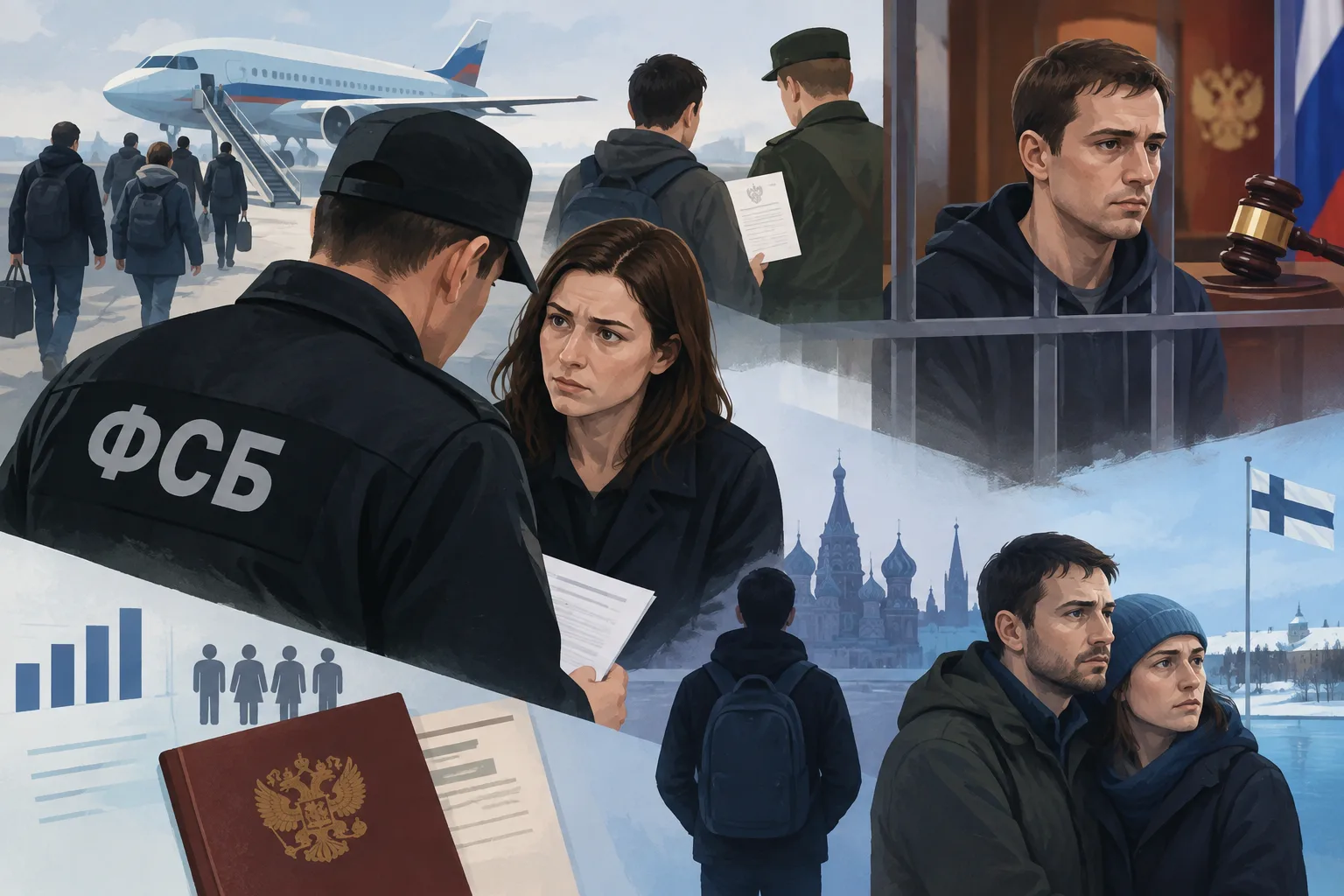
Russian returnees describe FSB questioning as activist receives six-year sentence
Loading statistics…
BBC interviews and a Russian activist’s six-year sentence highlight risks for some people returned after failed asylum claims. Official removal figures cannot show how many dissidents are among them.
Russians refused asylum in the United States have described being questioned by security officers after returning to Moscow in new BBC interviews. In a separate case, activist Leonid Melekhin has received a six-year sentence in Russia following his return after a failed US asylum claim. The accounts show what can be at stake for individuals, but deportation totals do not reveal how many anti-war activists or deserters are being sent back.
A woman identified by the BBC as Katya said officers from Russia’s FSB questioned her for hours when a deportation flight arrived in December 2025. She said male passengers were given papers requiring them to register with a military enlistment office. Another passenger and an activist backed her account, according to the BBC, which says it also saw supporting documents and photographs. Katya said she was released but that police still call and visit her. Registration papers do not establish that anyone on the flight was sent to fight in Ukraine. [1]
Melekhin’s asylum claim was rejected while he was in US immigration detention, and he was arrested after returning to Russia in July 2025, according to Mediazona. On 5 October 2026, a military court in Yekaterinburg sentenced him to six years in a penal colony on two counts of ‘justifying terrorism’. Mediazona reported that the case involved a post showing an image of a protest featuring Vladimir Putin’s likeness and a separate internet comment whose contents are unknown. The proceedings were closed; local outlet Vechernie Vedomosti said the court’s press office confirmed the sentence. [5] [6] [10]
The BBC describes Melekhin as deported. His state-appointed lawyer told Mediazona that Melekhin had asked to be sent back after his asylum claim failed, while an acquaintance doubted he would have returned voluntarily. Those accounts leave the precise terms of his departure from the US unclear; they do not alter the fact of his subsequent arrest and sentence in Russia. [1] [6]
Another BBC interviewee, a former Russian soldier identified as Artyom, said he was returned through Egypt after the US refused him asylum. He said he was held in a Russian military detention facility, escaped and is now outside Russia again. The Guardian and the Russian outlet Vyorstka separately reported flights through Egypt in 2025 and interviewed other returnees who described questioning in Moscow. Those reports do not establish what happened to every passenger.
How do we know?
11 listed sources · explore evidence, limitations and provenance.
Sign in to give this article a thumbs up or down.
About this discussion and AI questions
Private test discussion. Comments are readers’ views and are not yet automatically fact-checked. Editing is available for 60 seconds after posting.
Sign in with a confirmed reader account and choose a username to read comments and participate.
Sorting applies to top-level comments; replies remain oldest first. New comments and likes can change the order. Refresh for the current ranking.
Loading comments…