News Made Clear · Loading…
Category
Regions
Continents
More than a million in Lebanon face acute food insecurity, UN agencies say
Loading statistics…
An assessment estimates that 1.05 million people in Lebanon face crisis levels of acute food insecurity or worse, with the number expected to rise in 2027.
Review information is loading.
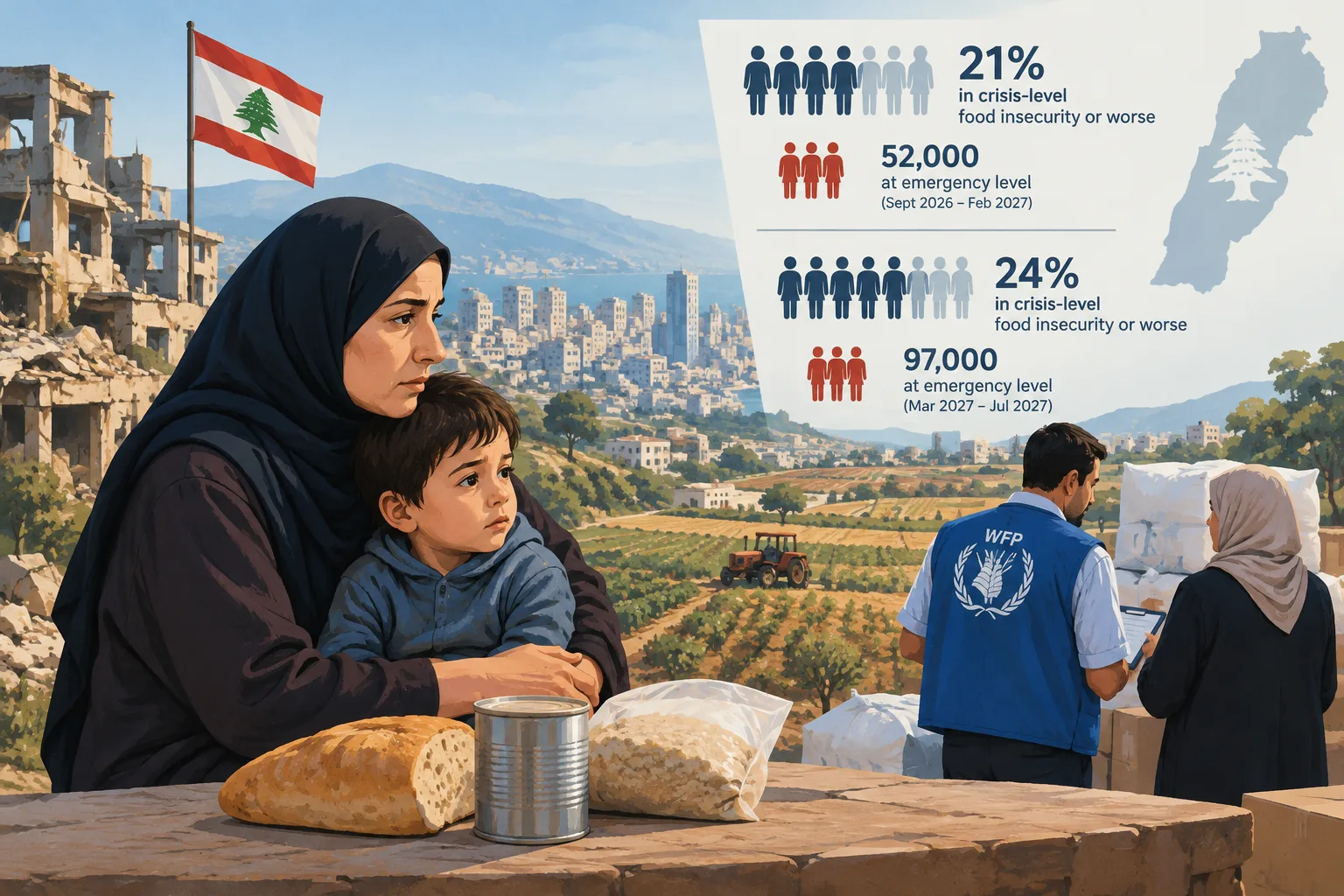
The assessment estimates that 21% of the population analysed faced crisis-level food insecurity or worse between September 2026 and February 2027. That includes around 52,000 people at the more severe emergency level.
The analysis was conducted in September by Lebanon’s agriculture ministry, with support from the UN World Food Programme (WFP), the Food and Agriculture Organization and other partners. Households facing acute food insecurity may struggle to meet their minimum food needs or have to take emergency measures, such as selling possessions, to do so.
Conditions are expected to deteriorate between March and July 2027, when around 1.15 million people, or 24% of those analysed, are projected to face crisis-level food insecurity or worse. The forecast includes 97,000 people at emergency level. The two estimates cover different-sized populations: about 5 million people in the earlier period and 4.8 million in the later one.
The WFP said the current percentage is below the 24% projected during the displacement crisis in April, but cautioned that the change reflects shifting conflict and displacement conditions rather than a sustained recovery.
The assessment attributes the food insecurity to the cumulative effects of two conflicts in less than two years, compounded by a fragile economy and rising living costs. The WFP said refugees were disproportionately affected, while damage to farmland and restricted access to agricultural land continued to weaken rural livelihoods.
The UN agencies called for continued humanitarian assistance alongside longer-term investment in livelihoods, agricultural recovery and economic resilience.
How do we know?
3 listed sources · explore evidence, limitations and provenance.
- wfp.org: Food Insecurity Persists in Lebanon as Fragile Conditions Stall Recovery Efforts, New Analysis Shows | World Food Programme
- ipcinfo.org: Lebanon: Acute Food Insecurity Situation for September 2026 - February 2027 and Projection for March - July 2027 | IPC - Integrated Food Security Phase Classification
- Nieuws.nl: Voedselonzekerheid in Libanon treft ruim 1 miljoen mensen
Sign in to give this article a thumbs up or down.
About this discussion and AI questions
Private test discussion. Comments are readers’ views and are not yet automatically fact-checked. Editing is available for 60 seconds after posting.
Sign in with a confirmed reader account and choose a username to read comments and participate.
Sorting applies to top-level comments; replies remain oldest first. New comments and likes can change the order. Refresh for the current ranking.
Loading comments…