News Made Clear · Loading…
Category
Regions
Continents
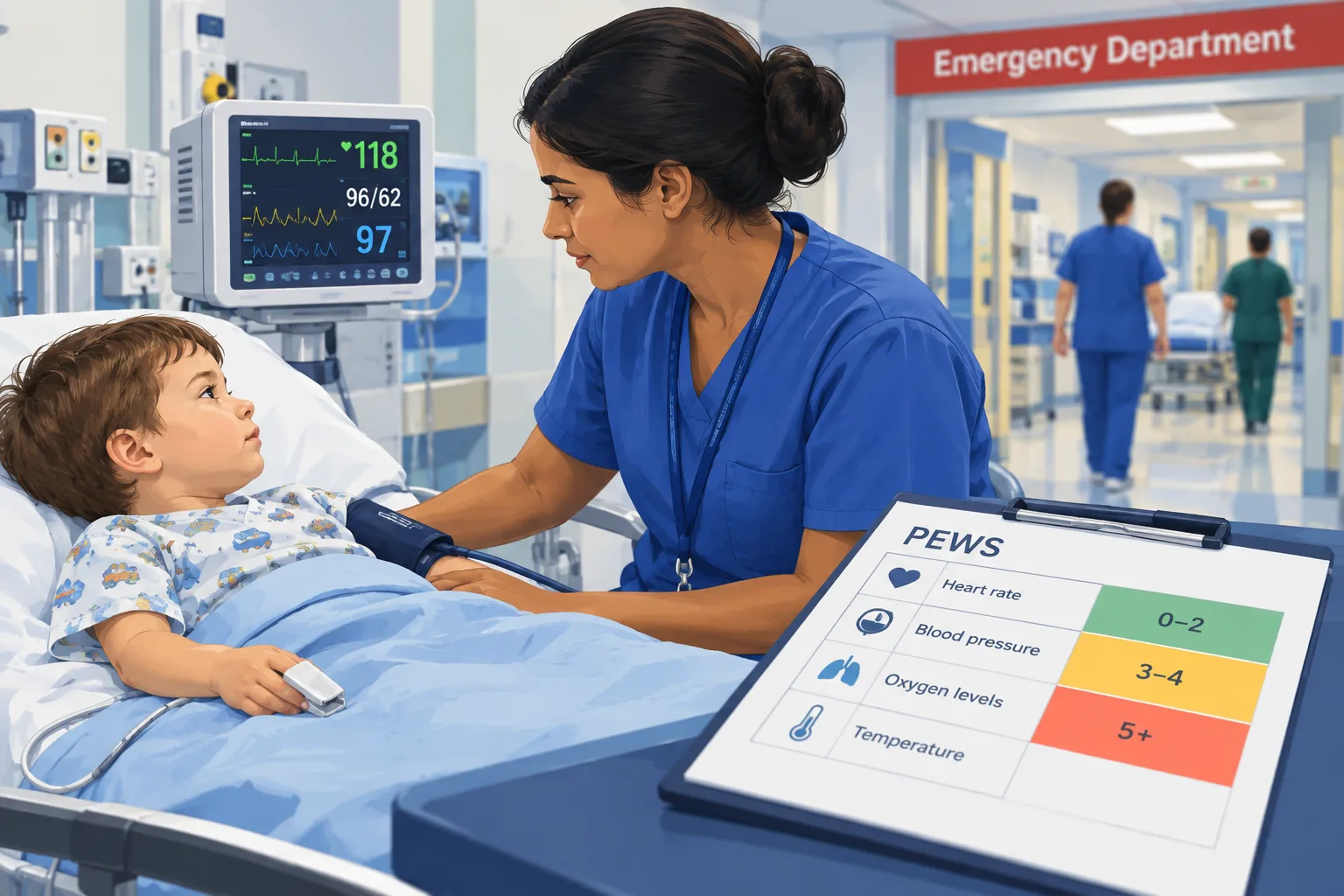
Warning system to help A&E staff spot dangerously ill children
Loading statistics…
Emergency departments across England are introducing a standardised system to help staff identify children whose condition is worsening and escalate their care quickly.
Review information is loading.
A new warning system is being introduced in emergency departments across England to help staff spot when a child is becoming dangerously ill and needs urgent care.
The National Paediatric Early Warning System (PEWS) asks staff to check and record vital signs such as blood pressure, heart rate and oxygen levels. A high score signals that a child needs more urgent attention. Concerns raised by staff, parents, carers or the child will trigger an immediate escalation of care, the BBC reports.
More than 90 hospitals in England already use the system on children’s wards, with assessments tailored to different age groups. Its introduction in emergency departments is intended to help staff respond during busy periods, including the winter months, when pressure on the NHS is typically highest.
Duncan Burton, England’s chief nursing officer, called the move an “important next step” in improving care for children and young people. He said a standardised approach could help emergency staff recognise warning signs, communicate concerns and make timely decisions.
The move follows concerns about children receiving care in crowded hospital corridors. Two-year-old Finlay Roberts died in 2024 after spending hours in a hospital corridor before being discharged. Health Secretary Yvette Cooper apologised to his parents on behalf of the NHS. Whittington Health NHS Trust, where Finlay waited for treatment, said it continued to experience periods of exceptional demand and that some patients may at times receive care in temporary clinical areas, including corridors.
A separate system, Martha’s Rule, is also being extended to every hospital emergency department in England. It allows patients, families and carers to request an urgent review if they are worried a condition is worsening and their concerns are not being addressed. The rule is named after 13-year-old Martha Mills, who died of sepsis in hospital in 2021; a coroner found her family’s concerns had not been listened to and that she probably would have survived if moved to intensive care sooner.
How do we know?
1 listed sources · explore evidence, limitations and provenance.
Sign in to give this article a thumbs up or down.
About this discussion and AI questions
Private test discussion. Comments are readers’ views and are not yet automatically fact-checked. Editing is available for 60 seconds after posting.
Sign in with a confirmed reader account and choose a username to read comments and participate.
Sorting applies to top-level comments; replies remain oldest first. New comments and likes can change the order. Refresh for the current ranking.
Loading comments…