News Made Clear · Loading…
Category
Regions
Continents
Dossiers
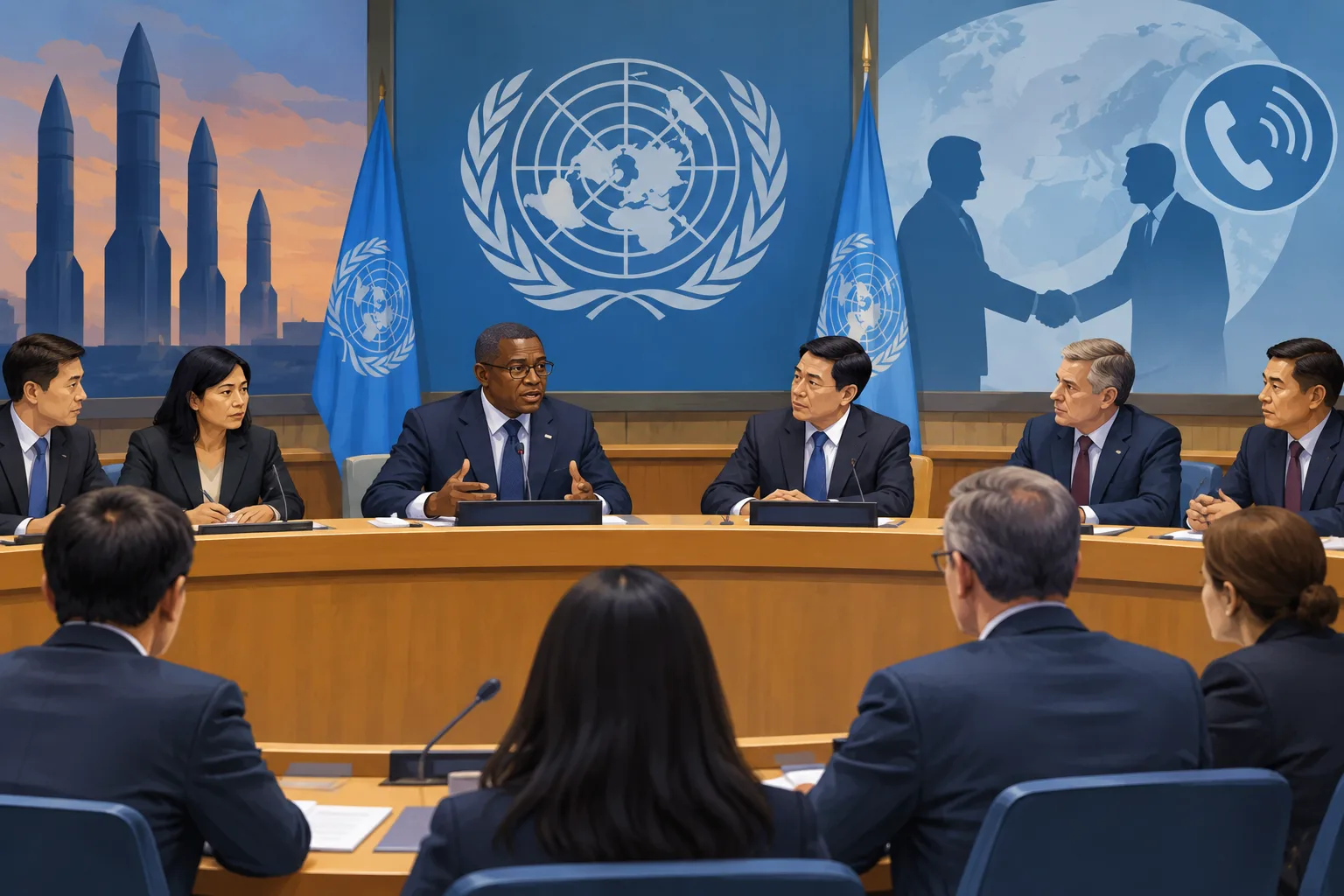
UN delegates urge nuclear risk safeguards after New START expiry
Loading statistics…
Delegates proposed hotlines, launch warnings and renewed arms talks after New START expired, but China rejected joining three-way disarmament negotiations at this stage.
The UN General Assembly’s First Committee opened its nuclear-weapons debate on 16 October with calls for better communication between nuclear powers and renewed arms-control negotiations. The proposals were not new agreements. Their urgency was sharpened by the expiry in February of New START, the treaty that limited US and Russian strategic nuclear forces. [1] [4]
Adedeji Ebo, a senior UN disarmament official, urged countries to update existing transparency and confidence-building measures and consider further steps, from political commitments to technical arrangements. Such measures can include crisis hotlines and advance notice of ballistic-missile launches. They are intended to reduce the risk of miscalculation, but are not a substitute for binding limits on weapons. [1] [4]
Vietnam, speaking for the Association of Southeast Asian Nations, called on the US and Russia to negotiate a new, legally binding framework for arms reductions. South Korea proposed crisis communication channels, pre-launch notifications and closer military contact among the five permanent members of the Security Council. [1] [2]
The US representative invited Russia and China to put forward proposals on risk reduction, nuclear testing and mutual transparency. China called for a treaty under which nuclear powers would agree not to use nuclear weapons first. But its representative later said it would be unfair and unworkable for China to join three-way nuclear disarmament negotiations with the US and Russia at this stage. That objection does not rule out every form of risk-reduction discussion, but it underscores the gap between an invitation to talk and agreement on who should negotiate arms cuts. [1] [3]
The debate also exposed a difference over what practical safeguards can achieve. Egypt argued that reducing strategic risks cannot replace the total, verifiable elimination of nuclear weapons.
How do we know?
4 listed sources · explore evidence, limitations and provenance.
Sign in to give this article a thumbs up or down.
About this discussion and AI questions
Private test discussion. Comments are readers’ views and are not yet automatically fact-checked. Editing is available for 60 seconds after posting.
Sign in with a confirmed reader account and choose a username to read comments and participate.
Sorting applies to top-level comments; replies remain oldest first. New comments and likes can change the order. Refresh for the current ranking.
Loading comments…