News Made Clear · Loading…
Category
Regions
Continents
How could the UK government reduce welfare spending?
Loading statistics…
The OBR expects UK welfare spending to rise to £431bn by 2032. Options for slowing that growth include changes to disability benefits and more employment support for young people, but savings are uncertain and may take time.
Review information is loading.
The UK government could reduce welfare spending by tightening access to some health and disability benefits or by helping more young people into work, but either approach may take years to lower the bill—and employment support could add to public spending in the meantime.
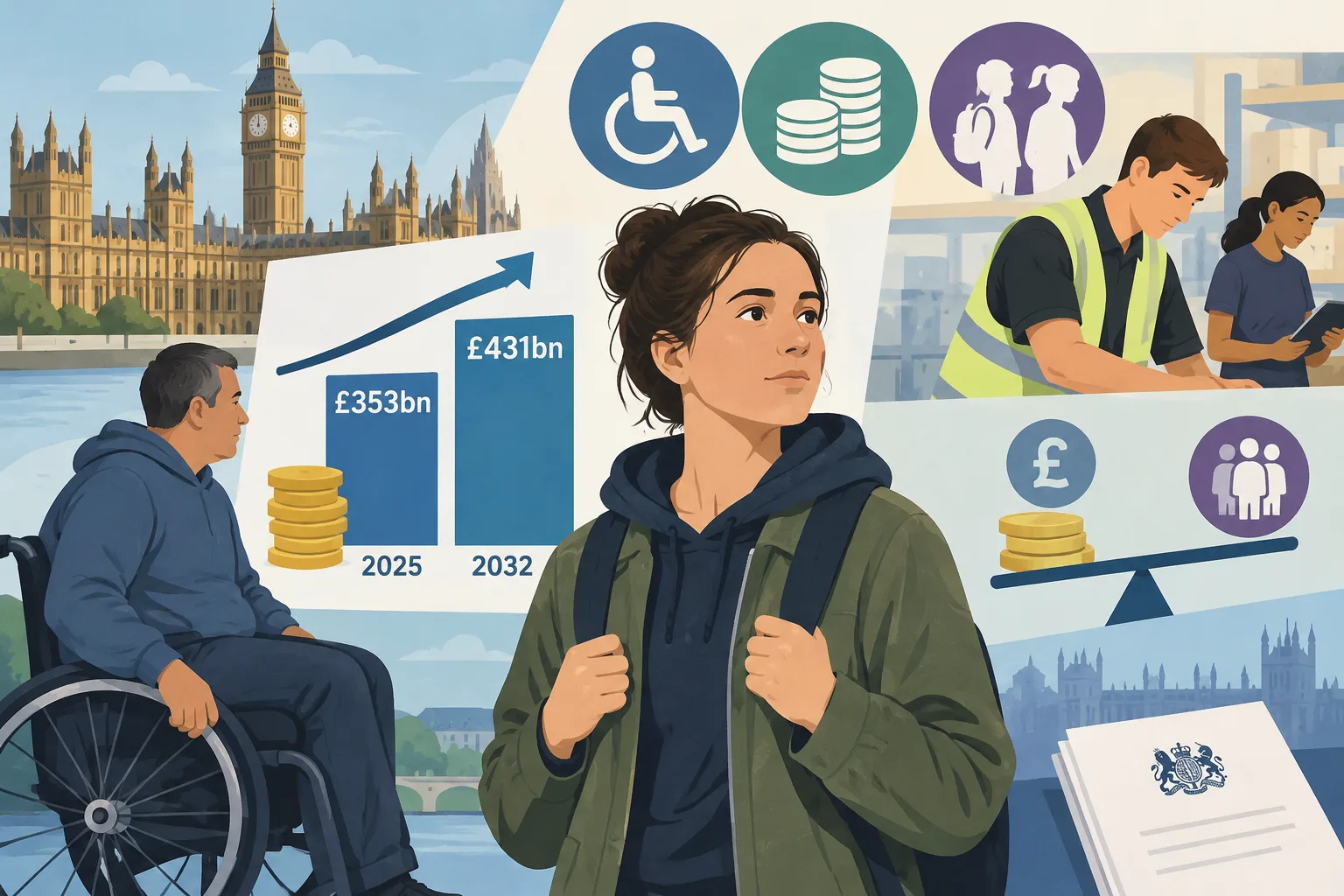
The Office for Budget Responsibility (OBR) forecasts that welfare spending will rise from £353bn this year to £431bn in 2032. That is a cash increase of £79bn, but spending is projected to edge up only from 11.1% to 11.3% of gross domestic product. Pensioners account for just under half of the total, mostly through the state pension.
The figures point to different pressures within the system. Spending on working-age disability benefits, adjusted for inflation, rose from £14bn in 2020 to £25bn in 2026, while several other working-age benefits remain below their earlier levels after cuts introduced from 2010 onwards. Some researchers have argued those cuts may have encouraged people to claim sickness and disability benefits instead, shifting costs rather than producing lasting savings.
One possible focus is Personal Independence Payment (PIP), a benefit that can be claimed by people in work as well as those who are not. Official figures show the number of 16 to 24-year-olds not in education, employment or training has risen by about 230,000 since 2019 to just under one million. An interim review led by former health secretary Alan Milburn estimated that annual PIP spending on this age group rose from £1.3bn in 2020 to about £3.2bn in 2025, and projected it could reach £6.5bn within five years.
The government has not set out a timetable for reducing the overall bill. Final reports from Milburn and disability minister Stephen Timms are expected in the coming weeks. The BBC reports speculation that the reviews could recommend a different system for under-25s, including lower payments or restrictions on eligibility for PIP. These are possible recommendations, not announced policy; Timms was not specifically asked to find savings.
A previous government plan illustrates the distinction between reducing spending and slowing its growth. Reforms announced in 2025 were intended to save £5bn a year by 2030 through tighter PIP access and lower health-related Universal Credit payments. Forecasts still showed health-related welfare spending rising in cash terms, though more slowly than previously expected. The OBR projected overall welfare spending would fall slightly as a share of the economy over the medium term.
Moving more young people into work could also reduce benefit spending over time, but analysts say that may require greater investment in employment support. The interim Milburn report noted that about £25 was spent on benefits for every £1 spent on employment support for young people. Any savings could therefore be offset in the short term by spending elsewhere, and would depend on support helping people enter and remain in work.
How do we know?
1 listed sources · explore evidence, limitations and provenance.
Sign in to give this article a thumbs up or down.
About this discussion and AI questions
Private test discussion. Comments are readers’ views and are not yet automatically fact-checked. Editing is available for 60 seconds after posting.
Sign in with a confirmed reader account and choose a username to read comments and participate.
Sorting applies to top-level comments; replies remain oldest first. New comments and likes can change the order. Refresh for the current ranking.
Loading comments…