Aaron Reitz’s warnings to Democrats over Trump investigations lack force, legal experts say
A Texas prosecutor has warned five Democratic lawmakers over their plans to investigate Donald Trump’s allies. Legal experts say the letters offer no sound reason to halt congressional oversight.
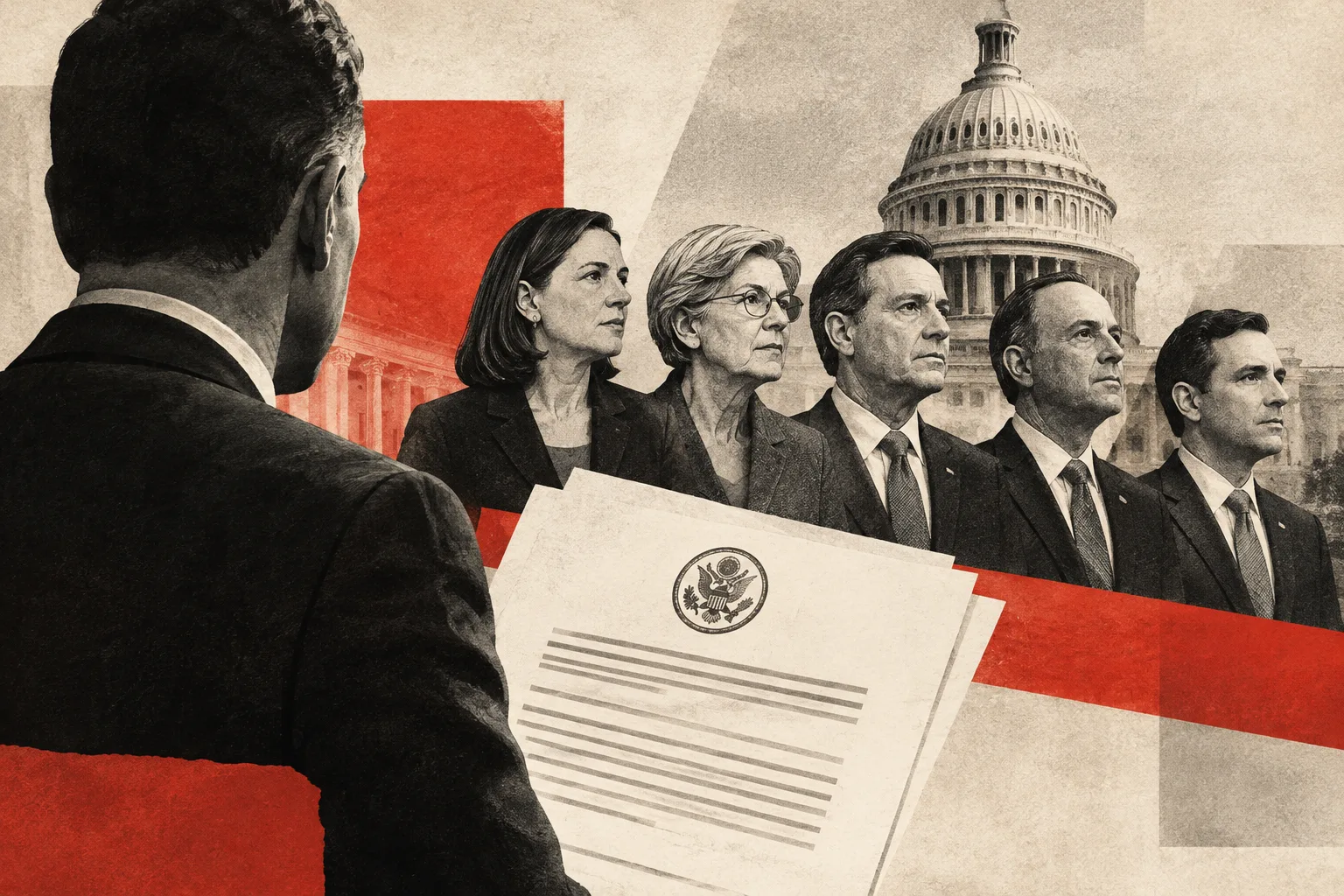
US Attorney Aaron Reitz has sent letters to four Democratic senators and a House member suggesting that their plans for aggressive oversight could lead to criminal inquiries or charges, POLITICO reports.
The recipients are senators Elissa Slotkin, Elizabeth Warren, Richard Blumenthal and Adam Schiff, and House member Robert Garcia. Garcia, who is expected to chair the House Oversight Committee, has outlined plans to investigate Trump and his associates when Democrats take control of the House in January.
Reitz, the US attorney for southern Texas, says he is conducting a preliminary inquiry into whether planned committee activities fall outside a legitimate legislative purpose. He said the letters, which ask lawmakers to preserve records, were sent in coordination with the Justice Department in Washington.
The department has backed him, saying oversight is not a licence to threaten private citizens for exercising their First Amendment rights.
The Hill reported that Reitz’s letter to Slotkin cited her comment that investigating possible administration misconduct could send a “deterrence message” to people interested in working in the Trump White House. Slotkin said she had been talking about accountability for breaking the law or wasting taxpayers’ money, and asked Reitz to withdraw his letter.
The Rothman Report said Reitz’s letter to Schiff asked him to preserve records and confirm by 25 November that he was doing so, warning of possible penalties for failing to comply. A preservation request is not a criminal charge or a subpoena.
It said the letter referred to two federal civil-rights statutes. One concerns agreements between two or more people to injure, threaten or intimidate someone exercising a protected right; the other makes it a crime to wilfully deprive someone of a protected right while acting under government authority.
Stan Brand, a former House general counsel, told POLITICO that Democrats should disregard the letters: “They’re saber-rattling, but there’s no force behind the saber.” Ohio State University law professor Steven Huefner also said Congress could ignore the warnings, pointing to constitutional protection for legislative activity.
Congress’s investigative powers are broad but not unlimited. In the 1957 case Watkins v United States, the Supreme Court said an inquiry must serve a legitimate congressional purpose and cannot be used merely to expose private affairs. It also said committee members’ motives alone would not invalidate an investigation serving a legislative purpose.
A federal appeals court ruled in 2023 that informal fact-finding by a member of Congress may be protected by the Constitution’s Speech or Debate Clause, but is not automatically covered. The question depends on its connection to legislative proceedings.
Georgetown University law professor Steve Vladeck told POLITICO that the letters were unlikely to provoke a serious clash between the branches, but he expected serious challenges to congressional authority once Democrats begin exercising their oversight powers.
Sign in to give this article a thumbs up or down.
From the discussion
Private test discussion. Comments are readers’ views and are not yet automatically fact-checked. Editing is available for 60 seconds after posting.
Sign in with a confirmed reader account and choose a username to read comments and participate.
Sorting applies to top-level comments; replies remain oldest first. New comments and likes can change the order. Refresh for the current ranking.
Loading comments…