News Made Clear · Loading…
Category
Regions
Continents
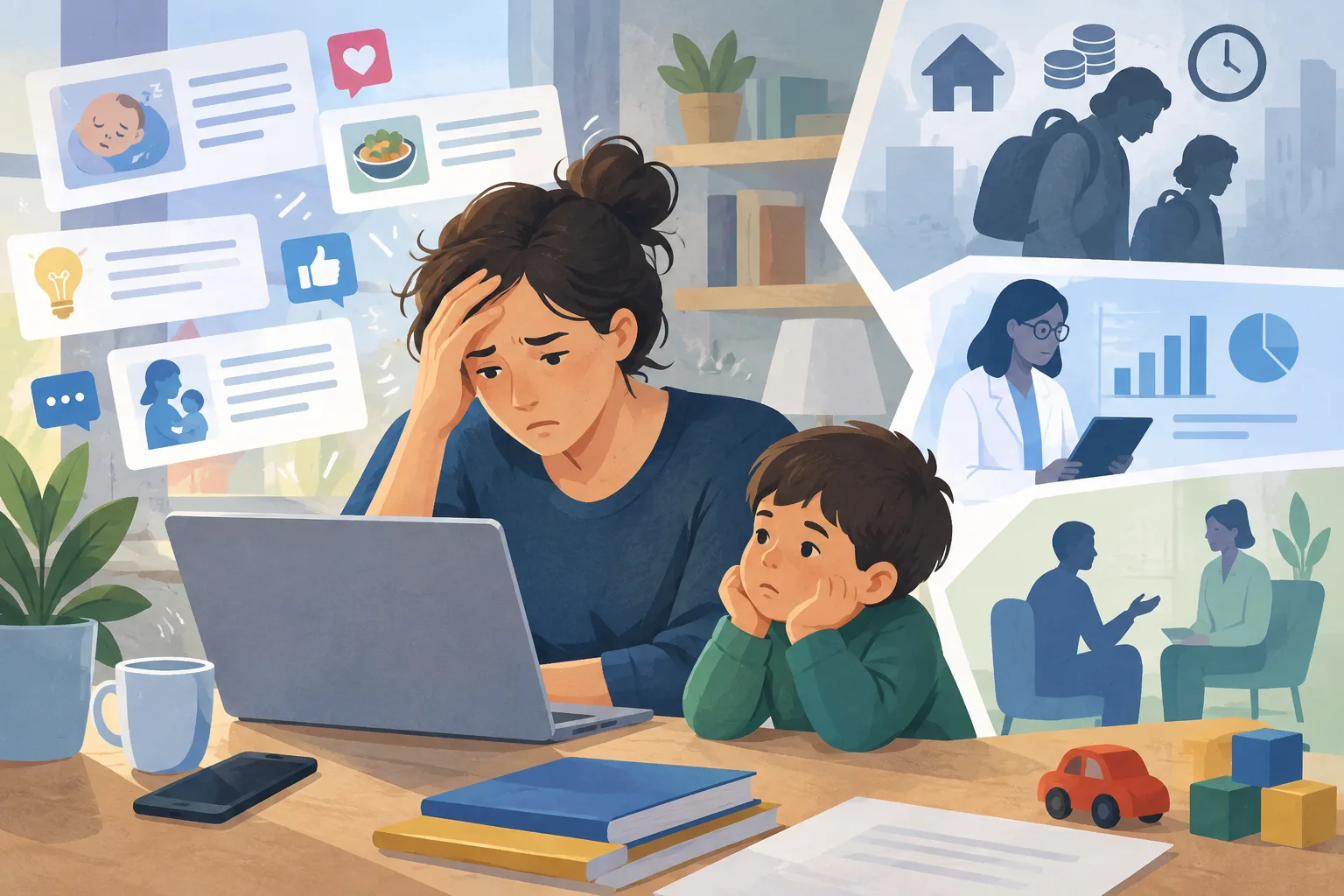
Parents report feeling overwhelmed by online advice amid wider pressures
Loading statistics…
Parents describe feeling overwhelmed by online advice, while research and support-service figures show a more complicated picture of parental pressure.
Review information is loading.
A BBC News feature published on Sunday describes how Rosie Whitfield, a mother of two, began to question everyday decisions after encountering large amounts of parenting advice online. She told the BBC that the volume of advice, rather than gentle parenting itself, had affected her confidence. [1]
The experience reflects a wider concern, though different figures measure different things. In 2025, the government reported that 68% of parents surveyed struggled with conflicting advice they found hard to trust, while 69% felt overwhelmed by the amount of information available. Those are separate findings, not a figure for parents experiencing both. The government subsequently launched its Best Start in Life campaign to bring together NHS and government-backed guidance. [3]
A King’s College London review found recurring accounts of information overload, conflicting guidance and difficulty judging the credibility of online advice. It also distinguished brief tips for individual problems from more structured online programmes, which can be helpful to parents. [4]
Parental strain extends beyond advice. Action for Children reported that wellbeing topics appeared in 40% of its one-to-one cases involving parents of 10- to 15-year-olds in August 2025 to July 2026, up from 24% three years earlier. Those figures concern families seeking help from the service, rather than all parents. Its report also describes pressures involving caring responsibilities, work, money, school and waits for support; one parent credited the service’s information and listening with helping him manage his anxiety. [5]
The BBC feature also sets out disagreement over whether gentle parenting is permissive or involves firm boundaries. A small US study found considerable variation among parents who called their approach ‘gentle’, with no statistically significant differences from other parents on established parenting-style measures after the study’s adjustment for multiple comparisons. That makes the label a poor shorthand for a single set of practices or outcomes. [1] [6]
How do we know?
11 listed sources · explore evidence, limitations and provenance.
Sign in to give this article a thumbs up or down.
About this discussion and AI questions
Private test discussion. Comments are readers’ views and are not yet automatically fact-checked. Editing is available for 60 seconds after posting.
Sign in with a confirmed reader account and choose a username to read comments and participate.
Sorting applies to top-level comments; replies remain oldest first. New comments and likes can change the order. Refresh for the current ranking.
Loading comments…