News Made Clear · Loading…
Category
Regions
Continents
Topics
Data-centre concerns mattered to US voters, but election impact is unclear
Loading statistics…
A poll found that 56% of surveyed US voters considered data centres a major factor in their midterm vote, but it cannot show whether opposition to the facilities changed any election outcomes. The findings add to pressure on politicians and developers over the costs and pace of the AI infrastructure boom.
Review information is loading.
A post-election poll suggests opposition to data centres was a significant concern for many US voters, but the results do not show that it decided any Senate race. The issue is now creating pressure on politicians and developers as America’s AI infrastructure boom accelerates.
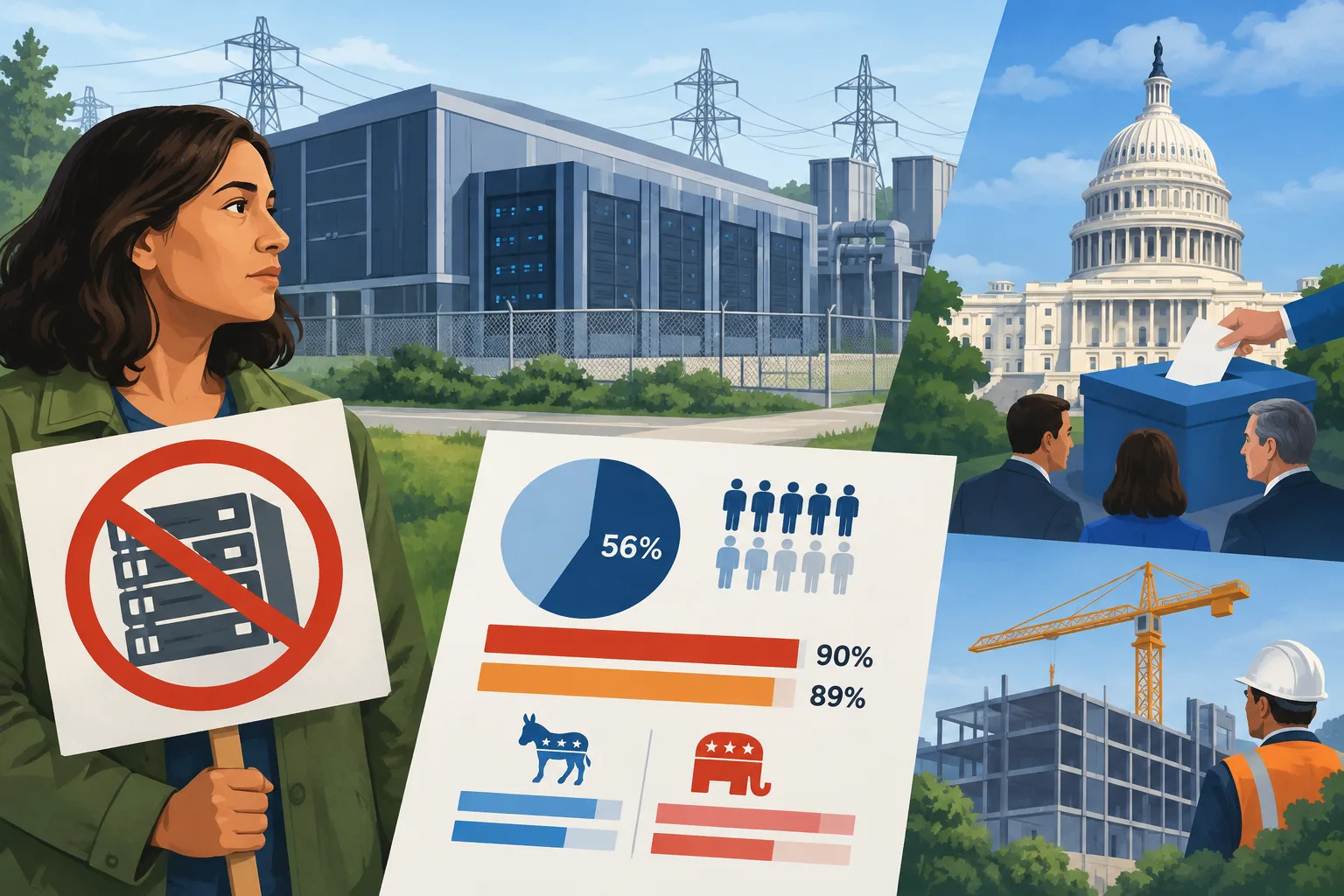
The poll, conducted for the Associated Press and a group of news organisations, found that 56% of surveyed voters considered data centres a “crucial or major” factor in their vote. Three-quarters said they would oppose a new facility in their community.
Concern was more pronounced among voters who backed Democrats: 65% of Democratic voters said data centres were a major factor, compared with 33% of Republican voters. But the issue ranked below government corruption and the cost of living, which 90% and 89% respectively called major factors.
The Democrats won Senate seats in Texas, Ohio and Iowa — states with more data centres than the national median. Yet other factors were also shaping voters’ choices, and the polling cannot establish how many votes, if any, opposition to the facilities delivered to Democratic candidates.
The results do, however, point to political consequences for an industry facing growing local resistance. Texas, Georgia and Ohio elected Democratic senators and governors who have called for tighter rules on data centres. Proposals include making developers cover energy and water infrastructure costs, ending tax breaks and giving communities more say over projects.
The scale of investment helps explain why the debate matters beyond local planning. US spending on data-centre construction, excluding computer hardware, reached $5bn in August, five times the level in 2023, according to official data cited by the BBC.
Industry analysts expect new leaders to face demands for stronger conditions on development. Those could raise costs or slow approvals, but existing permitted projects are likely to continue, one analyst told the BBC. Tax revenue and construction jobs also give politicians reasons to avoid policies that could halt building altogether.
OpenAI pledged on Thursday, a day after the election results, to pay fully for its electricity use. The commitment reflects one of the central demands from communities: that the costs of powering new facilities should not fall on local residents.
How do we know?
1 listed sources · explore evidence, limitations and provenance.
Sign in to give this article a thumbs up or down.
About this discussion and AI questions
Private test discussion. Comments are readers’ views and are not yet automatically fact-checked. Editing is available for 60 seconds after posting.
Sign in with a confirmed reader account and choose a username to read comments and participate.
Sorting applies to top-level comments; replies remain oldest first. New comments and likes can change the order. Refresh for the current ranking.
Loading comments…