After surviving an aortic dissection, mother urges three children with Loeys-Dietz syndrome to have surgery
After surviving an aortic dissection and waking from a coma, Annette Wagner urged her three adult children, who shared her genetic condition, to have preventive aortic surgery. Their family history helped identify the inherited risk before they faced the same emergency.
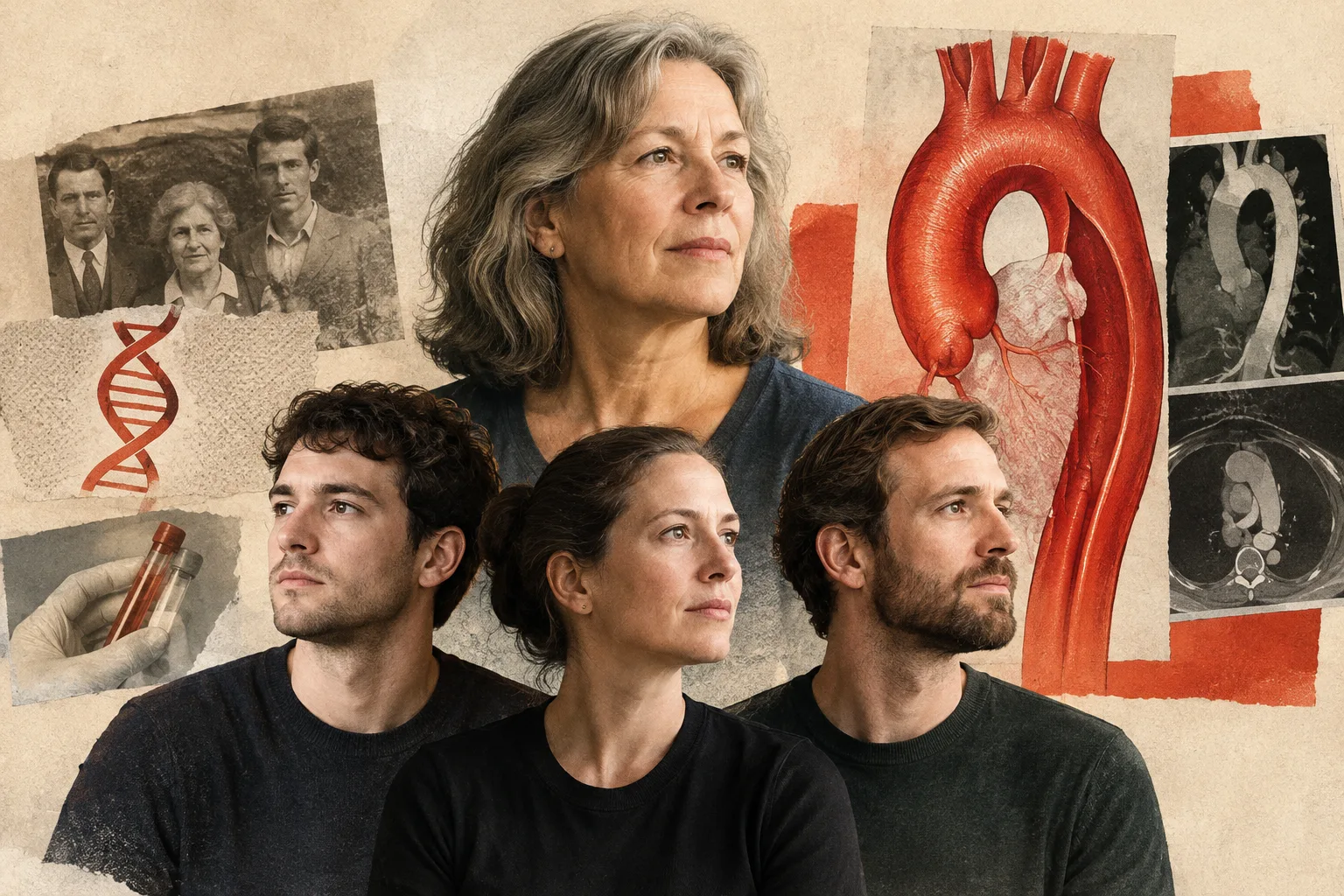
Three adult children had preventive surgery on their aortas after their mother survived a life-threatening tear and, on waking from a coma, urged them to act. The family’s experience highlights how knowing their medical history—and identifying a genetic condition—can help relatives assess their own risk.
Annette Wagner, a paediatric dermatologist, had Loeys-Dietz syndrome, a connective-tissue disorder that can weaken the aorta. She was 64 when she suffered an aortic dissection, a tear in the artery’s inner layer. After an initial operation, her heart stopped and she spent two weeks on life support.
Two days after waking from the coma, Wagner told her three children, who shared the condition, that they needed a graft to replace part of the aorta. She said doctors had been reluctant to consider preventive surgery before age 45, but her experience suggested that would be too late for their family.
Her children—Gavin, then 28, Kirstin, 37, and Charlie, 33—had the procedures over the following six months. Their aortas measured 4.1 centimetres, compared with 4.2 centimetres when their mother’s dissection occurred, according to surgeon Christopher Mehta. Gavin and Charlie had surgery in Chicago; Kirstin was treated in Paris.
Wagner’s family had been investigating its history of aortic disease since the 1990s. Her brother suffered a dissection at 38 and died after another at 60; her father and grandfather also died from dissections. Wagner gathered blood and skin samples from more than 40 relatives and sent them to a research laboratory. In 2011, she learned that she and three of her six children had a mutation in the SMAD3 gene, which can cause Loeys-Dietz syndrome.
The condition is estimated to affect about one in 50,000 people, though it may be underdiagnosed. Cardiovascular geneticist Elizabeth McNally said relatives’ aortas were monitored with imaging, alongside blood-pressure checks and medication. She said people with Loeys-Dietz can suffer a dissection even when the aorta is not especially enlarged.
The operations also brought difficult recoveries. Charlie developed inflammation around his heart and took six months to recover; he later said he felt fully recovered. Gavin described feeling well for months after his operation. Wagner still has a tear in another section of her aorta, and her doctors are unsure whether she could survive another surgery.
Her family’s experience has also shaped plans for the next generation. One of Wagner’s sons is pursuing IVF to avoid passing on the gene mutation. Wagner said she hopes to work with her cardiologist to gather more information about SMAD3.
Sign in to give this article a thumbs up or down.
From the discussion
Private test discussion. Comments are readers’ views and are not yet automatically fact-checked. Editing is available for 60 seconds after posting.
Sign in with a confirmed reader account and choose a username to read comments and participate.
Sorting applies to top-level comments; replies remain oldest first. New comments and likes can change the order. Refresh for the current ranking.
Loading comments…