AI and children’s education: Daniel Susskind urges core skills over ‘future-proof’ careers
As AI alters the skills employers may need, economist Daniel Susskind tells CNN that children should build strong foundations in reading, maths and critical thinking, while learning when to use AI and when to work without it.
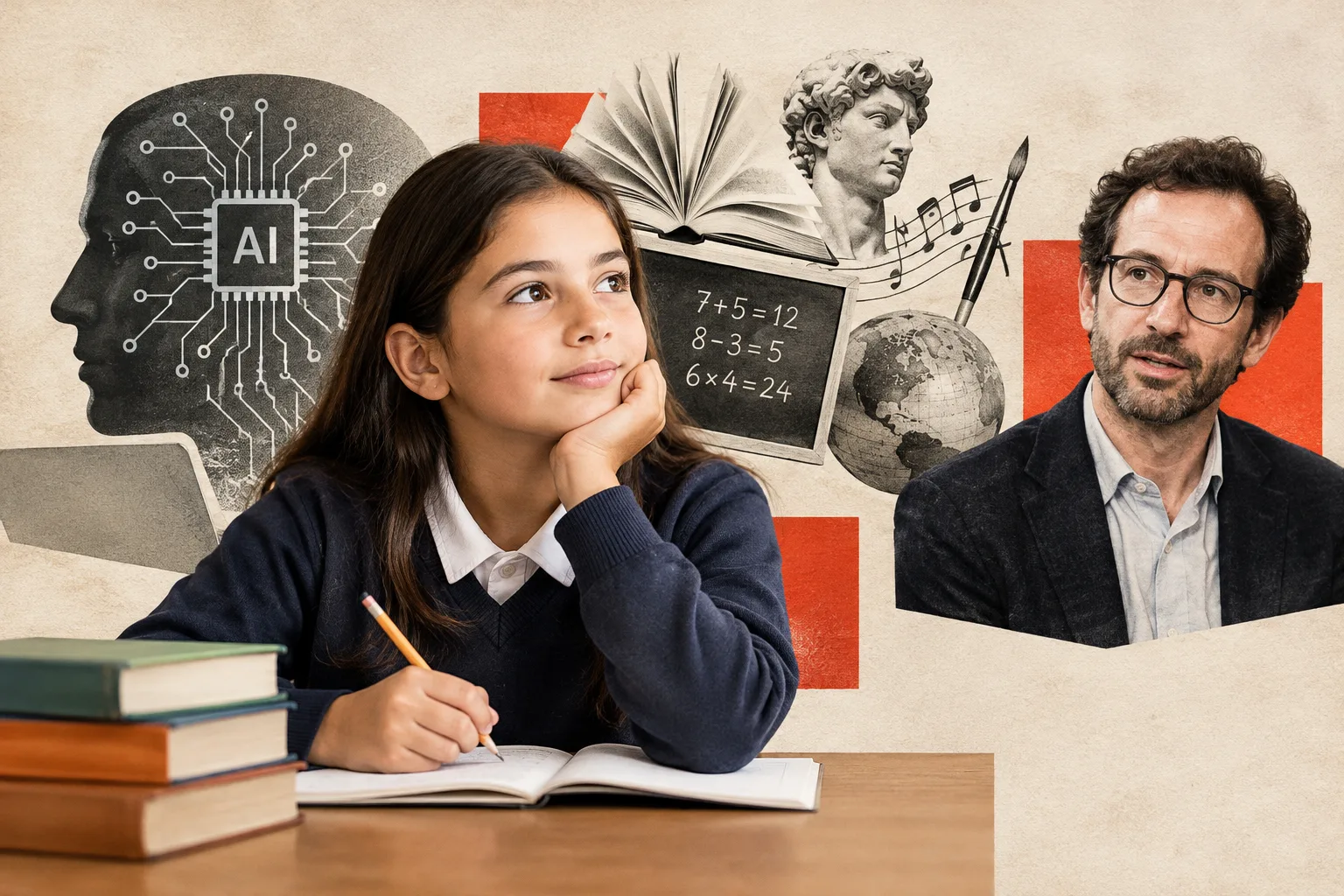
Parents should avoid trying to steer children towards supposedly “future-proof” careers as artificial intelligence reshapes work, says economist Daniel Susskind. Instead, he argues, education should strengthen core skills and teach young people to use AI critically — and to work without it.
In an interview with CNN, Susskind, a professor at Gresham College in London, said the future was too uncertain to predict which occupations would endure. He pointed to England’s 2013 decision to teach coding in primary and secondary schools as a bid to prepare pupils for technological change. By January 2023, he said, ChatGPT had become effective at writing code, illustrating how quickly the value of a targeted skill can shift.
His recommended foundation is literacy, numeracy and critical thinking. These skills help children assess AI-generated answers, which can contain mistakes or fabricated information, he said. He also cited OECD data showing basic skills declining in many countries, though the interview did not specify which countries or measures.
Susskind proposes teaching pupils both how to use AI and how to work without it. He calls the approach “teach both, test both”: use the technology to tackle tasks that would otherwise be difficult, while setting aside time to practise underlying skills independently. He said this should apply across subjects, including English, history, music and art.
He also argues that education should address AI’s capacity to distract, not just how to write prompts. About a third of time in education and professional settings should be spent learning to use the technology effectively and critically, he suggested.
For adults, his advice is to treat education as a lifelong process and remain willing to retrain. For young people considering work, he suggests focusing on problems they want to solve, such as improving access to justice or helping people live longer, healthier lives, rather than trying to guess which job titles will survive.
Susskind expects human roles to remain important where people value the human presence as well as the outcome, including teaching, social work and some care. He also sees a potential role for AI in personalised tutoring, which he says could offer some benefits of one-to-one tuition at lower cost. These are his views about possible futures, not a guarantee of which jobs AI will replace or preserve.
Sign in to give this article a thumbs up or down.
From the discussion
Private test discussion. Comments are readers’ views and are not yet automatically fact-checked. Editing is available for 60 seconds after posting.
Sign in with a confirmed reader account and choose a username to read comments and participate.
Sorting applies to top-level comments; replies remain oldest first. New comments and likes can change the order. Refresh for the current ranking.
Loading comments…