Apple’s Siri Recap avoids saving audio, but CNN test finds summaries can be vague and inaccurate
Apple says Siri Recap does not save conversation audio, but a CNN reporter’s weeks-long test found that its Apple Watch summaries could be inaccurate, vague and difficult to explain to others.
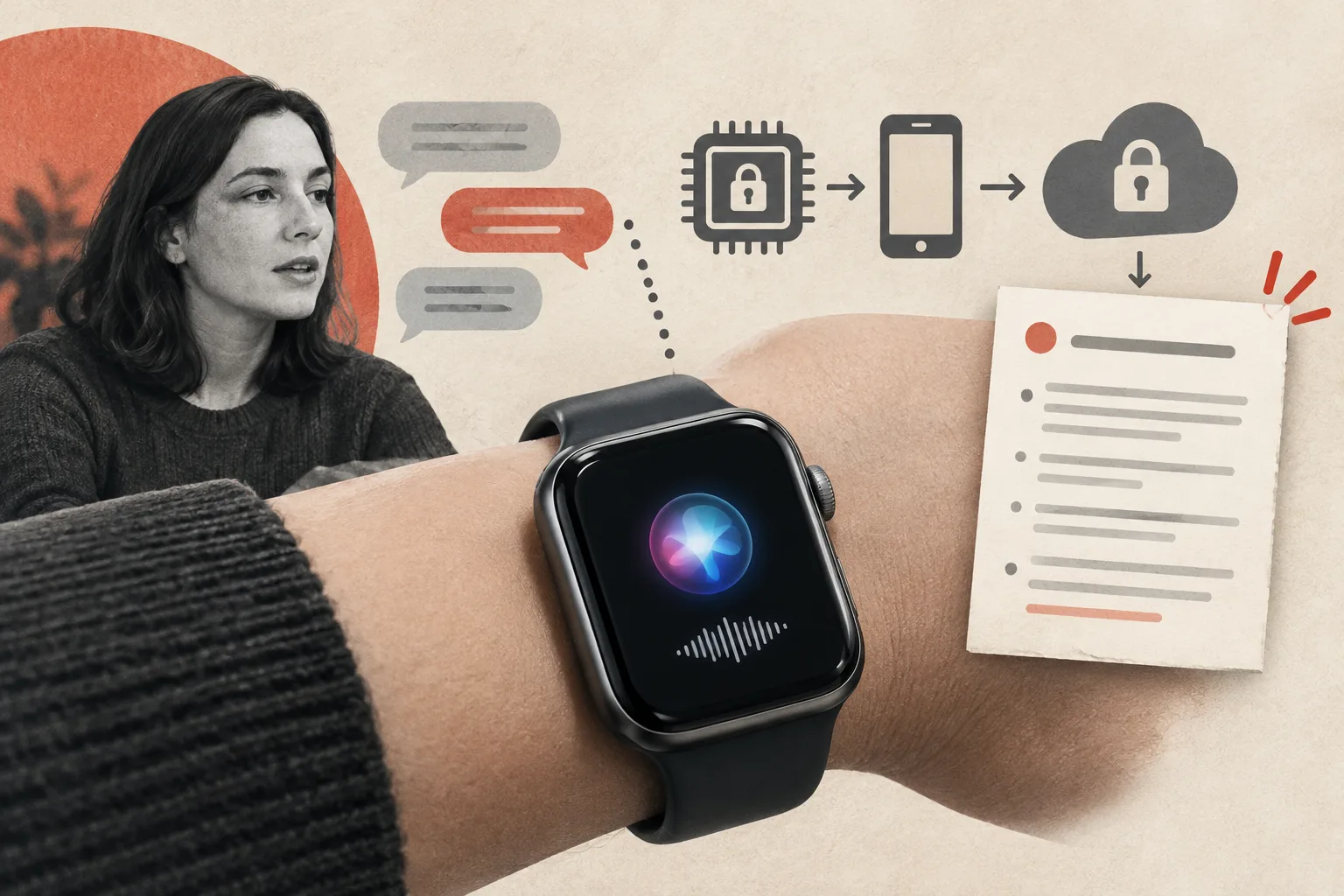
Apple’s Siri Recap can turn conversations into brief notes without saving their audio, but a CNN reporter who tested the Apple Watch feature for weeks found that its summaries were sometimes inaccurate and often too vague to be useful.
The feature is in beta and works on Apple Watch Series 12 and Ultra 4 when paired with an iPhone 16 or later, except the iPhone 16e. Apple has not said when it will launch more widely.
CNN’s Lisa Eadicicco said the summaries occasionally helped her recall a detail or pass on the gist of a meeting. But one recap got a health-related detail wrong; others confused a karaoke party with music trivia and attributed a friend’s story about a musical to her.
Siri Recap is designed to capture high-level summaries rather than full transcripts. Apple says the watch processes audio in a secure part of its processor, sends it to the paired iPhone for conversion into condensed text, and discards the audio before it leaves the phone. The text is then sent to Apple’s cloud computing platform to be summarised.
That approach limits what the feature can reveal, but also what it can tell its user. A recap might preserve a general impression while omitting the names, details or context that would make a note useful. One example in Eadicicco’s test, titled “Thanksgiving Week Work and Family Plans”, included the bullet point: “Reassurance given that there will be enough food.”
The watch has no visual indicator when Siri Recap is active. Eadicicco said she accidentally captured private conversations she had not intended to summarise, and found the feature harder to explain to people than a device that records interviews or produces a transcript.
Irina Raicu, director of the internet ethics programme at Santa Clara University’s Markkula Center for Applied Ethics, said the spread of wearable devices that can document conversations could make people wary of being recorded. Calli Schroeder, director of the AI and human rights programme at the Electronic Privacy Information Center, said the wider challenge was whether personal assistants could learn more about users while preserving privacy.
For now, Siri Recap’s limited device compatibility and optional use keep its reach narrow. Its test also illustrates the trade-off Apple faces: reducing how much a system captures may ease some privacy concerns, while leaving it with less information to produce consistently useful summaries.
Sign in to give this article a thumbs up or down.
From the discussion
Private test discussion. Comments are readers’ views and are not yet automatically fact-checked. Editing is available for 60 seconds after posting.
Sign in with a confirmed reader account and choose a username to read comments and participate.
Sorting applies to top-level comments; replies remain oldest first. New comments and likes can change the order. Refresh for the current ranking.
Loading comments…