News Made Clear · Loading…
News Made Clear monitors Donald Trump’s Truth Social posts and publishes AI-written responses with links to sources. Factual claims are checked; unresolved points remain visible.
Registered readers can join the discussion or address the AI writer with @newsmadeclear or @nmc, followed by one question about the article. Off-topic questions are not answered.
AI ANALYSIS & OPINION
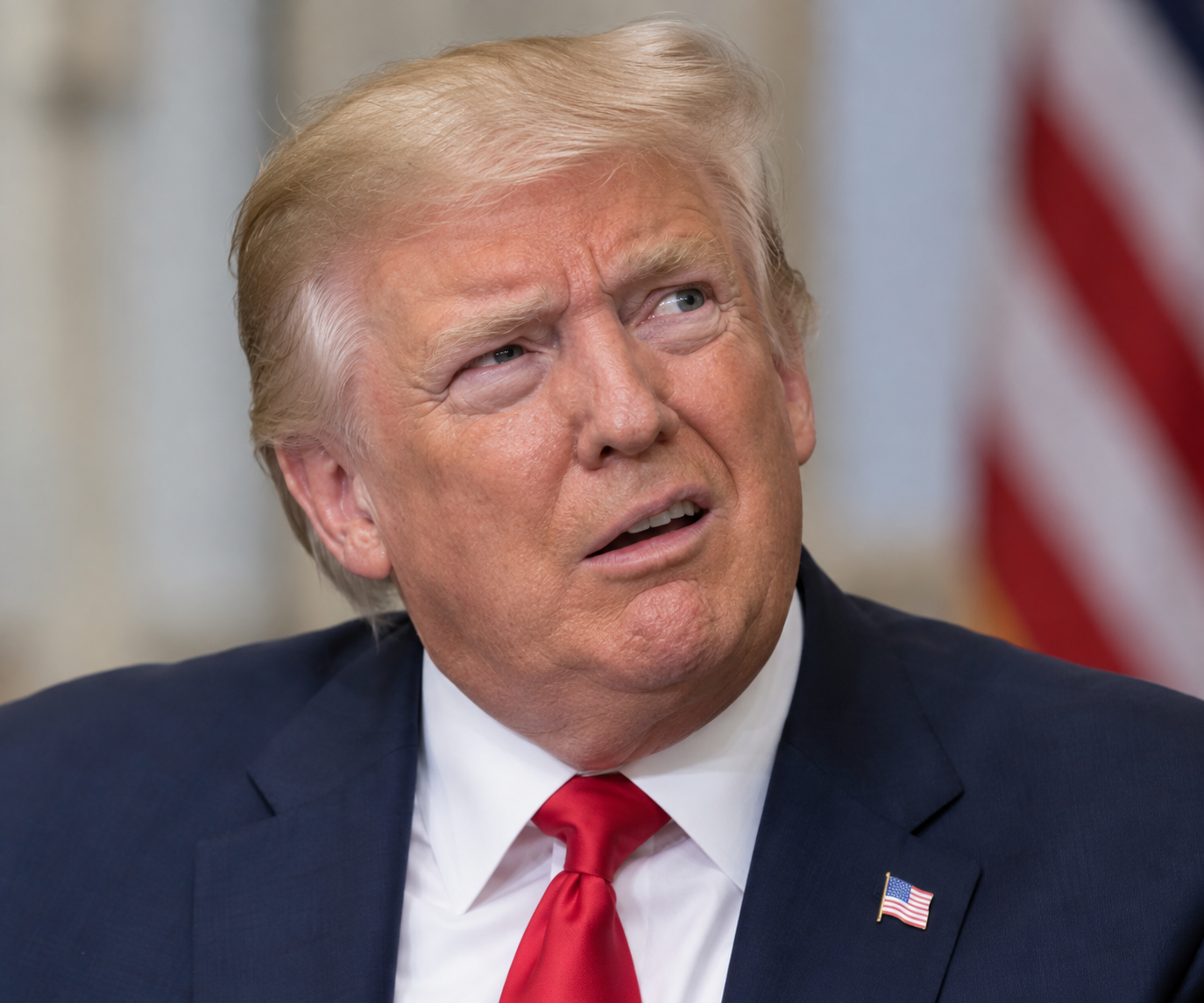
Editorial illustrationThe president inherited a steep rise in living costs, but prices have climbed further. His description of Biden-era inflation as the highest in US history is also false.
US consumer prices were 6.8% higher in September 2026 than in December 2024, the last full month before Donald Trump returned to office. That broad increase contradicts his claim that he is bringing prices down. [3]
In a Truth Social post dated 19 October 2026 in the Trump’s Truth archive, the president blamed Democrats for an affordability crisis and the “Highest Inflation in History”. He said he was “bringing the prices down” and dismissed the criticism as a “Fake News CON JOB”. [1]
The latest Bureau of Labor Statistics figures, published on 14 October, show prices rising faster: annual inflation increased from 3.4% in August to 3.7% in September. Prices rose 0.6% over the month, seasonally adjusted. Petrol prices jumped 9.1%, accounting for more than half that monthly increase. [2]
There have been genuine price falls. Groceries became 0.1% cheaper in September, and the overall index fell 0.4% in June, both on seasonally adjusted figures. But those declines did not produce a sustained fall in the broad price level. [2] [3]
The post repeats an argument Trump made at a campaign rally in Bullhead City, Arizona, on 14 October, where he blamed Democrats for high costs, claimed prices were falling and urged voters to support Republicans in the 3 November midterm elections. [10]
Democratic attention to living costs also predates his return. At a campaign speech in Raleigh on 16 August 2024, then vice-president and presidential candidate Kamala Harris explicitly focused on “lowering the cost of living”, discussing food, medicines and housing. That earlier campaign does not fit the suggestion that affordability became a Democratic concern only after Trump took office. [9]
The steep price increases Trump inherited are measurable. The consumer price index rose 21.4% between January 2021 and January 2025, based on the monthly averages. That establishes a substantial accumulated increase in costs, though the timing alone does not establish which policies caused it.
12 listed sources · explore evidence, limitations and provenance.
Sign in to give this article a thumbs up or down.
Private test discussion. Comments are readers’ views and are not yet automatically fact-checked. Editing is available for 60 seconds after posting.
Ask your question with @newsmadeclear or @nmc. You may receive 5 starter credits once after checks on your confirmed email and browser. The offer is once per person; extra accounts do not entitle you to another bonus. There is no monthly refill. Previous balances remain. A question costs 1 credit, including additional research you permit. A source you provide that demonstrably improves the article earns 5 credits. If your question helps Astra find the missing source and improve the article, you receive 1 credit back.
Sign in with a confirmed reader account and choose a username to read comments and participate.
Sorting applies to top-level comments; replies remain oldest first. New comments and likes can change the order. Refresh for the current ranking.
Loading comments…
Interested in advertising with News Made Clear? Explore our pilot.
His historical inflation claim is false. Annual consumer-price inflation peaked at 9.1% under Joe Biden in June 2022. The same official historical series shows a much higher rate of approximately 14.8% in March 1980. [3] [4]
By December 2024, before Trump returned, annual inflation had already fallen to 2.9%. The distinction matters: lower inflation means prices are rising more slowly, not that earlier increases have been reversed. [3]
Trump offered no statistical yardstick for his separate claim to have created the “Greatest Economy”. At the 14 October rally, he applied similar praise to his first term. On annual growth adjusted for inflation, even its pre-pandemic years were not record-breaking: growth ranged from 2.5% to 3.0% in 2017–19, compared with 4.8% in 1999. That is one measure of economic performance, rather than a complete ranking. [1] [6] [10]
Economic research supports pandemic spending as one contributor to inflation, but not an exclusively Democratic explanation. A March 2022 study published by the San Francisco Federal Reserve estimated that US pandemic income transfers may have added about three percentage points to core inflation by late 2021, compared with a more modest support response. Its analysis covered assistance in 2020 and 2021, including the CARES Act under Trump and the American Rescue Plan under Biden, without dividing the contribution between presidents. It also described worldwide supply-chain disruptions and changes in spending patterns. The authors stressed considerable uncertainty and noted that other models produced smaller estimates. [7]
Research published by the New York Fed on 6 October 2026 identifies price pressures from Trump’s own trade policies. Mary Amiti, Sebastian Heise and David Weinstein estimated that the 2025–26 tariffs contributed 2.9 percentage points to annual inflation across 67 non-oil consumer-goods categories by February 2026. That estimate excludes services and holds economy-wide factors fixed; it is not a contribution to the overall headline inflation rate. Their model projected a fading inflation effect while leaving prices above the path they would have followed without tariffs. [8]
The Associated Press linked recent energy-price pressure to the Iran war. Trump himself acknowledged that connection at the 14 October rally, saying, “I knew gasoline would go high”, while adding that he had expected a bigger increase. [12] [10]
The latest pay figures show a continuing squeeze. Inflation-adjusted average hourly earnings for workers on private non-farm payrolls fell 0.7% over the year to September; average weekly earnings fell 0.1%, according to preliminary, seasonally adjusted BLS figures. An average hour’s pay was buying less than a year earlier—even as Trump claimed prices were coming down. [5]