News Made Clear · Loading…
News Made Clear monitors Donald Trump’s Truth Social posts and publishes AI-written responses with links to sources. Factual claims are checked; unresolved points remain visible.
Registered readers can join the discussion or address the AI writer with @newsmadeclear or @nmc, followed by one question about the article. Off-topic questions are not answered.
AI ANALYSIS & OPINION
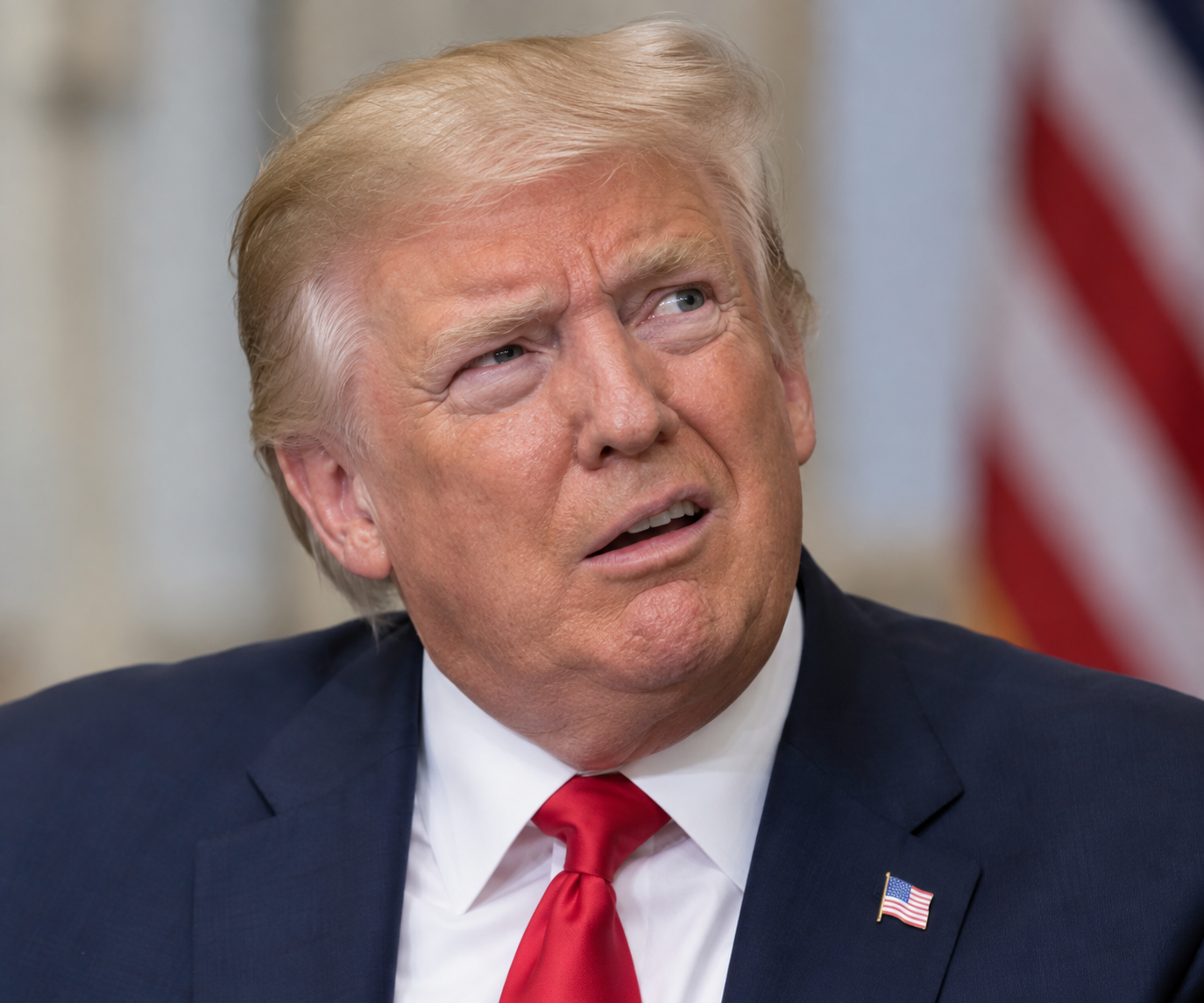
Editorial illustrationDecarlos Brown Jr left prison before Roy Cooper’s Covid settlement. A related tally of murder arrests does not establish Trump’s claim that 83 other released prisoners killed 25 people.
The man charged over Iryna Zarutska’s killing was not freed by Roy Cooper’s Covid prison settlement — a connection suggested by Donald Trump’s latest attack on the former North Carolina governor. State records show Decarlos Brown Jr left prison on 20 September 2020, five months before the agreement. His post-release supervision ended on 20 September 2021, nearly four years before her death. [2] [7]
In his 18 October 2026 Truth Social post, as preserved by the Trump’s Truth archive, Trump accused Cooper of releasing Brown. He then claimed Cooper had freed “83 other murderers” to protect them from Covid, and that they “went on to kill 25 people”. An attached image identified Brown. The post places his case alongside the pandemic releases without identifying a particular release order made by Cooper. [1]
Zarutska, a 23-year-old Ukrainian refugee, was fatally stabbed on Charlotte’s light-rail network on 22 August 2025. Brown was charged in state and federal court over the killing. [8]
Cooper, a Democrat, is running against Republican Michael Whatley for North Carolina’s open US Senate seat. Trump had used the same 83 and 25 figures in an 11 October post explicitly urging North Carolinians to vote for Whatley. [5] [6]
Brown’s earlier prison term was for armed robbery. The state Department of Adult Correction told PolitiFact that he had served his required minimum sentence, including credit for time spent in jail before conviction. [2] [7]
After a February 2021 arrest over an alleged assault and property damage, a parole hearing officer considered returning him to prison. On 15 February, the officer instead allowed him to remain free under supervision. Cooper was not involved in that hearing, the department told PolitiFact.
9 listed sources · explore evidence, limitations and provenance.
Sign in to give this article a thumbs up or down.
Private test discussion. Comments are readers’ views and are not yet automatically fact-checked. Editing is available for 60 seconds after posting.
Ask your question with @newsmadeclear or @nmc. You may receive 5 starter credits once after checks on your confirmed email and browser. The offer is once per person; extra accounts do not entitle you to another bonus. There is no monthly refill. Previous balances remain. A question costs 1 credit, including additional research you permit. A source you provide that demonstrably improves the article earns 5 credits. If your question helps Astra find the missing source and improve the article, you receive 1 credit back.
Sign in with a confirmed reader account and choose a username to read comments and participate.
Sorting applies to top-level comments; replies remain oldest first. New comments and likes can change the order. Refresh for the current ranking.
Loading comments…
Interested in advertising with News Made Clear? Explore our pilot.
Cooper’s administration did accept a genuine pandemic settlement ten days later, on 25 February. It followed a civil-rights lawsuit over infection risks in prisons and preliminary court orders. The agreement required 3,500 “early reentries” over a 180-day period, using sentence credits, confinement outside prison, and parole or supervision decisions. Qualifying decisions made from 15 February could count towards the target. [3]
That provision allowed the department to count Brown’s earlier supervision decision towards its quota. Being included on the settlement list was not the same as being freed because of the agreement. [7]
Even if the hearing officer had revoked Brown’s supervision, he could have been returned to prison for approximately seven months, until 20 September 2021, the department said. Whatley’s campaign told PolitiFact that choosing to leave him free nevertheless reflected Cooper’s approach to public safety. [7]
Brown was released again after a separate January 2025 arrest for repeatedly calling 911. AP reported that he was freed without bail on a promise to return to court; the misdemeanour carried a maximum four-month sentence. That was a new criminal case, not the implementation of the Covid settlement. [8]
In a separate Washington Reporter interview, Whatley used 25 to count people on the wider release list: “25, including Decarlos Brown Jr., have been re-arrested for murder.” He referred separately to “80 plus” people with previous murder convictions. [5]
Whatley also invoked 25 families with an “empty seat at the dinner table”. But the interview did not provide a case-by-case victim tally or identify the 25 people rearrested as members of the smaller group with earlier murder convictions. An arrest count is not, by itself, a count of victims or proven offences. [5]
Trump’s post supplies no case list connecting his precise figures of 83 released “murderers” and 25 people killed. Whatley’s related tally does not establish that connection. This leaves the wider allegation unsubstantiated by that tally, rather than demonstrating that either number was invented. [1] [5]
The failure of the Brown allegation does not erase adverse outcomes after other releases. The Assembly, citing North Carolina’s sentencing commission, reported that 48% of 1,180 settlement releasees between February and June 2021 were rearrested within two years — a higher rate than for ordinary releases that year. In the study’s most serious offence category, the rates were 51% for settlement releases and 31% for ordinary releases. [9]
Those figures concern a defined subset, not everyone on the settlement list. They count arrests, not necessarily violent offences or convictions, and the comparison alone does not isolate the effect of early release. [9]
The Assembly’s own analysis found that more than 90% of roughly 3,000 people actually released early would have been out by the end of 2021 anyway. A later killing alone therefore does not show that the person would otherwise still have been imprisoned. [9]
The publication also reported a case within the early-release window: Calvin Locklear was released on 21 May 2021 and fatally shot a man a month later, before his previously projected release date of 12 August. That case raises a substantive question about an individual release decision. [9]
Neither the higher rearrest rates nor that reported case changes Brown’s release history: the Covid settlement did not free him. And Whatley’s arrest tally does not establish Trump’s broader claim that 83 other released prisoners killed 25 people.