Bangladesh garment association puts protest-related production losses at $428m
Bangladesh’s garment manufacturers’ association says 317 factories reported $428 million in production losses during 1–18 November. The figure is based on factories’ reported free-on-board value, rather than an independently verified measure of lost income.
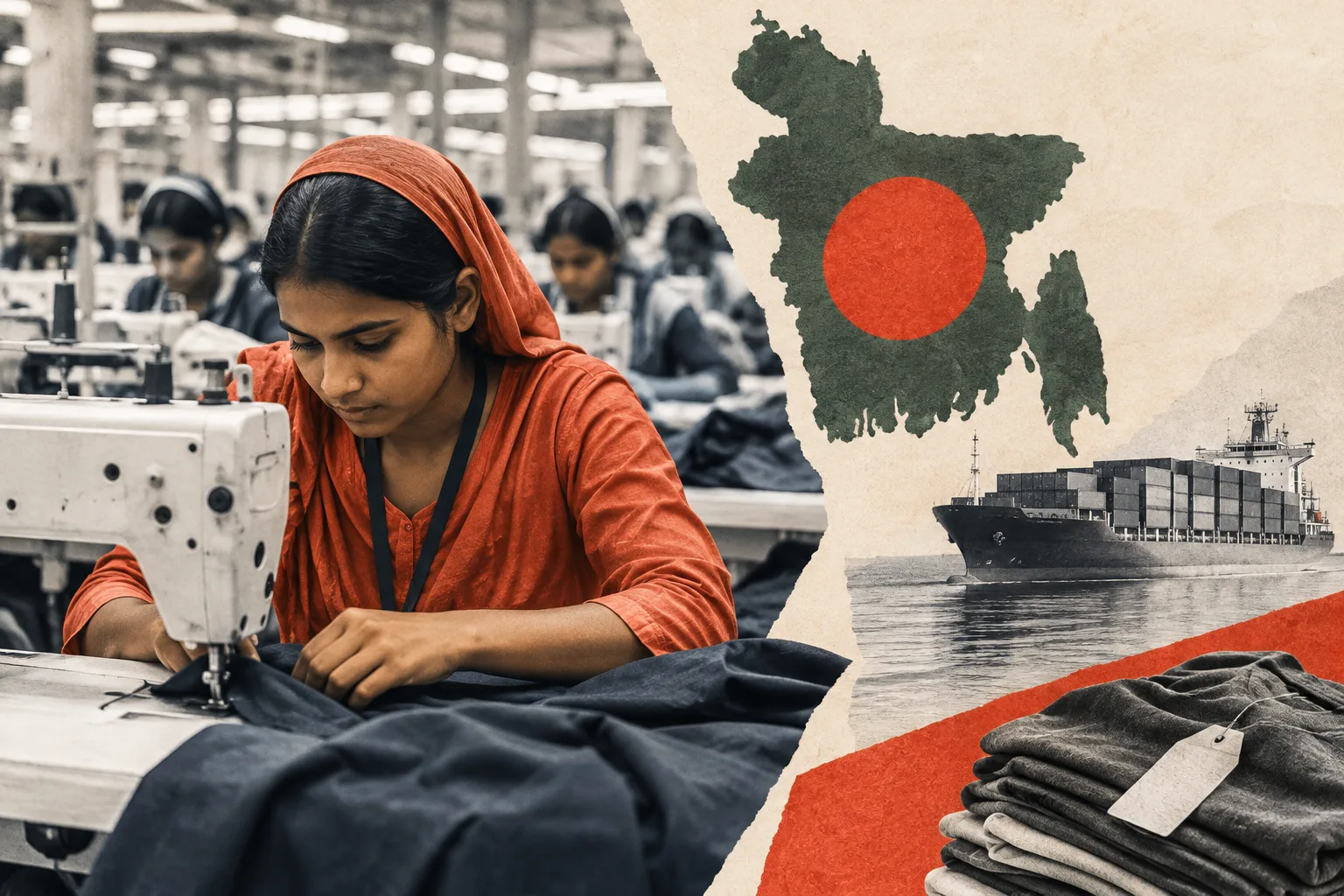
Bangladesh’s garment manufacturers’ association says 317 factories reported production losses worth $428 million in the first 18 days of November, as protests over pay disrupted the country’s major export industry. The figure is the factories’ reported free-on-board (FOB) value, not a separately verified measure of lost income.
The Bangladesh Garment Manufacturers and Exporters Association (BGMEA) said the estimate came from an emergency survey of member factories. The 317 respondents reported suspending production for between one and 16 days during the period. The association said more than 600 of its member factories had been affected, so the survey covered only part of the disruption.
The association also said participating factories reported that buyers had shifted 59 million garments from confirmed orders to other countries, representing $254 million in market value. It described the survey as a partial picture and said unrest was continuing after the survey period. These figures are industry-association claims; the underlying factory submissions and calculation are not detailed in the report.
Independent reporting supports the existence of substantial disruption, though not the financial estimate. Reuters reported that more than 100 factories in Ashulia suspended operations on 5 November. AP later reported recurring production disruption and the closure of hundreds of factories during the protests. Those accounts cover different dates and areas and do not verify the BGMEA’s dollar figures.
The protests grew out of workers’ demand for a monthly minimum wage of 30,000 taka, up from 12,500 taka, according to Reuters. The wage board had agreed to introduce a revised pay structure from December, but had not yet set the size of any increase. H&M told Reuters on 5 November that some factories had closed temporarily, but that it had not experienced major supply-chain disruption at that point.
Sign in to give this article a thumbs up or down.
From the discussion
Private test discussion. Comments are readers’ views and are not yet automatically fact-checked. Editing is available for 60 seconds after posting.
Sign in with a confirmed reader account and choose a username to read comments and participate.
Sorting applies to top-level comments; replies remain oldest first. New comments and likes can change the order. Refresh for the current ranking.
Loading comments…