BBC visits Ukraine’s underground battle in gas pipeline near Kupyansk
A BBC visit to Ukrainian positions near Kupyansk shows how troops are using a gas pipeline for shelter and movement. Fighting continues around the city despite Ukraine’s reported progress underground.
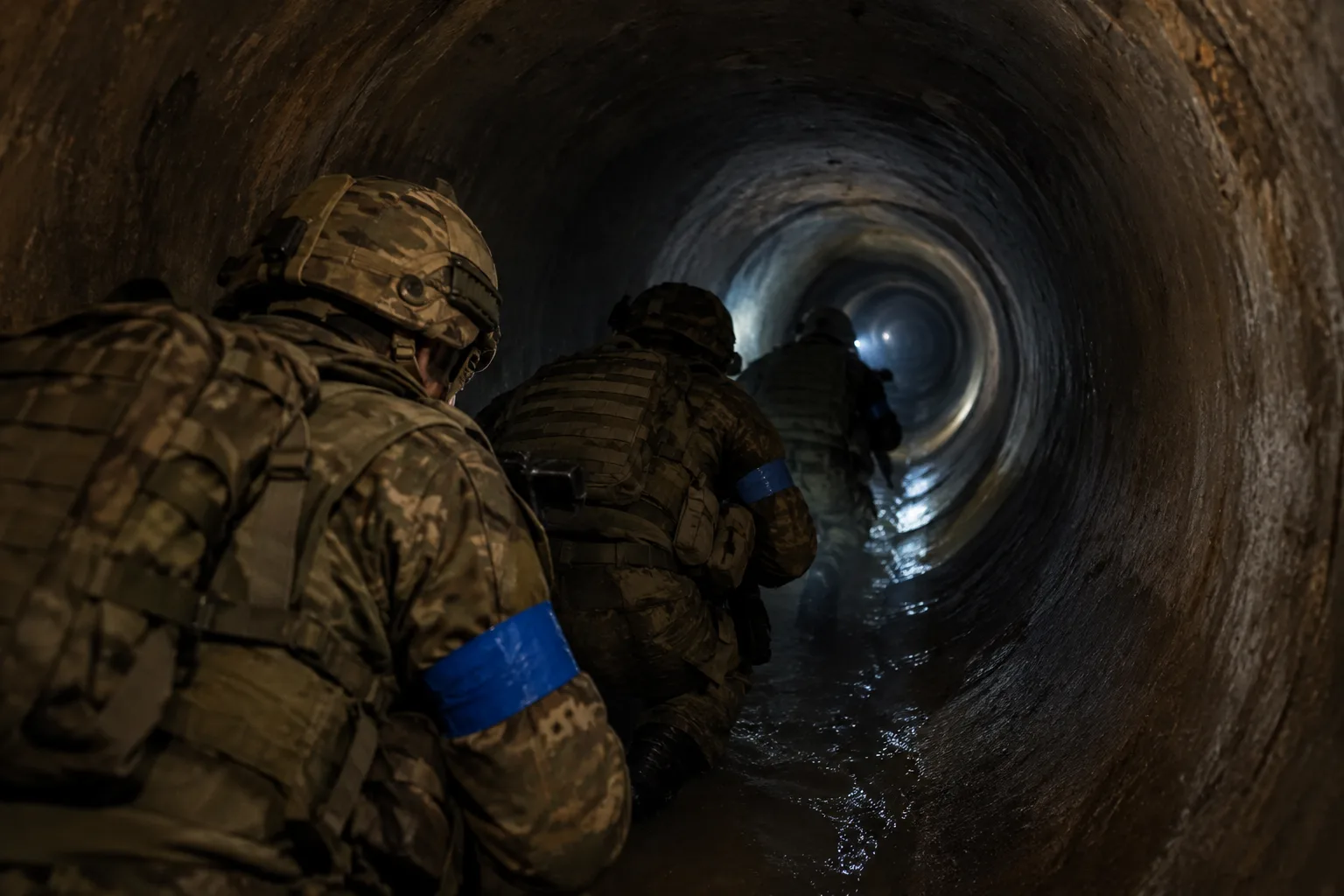
Ukrainian troops have been fighting Russian forces inside an old Soviet-era gas pipeline near Kupyansk, a route that offers shelter from the drones making movement above ground dangerous.
In a report published on 18 November, the BBC described a visit to Ukrainian positions inside the pipe and said Ukrainian forces had advanced 15km along it since Operation Veles began in April.
On 22 October, Ukraine’s National Guard Khartiia Corps said its forces had advanced more than 15km through underground infrastructure. A corps spokesman separately gave a range of 10 to 15km that day. The figures describe an operation lasting months, rather than a new 15km advance. The length of pipe also does not, by itself, establish how much territory changed hands above ground.
The BBC travelled for 40 minutes on an electric cart used to move troops and supplies through the pipe. Its destination was an underground position where Ukrainian soldiers stored ammunition and equipment. The pipeline is just over a metre wide, leaving little room to move.
A soldier using the call sign Vovochka told the BBC it was more comfortable inside the pipe because “drones don't fly here, and neither do artillery shells or glide bombs”. But Ukrainian troops also described fighting inside it, clearing water and Russian barricades. One soldier, Chyzh, said gunfire could ricochet unpredictably in the confined space.
The BBC reported that Russian forces first used the pipeline to infiltrate Kupyansk in September 2025. Ukraine says it killed more than 100 Russian soldiers and captured 30 during the operation.
The BBC said both sides had fortified positions inside the pipeline. From a control room above ground, its journalists watched Ukrainian drones target what they described as another Russian attempt to outflank Ukrainian troops.
On 26 October, a Khartiia soldier told Ukrainian broadcaster Suspilne that the operation had deprived Russia of an underground infiltration route, but that attempts to enter the city and attack Ukrainian positions continued. Two days later, Ukrainian military spokesman Viktor Trehubov said troops from both countries remained in Kupyansk and Russian soldiers had established positions in the north.
On 17 November, the Institute for the Study of War cited Russian sources describing continuing offensives in the Kupyansk direction, while saying it had seen no evidence of Russian advances there.
Sign in to give this article a thumbs up or down.
From the discussion
Private test discussion. Comments are readers’ views and are not yet automatically fact-checked. Editing is available for 60 seconds after posting.
Sign in with a confirmed reader account and choose a username to read comments and participate.
Sorting applies to top-level comments; replies remain oldest first. New comments and likes can change the order. Refresh for the current ranking.
Loading comments…