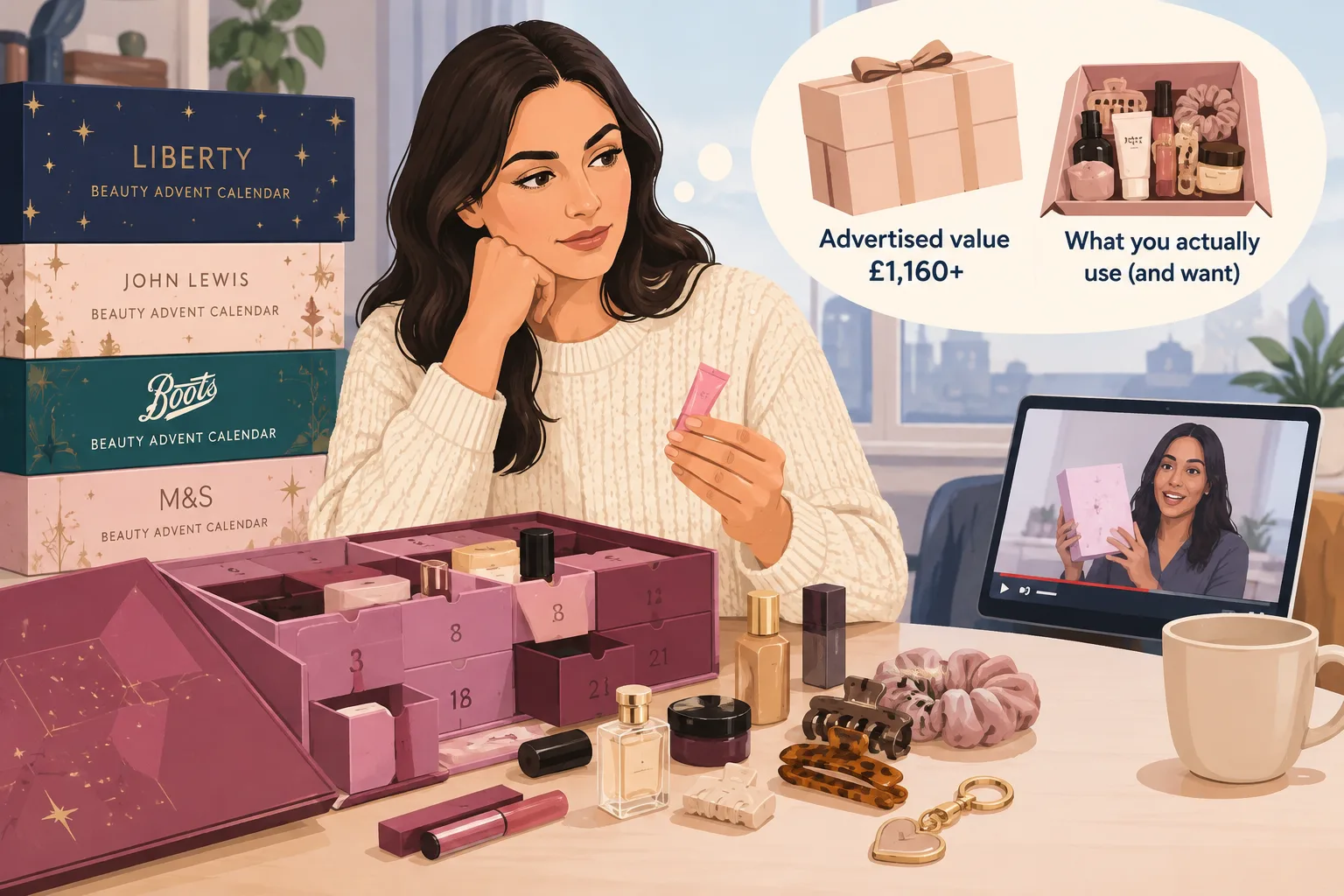
Beauty advent calendars promise big savings, but value depends on what buyers use
Beauty advent calendars promise hundreds of pounds’ worth of products for prices reaching £285, but their real value depends on what buyers will use. A refund offer for Kim Kardashian’s criticised Skims calendar has brought that distinction into focus.
Review information is loading.
Beauty advent calendars costing up to £285 promise products worth several times their price, but the value depends on whether buyers actually want and use what is inside. A recent backlash over Kim Kardashian’s $148 Skims calendar has sharpened questions about the gap between advertised value and customers’ experience.
Skims offered refunds to all customers after complaints about the calendar’s contents, which included hair clips, scrunchies and keychains. Some buyers likened the items to things found down the back of a sofa.
Retailers’ headline valuations can look generous. Liberty’s 2026 calendar costs £285 and claims a value of more than £1,300; John Lewis charges £250 for a calendar valued at £1,160. Boots lists its £150 calendar at £706.99, while Marks & Spencer’s £75 version is now on offer for £56 and claims a value of £450.
Those figures reflect the stated value of all the products, not how much a particular customer would otherwise spend. Heather Widdows, a philosophy professor and beauty expert, says buyers are unlikely to use everything in a calendar and therefore may not get their money’s worth.
For some customers, the appeal is trying products in smaller sizes rather than buying full-size versions. Fashion journalist Priya Raj says that is one reason she likes them, though she rarely buys a calendar because only a few items tend to interest her.
Others judge value by the products they keep. Julia, a 39-year-old commercial manager, says she has bought fragrance calendars when they included scents she wanted. She paid £160 for one last year and sold unwanted products; this year she has spent £99 on a John Lewis fragrance calendar and joined a Facebook group to trade items she does not want.
The market has grown alongside the marketing, including warnings that popular calendars may sell out and influencers’ unboxing videos. Ipsos data cited by the BBC suggests beauty products account for about 15% of advent calendars sold, with 18- to 34-year-olds particularly willing to spend on them.
The practical test is less the total retail value than whether the contents suit the buyer. As podcaster Rhea Somaiya puts it, unwanted products can turn the daily surprise into clutter rather than enjoyment.
Sign in to give this article a thumbs up or down.
About this discussion and AI questions
Private test discussion. Comments are readers’ views and are not yet automatically fact-checked. Editing is available for 60 seconds after posting.
Sign in with a confirmed reader account and choose a username to read comments and participate.
Sorting applies to top-level comments; replies remain oldest first. New comments and likes can change the order. Refresh for the current ranking.
Loading comments…