Belfast coroner’s inquiry finds Iron Age woman in Northern Ireland bog was deliberately decapitated
A Belfast coroner’s investigation found that an Iron Age woman whose remains were unearthed near Bellaghy in 2023 was deliberately decapitated. Researchers say her death may have been ritualistic, but its motive remains unknown.
Review information is loading.
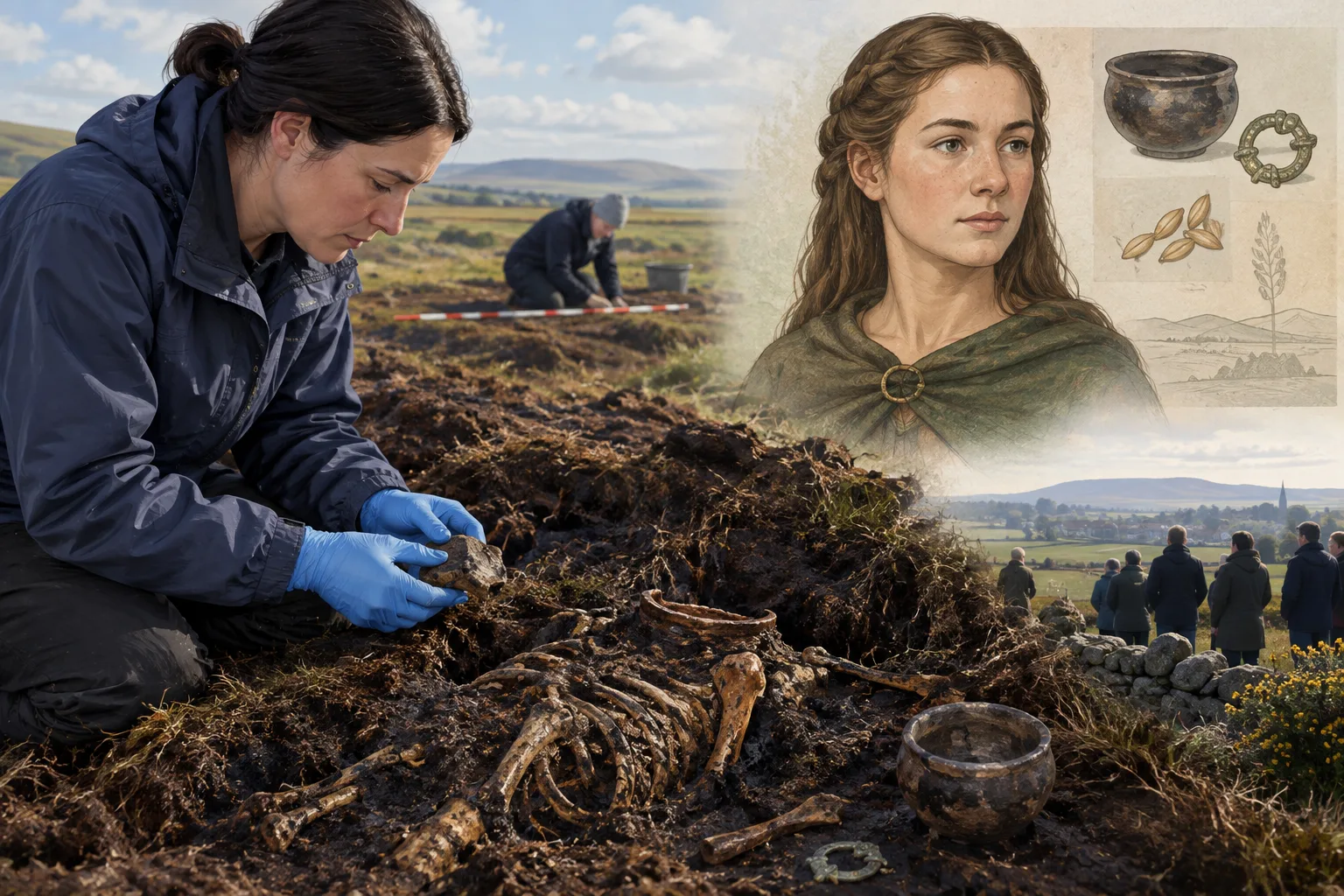
A coroner’s investigation in Belfast has concluded that the remains of an Iron Age woman found in a Northern Ireland bog show she was deliberately decapitated more than 2,000 years ago. The inquiry brought archaeological and scientific findings together to shed light on her death, although it could not establish why she was killed.
The woman, known as the Ballymacombs More Woman, was found near Bellaghy, County Londonderry, in October 2023. An examination identified cut marks on her neck; no skull was recovered. Niamh Baker, curator of archaeology at National Museums NI, said the marks suggested she had been intentionally decapitated in the bog.
Researchers estimate she was between 15 and 22 when she died. Analysis of her remains and objects found nearby has also offered clues about her diet, health, appearance and the world she lived in.
The evidence suggests her death may have been ritualistic or a sacrifice, but the circumstances remain uncertain. Baker said it could fit a wider pattern of violent deaths among Iron Age remains in north-west Europe, some associated with kingship or sovereignty. She also raised the possibility of an agricultural or weather-related motive, while stressing that the reason was unknown.
Hannah Crowdy, head of curatorial at National Museums NI, said she believed it was the first time a museum had held a coroner’s investigation into the cause of death of an ancient individual. Coroner Joe McCrisken said the hearing had answered the traditional questions of who the deceased was, when and where she died, and how she came by her death — but that some mystery remained.
The remains will not be displayed when the museum creates an exhibition about the discovery. Crowdy said the museum was considering ways to tell the woman’s story through material such as illustration and poetry. People in Bellaghy have named her Áine; a local historical society representative said residents felt she was “one of our own” and wanted to understand how she lived and died.
Sign in to give this article a thumbs up or down.
About this discussion and AI questions
Private test discussion. Comments are readers’ views and are not yet automatically fact-checked. Editing is available for 60 seconds after posting.
Sign in with a confirmed reader account and choose a username to read comments and participate.
Sorting applies to top-level comments; replies remain oldest first. New comments and likes can change the order. Refresh for the current ranking.
Loading comments…