Burnham’s influencer strategy faces scrutiny after Downing Street video row
A video by influencer Max Balegde, filmed outside Downing Street and later deleted, has renewed debate over Andy Burnham’s social media strategy and whether influencer access can match the scrutiny of journalism.
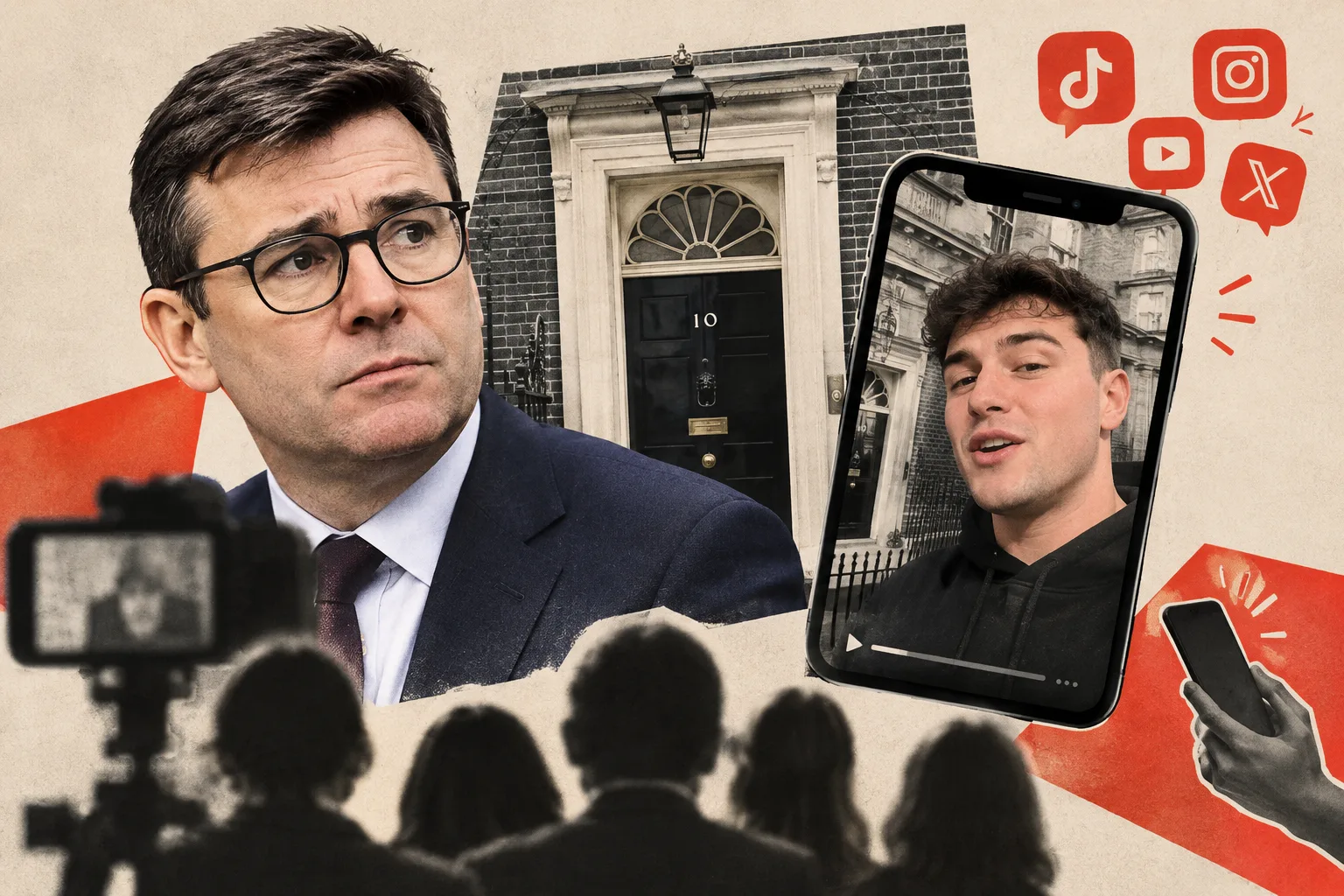
A video filmed outside Downing Street has turned Prime Minister Andy Burnham’s use of social media influencers into a test of how the government can reach new audiences without sacrificing scrutiny.
The clip, posted by TV presenter and social media personality Max Balegde, showed him miming to explicit lyrics. Downing Street called the video “clearly not acceptable”; Balegde deleted it. The incident prompted criticism from Burnham’s political opponents and renewed questions about who gets access to the prime minister.
Burnham has made social media a prominent part of his communications strategy, regularly recording content and working with influencers. BBC political editor Laura Kuenssberg describes his online operation as on a larger scale than those of his predecessors, reflecting the growth of digital media. Downing Street says he is not avoiding conventional scrutiny: in the fortnight before the BBC report, it pointed to five broadcast interviews and two press conferences, as well as 113 questions answered in Parliament since Monday.
The distinction at issue is not simply between old and new media. Content creators can help politicians reach audiences, but their role is not the same as journalism. Some creators may accept restrictions journalists would reject: one told the BBC they had been required to submit questions to a minister in advance. A senior political journalist warned that the public loses out if influencers receive access without comparable scrutiny.
There is also a risk that official or paid content can look much like independent coverage while people scroll online. That makes the source and conditions of a video important, not just how many people see it.
A prominent content creator told the BBC that Downing Street should involve creators, but questioned the selection of influencers and said journalistic creators with large, engaged audiences seemed to be missing. The creator raised the possibility that they might be excluded because they were more likely to hold the prime minister to account. That was a concern, not an established explanation for how the list was drawn up.
Burnham’s team has no intention of abandoning its approach, Kuenssberg reports. The episode has nevertheless drawn attention to the need to vet collaborators and keep access to challenging questions alongside the pursuit of online reach.
Sign in to give this article a thumbs up or down.
From the discussion
Private test discussion. Comments are readers’ views and are not yet automatically fact-checked. Editing is available for 60 seconds after posting.
Sign in with a confirmed reader account and choose a username to read comments and participate.
Sorting applies to top-level comments; replies remain oldest first. New comments and likes can change the order. Refresh for the current ranking.
Loading comments…