News Made Clear · Loading…
Category
Regions
Continents
Topics
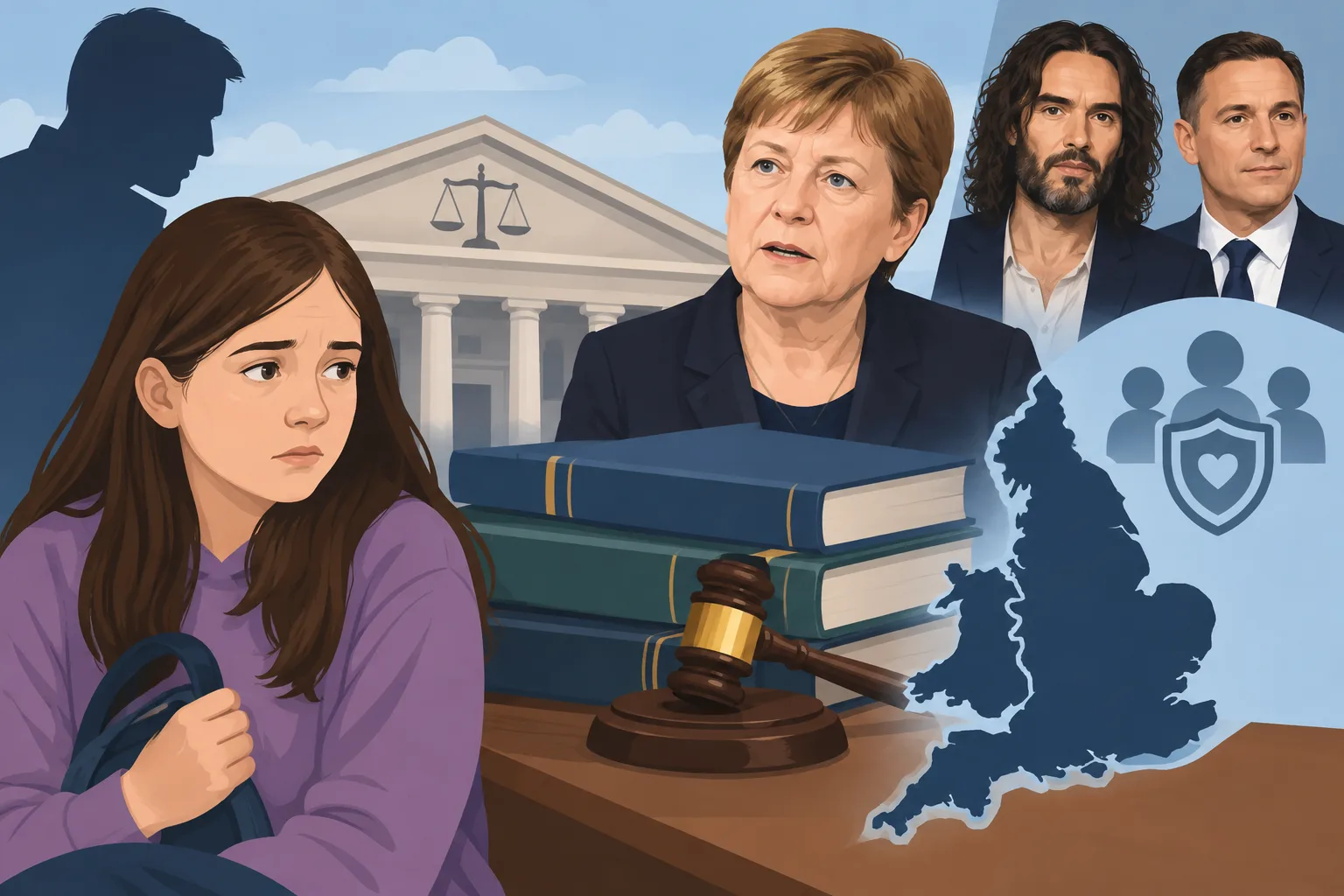
England and Wales grooming laws: what offences exist and what changes are being urged?
Loading statistics…
England and Wales have several offences covering child grooming, and recorded grooming prosecutions have risen. But campaigners and Baroness Louise Casey say gaps remain in the law and in how some cases are charged.
Review information is loading.
England and Wales already have several offences that cover different forms of child sexual grooming, but campaigners and Baroness Louise Casey say parts of the law and its application still need attention. The debate has returned following comedian Russell Brand’s conviction for rape and sexual assault and separate allegations of sexual misconduct against David Walliams, who denies being a sexual predator and is not under criminal investigation.
In general, grooming describes a process in which an adult builds trust with a child to prepare for sexual activity. It is not, however, a single offence with one legal definition covering every situation.
Since 2003, it has been a crime for an adult to meet or communicate with someone under 16 and then intentionally meet, or travel to meet, them intending to commit a sexual offence. The maximum sentence is 10 years. Other offences cover arranging or facilitating child sex offences, sexual communications with a child, making a child watch a sexual act, and encouraging a child under 13 to take part in one.
The offences are used regularly, according to analysis by the Centre of Expertise on Child Sexual Abuse. Police recorded 7,197 sexual grooming offences in England and Wales in 2024-25. Nearly a third resulted in a charge, and just over 2,000 defendants were convicted in 2024. The rate at which suspects were prosecuted for grooming has more than doubled in seven years, the centre’s report says.
A separate offence covers abusing a position of trust for a sexual purpose with a child up to the age of 18, including in a care setting. Since June, evidence of grooming has also been a factor judges must consider when sentencing a child sex offender, and can increase the sentence.
Calls for further changes
ThirtyOne:Eight, a charity consultancy working on safeguarding in religious settings, has argued that intending to groom a child should itself be a standalone crime, whether or not sexual abuse follows.
Casey’s national audit of grooming-gang abuse raised a different concern: she said adults had sometimes been charged with the lesser offence of sexual activity with a child rather than rape because someone believed the child had consented. Casey has called for adults who have sex with 13-, 14- and 15-year-olds to be charged automatically with rape, as she says is the case in France. She told the BBC she had received an assurance from ministers that the gap would be closed, but said her audit’s recommendations were still in progress. The Ministry of Justice was approached for comment.
There is also debate about the age of consent, which is 16. One proposal is a “staggered” age of consent that would prevent adults over 18 from having sex with 16- and 17-year-olds. A woman who made allegations against Brand raised the idea on BBC Radio 4’s Woman’s Hour in 2023, arguing that teenagers should be able to have relationships with people their own age.
How do we know?
1 listed sources · explore evidence, limitations and provenance.
Sign in to give this article a thumbs up or down.
About this discussion and AI questions
Private test discussion. Comments are readers’ views and are not yet automatically fact-checked. Editing is available for 60 seconds after posting.
Sign in with a confirmed reader account and choose a username to read comments and participate.
Sorting applies to top-level comments; replies remain oldest first. New comments and likes can change the order. Refresh for the current ranking.
Loading comments…