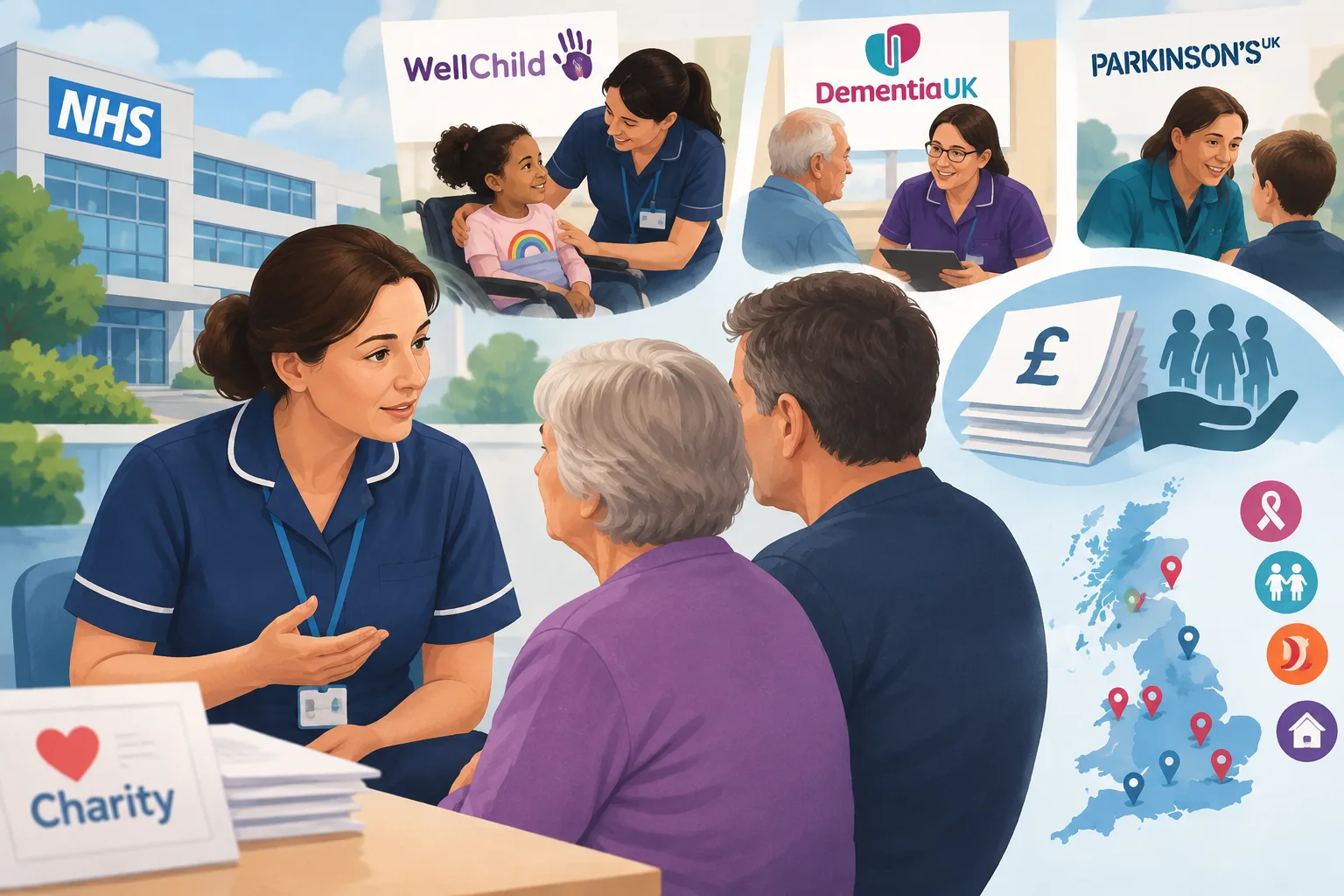
Charities fill NHS gaps as funding pressures risk unequal patient support
Charities are taking on a growing role in NHS care, but providers say stretched funding is leaving them to subsidise services. The uneven ability to raise donations may also contribute to differences in support between communities and conditions.
Review information is loading.
Charities are increasingly helping deliver NHS services, but some are struggling to meet demand and say they are being asked to plug gaps in stretched public provision. The growth of their role may also leave patients with unequal access to care, depending on where they live and which conditions attract charitable support.
The BBC reports that NHS England spends nearly £2bn a year buying services from the voluntary and not-for-profit sector. NHS charities attached to hospitals and community services raise a further £620m a year, according to NHS Charities Together, which says that represents about 0.3% of the health budget.
The work can provide practical support. Dementia UK funds virtual clinics, where specialist nurse Louise Burns helps patients and families navigate care, including hospital discharge. The charity says its nurses and services are intended to fill gaps in NHS and social care provision.
But charities say funding is becoming harder to secure even as demand rises. Dementia UK’s chief nursing officer, Paul Edwards, said the NHS was asking the charity to fund posts for longer or cover more than half their cost. WellChild said the average caseload for its specialist nurses supporting seriously ill children was 40, against a planned 15, and that one nurse post was not retained this year.
Parkinson’s UK says its funding supports about 70% of specialist nurses in the field. Its chief executive, Caroline Rassell, called it an additional “tax” on people with Parkinson’s, who are among the charity’s main donors, and said nursing care should be a core NHS responsibility.
A 2023 survey by the National Council for Voluntary Organisations found that 71% of health charities said their contracts did not cover the demand for their services. The council says there is no indication the situation has eased. NHS England, meanwhile, says the proportion of its budget spent on voluntary-sector contracts has fallen, but the cash value has risen. It says the government’s 10-year plan aims to build on partnerships with charities.
The funding is not evenly distributed. NHS Charities Together chief executive Ellie Orton acknowledged that large London hospitals and specialist cancer and children’s centres dominate NHS charity fundraising. The Royal Marsden and Great Ormond Street charities together account for nearly a sixth of investment by NHS charities, the BBC reports.
King’s Fund researcher Helen Gilburt says charities can bring expertise and close community links, but their involvement can also create inequalities in funding and support between conditions. Some areas, such as cancer, have well-established charities able to raise large sums; others, including sickle cell disease, have smaller and less-funded charitable sectors.
The BBC also reports concerns that communities with less capacity to give may have fewer hospice services. Nuffield Trust deputy director Sarah Scobie says health literacy and people’s ability to navigate services can also affect access to support. The debate is therefore not simply whether charities add valuable help, but whether essential services can depend on donations that vary between communities and causes.
Sign in to give this article a thumbs up or down.
About this discussion and AI questions
Private test discussion. Comments are readers’ views and are not yet automatically fact-checked. Editing is available for 60 seconds after posting.
Sign in with a confirmed reader account and choose a username to read comments and participate.
Sorting applies to top-level comments; replies remain oldest first. New comments and likes can change the order. Refresh for the current ranking.
Loading comments…