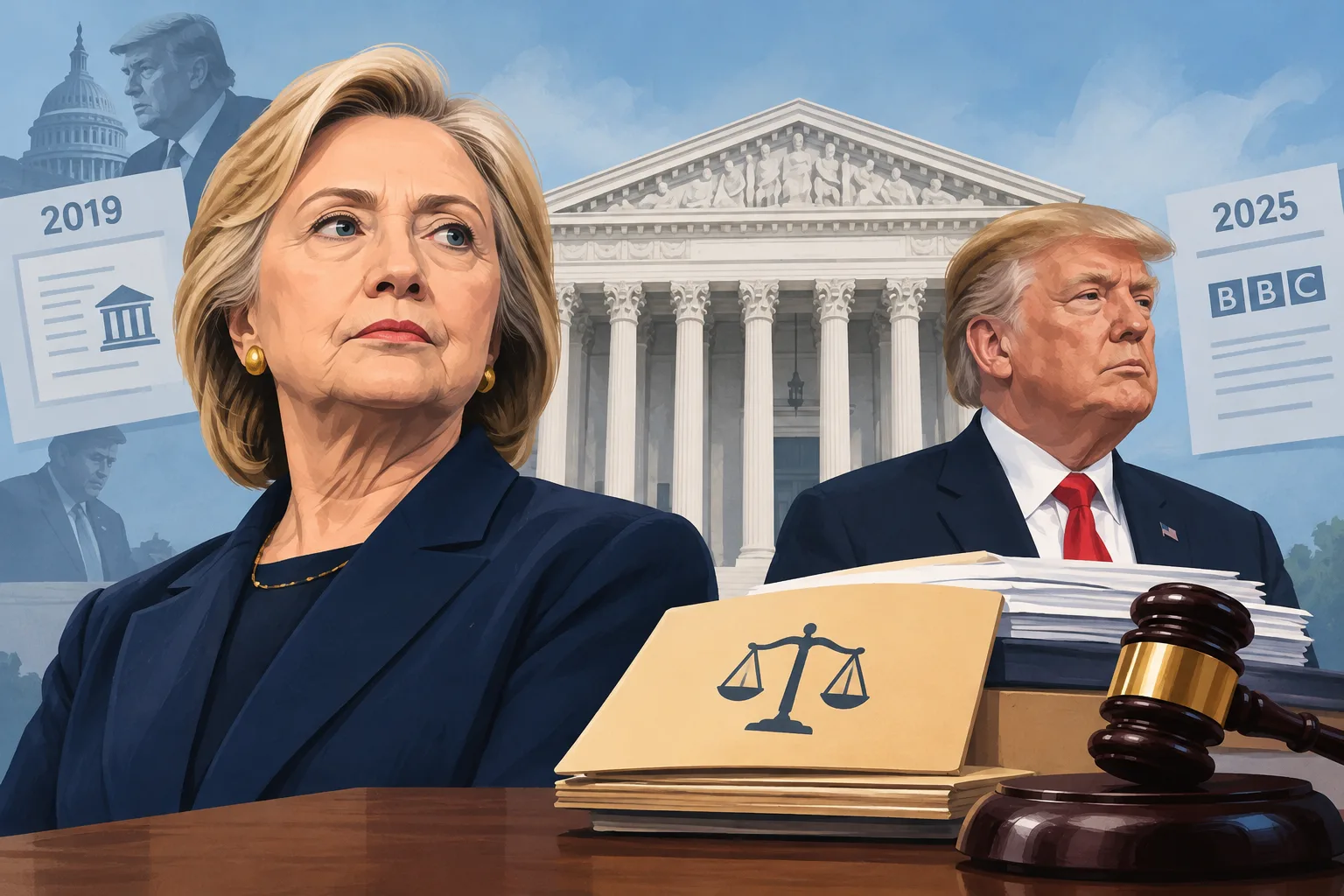
Clinton urges Supreme Court to reject Trump’s bid to revive 2016 election lawsuit
Clinton’s lawyers say Trump’s other lawsuits while in office weaken his argument that presidential duties justified delaying his 2022 case. Lower courts also found problems beyond its timing.
Review information is loading.
Hillary Clinton and other defendants have urged the US Supreme Court to reject Donald Trump’s attempt to revive his lawsuit against them, arguing that the president’s other legal actions undermine his explanation for filing it late.
The case concerns Trump’s allegation that Clinton and others conspired before the 2016 election to spread a false story that his campaign colluded with Russia. He filed it in March 2022, between his two presidential terms. A federal judge dismissed it, and an appeals court upheld the dismissal against Clinton and most of the other defendants.
Trump’s lawyers argue that the demands of his first term led him to defer the suit and that courts should take his presidential duties into account when applying the filing deadline. They distinguish between a president having to defend a private lawsuit and choosing to start one.
In their response filed on 13 November, lawyers for Clinton and other defendants pointed to cases Trump brought in his personal capacity during both terms. In 2019, he challenged a congressional subpoena for financial records held by his accountants, Mazars. In December 2025, during his second term, he sued the BBC for defamation.
Those cases show that Trump initiated other litigation while president. They do not by themselves resolve whether the circumstances of the Clinton case justified extending its deadline. Clinton’s lawyers also say he waited about 14 months after leaving office before filing it.
The appeals court found that the deadline for Trump’s racketeering claims had expired in October 2021, five months before he sued. It rejected his argument for pausing the clock. The trial judge had also found separate legal defects in those claims, concluding that they failed even if filed on time. Clinton’s lawyers argue that extending the deadline would therefore not save the suit.
The dispute over sanctions
Trump’s petition also challenges nearly $938,000 in fees and costs imposed on him, lawyer Alina Habba and her firm. His lawyers say the lower courts improperly treated their argument about presidential duties as evidence of bad faith.
The trial judge did criticise that argument in the sanctions order, alongside other findings. The appeals court called the deadline argument frivolous in one part of its ruling, but upheld the sanctions after setting the deadline arguments aside. It relied instead on the sprawling structure of the complaint and other claims it found frivolous.
The appeals court made one change to the dismissal: it said the claims against British intelligence company Orbis should be dismissed without prejudice because the trial court lacked jurisdiction over it. It also declined to impose additional sanctions for the appeal, finding that Trump had raised some valid arguments.
Clinton’s team initially waived its right to respond to Trump’s Supreme Court petition, but the court requested a response on 27 October. The court’s docket showed no decision on whether to hear the case as of 16 November; requesting a response does not mean the justices have agreed to review it.
Sign in to give this article a thumbs up or down.
About this discussion and AI questions
Private test discussion. Comments are readers’ views and are not yet automatically fact-checked. Editing is available for 60 seconds after posting.
Sign in with a confirmed reader account and choose a username to read comments and participate.
Sorting applies to top-level comments; replies remain oldest first. New comments and likes can change the order. Refresh for the current ranking.
Loading comments…