Covid inquiry criticises care-home protection and prolonged visiting bans
A Covid inquiry says care-home residents were not adequately protected in the pandemic’s early stages, while prolonged visiting restrictions later harmed their health and wellbeing.
Review information is loading.
A Covid inquiry has criticised the UK government’s early response to care homes, saying protection came too late and that infection-control measures later caused avoidable harm to residents. Its sixth report examines the pandemic’s impact on social care across the UK.[1]
More than 43,000 deaths involving Covid were recorded in care homes between March 2020 and July 2022, according to the BBC’s account of the report. Around 500,000 people were living in care homes when the pandemic began, while another million received care at home.[1]
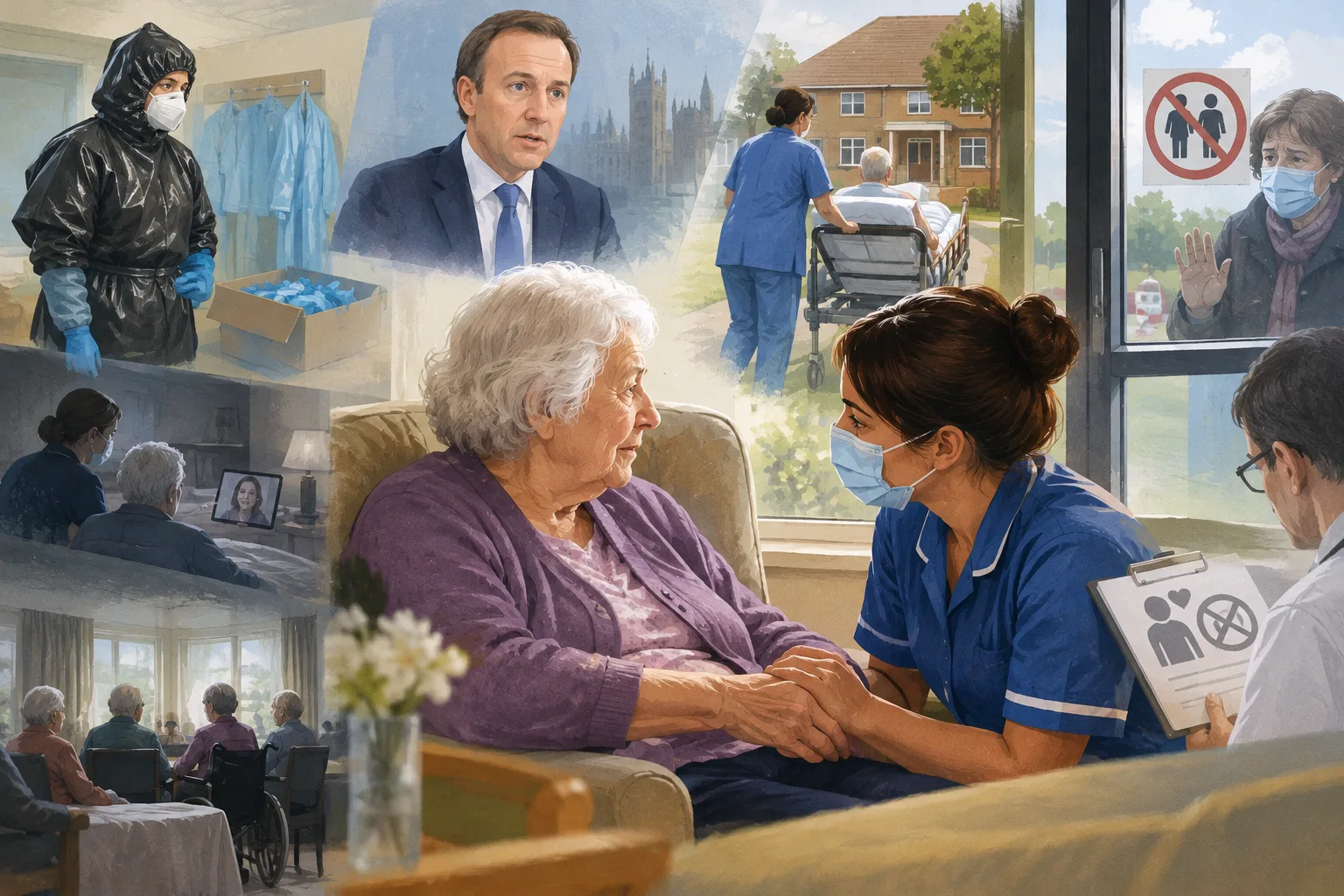
The inquiry rejected the claim, made by England’s then health secretary Matt Hancock, that there had been “a protective ring” around care homes. It described the sector as “something of an afterthought” and highlighted shortages of protective equipment, which left some staff using improvised alternatives such as bin bags and painters’ overalls.[1]
It also criticised the discharge of hospital patients who might have Covid into care homes to free beds. The report said the decision was understandable, but that patients needed to be tested and isolated. Guidance issued in March 2020 in England, Wales and Northern Ireland did not require this, which the inquiry called a significant oversight.[1]
The report said longstanding staff shortages, high turnover and reliance on agency workers weakened the sector’s ability to respond. Financial pressures and the fragmented system of thousands of providers overseen by councils also made the response harder, it said.[1]
Visiting bans were initially a rational precaution, the inquiry acknowledged, but restrictions remained too severe as the pandemic progressed. By September 2020, evidence suggested visitors posed only a “marginal risk”, while staff were considered the main route by which infections entered care homes. Despite national guidance being relaxed, many homes continued to restrict visits, contributing to a decline in residents’ health and wellbeing, the report said.[1]
The inquiry also heard evidence that GPs had imposed blanket “do not attempt cardiopulmonary resuscitation” orders on care-home residents. Such decisions should be made individually, not applied across a group. The BBC reported that records showed orders rising from 16,800 to 26,500 in the first nine months of the pandemic.[1]
Care staff suffered deep distress, the report said. Workers described caring for residents at the end of life while supporting families through video calls; one care home lost half its residents over three weeks.[1]
Sign in to give this article a thumbs up or down.
About this discussion and AI questions
Private test discussion. Comments are readers’ views and are not yet automatically fact-checked. Editing is available for 60 seconds after posting.
Sign in with a confirmed reader account and choose a username to read comments and participate.
Sorting applies to top-level comments; replies remain oldest first. New comments and likes can change the order. Refresh for the current ranking.
Loading comments…