News Made Clear · Loading…
Category
Regions
Continents
Dutch survey finds poorer self-reported health among intensive carers
Loading statistics…
Dutch statistics show that people providing at least eight hours of unpaid care a week are less likely to report good health, with the clearest gap among adults aged 40 to 64. The figures also show higher reported feelings of anxiety or depression among many intensive carers.
Review information is loading.
Adults who provide at least eight hours of unpaid care a week are less likely to describe their health as good than people of the same age who provide less care or none, according to Dutch statistics based on health surveys from 2023 and 2025.
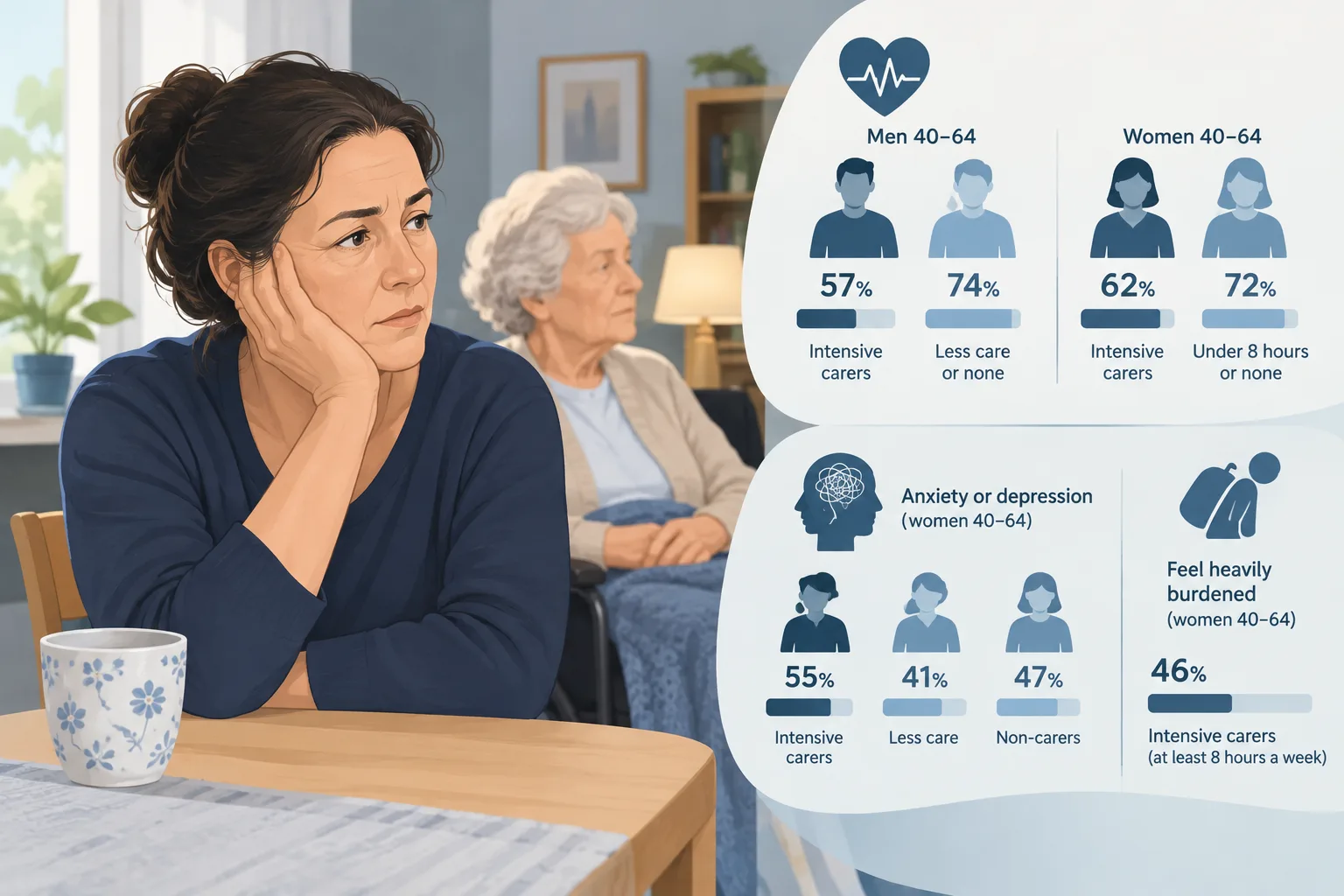
The gap was clearest among people aged 40 to 64. Among men in that age group, 57 per cent of those providing intensive care said they were in good health, compared with 74 per cent of those providing less care or none. For women, the figures were 62 per cent among intensive carers, 72 per cent among those providing under eight hours a week and 69 per cent among non-carers.
The Netherlands’ national statistics agency, CBS, also found differences among people aged 65 and over: 60 per cent of men providing intensive care reported good health, against 73 per cent of those providing less than eight hours. The corresponding figures for women were 61 and 69 per cent.
The survey results also show differences in reported feelings of anxiety or depression. Among women aged 40 to 64, 55 per cent of those providing intensive care reported such feelings, compared with 41 per cent of those providing less care and 47 per cent of non-carers. Among men of the same age, the figure was 50 per cent for intensive carers, against 34 per cent for those providing less care.
More than 46 per cent of women aged 40 to 64 who provided at least eight hours of care a week said they felt heavily burdened. CBS said intensive carers were more likely to feel heavily burdened than those providing less care in both age groups and for both sexes.
The figures describe differences between groups and do not establish that caring itself caused poorer health. CBS also cautioned that its figures differ from those of the Netherlands Institute for Social Research, which uses a broader definition of informal care and different questions.
How do we know?
1 listed sources · explore evidence, limitations and provenance.
Sign in to give this article a thumbs up or down.
About this discussion and AI questions
Private test discussion. Comments are readers’ views and are not yet automatically fact-checked. Editing is available for 60 seconds after posting.
Sign in with a confirmed reader account and choose a username to read comments and participate.
Sorting applies to top-level comments; replies remain oldest first. New comments and likes can change the order. Refresh for the current ranking.
Loading comments…