News Made Clear · Loading…
Category
Regions
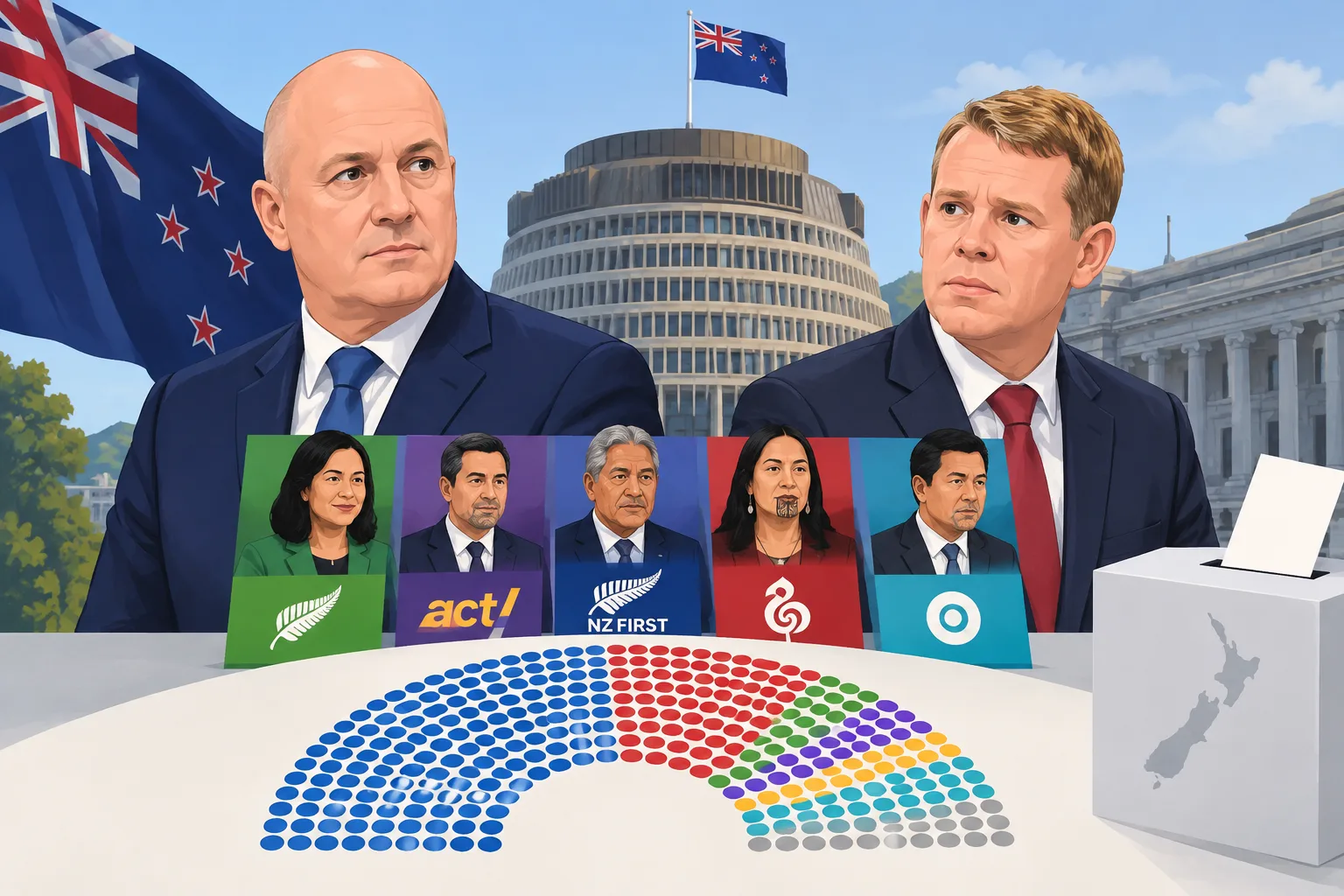
New Zealand election leaves government in the balance as coalition talks loom
Loading statistics…
New Zealand’s close election has left coalition negotiations to decide who governs. National won the most seats, but needs support from other parties, while the final balance could shift when special votes are counted.
Review information is loading.
New Zealand’s election has left no party with a clear path to govern, setting up coalition talks after a close contest shaped by cost-of-living pressures and unemployment.
With more than 99% of votes counted, Prime Minister Christopher Luxon’s National Party had won 42 seats, while the Labour Party led by Chris Hipkins had 36. National was the largest party but remained 19 seats short of a simple majority. A deal with its current partners, ACT and New Zealand First, would give the centre-right bloc a narrow lead over the left-leaning parties.
The result is not final. The Electoral Commission is due to announce the official tally on 27 November, after special votes—including ballots cast overseas or outside a voter’s electorate—are counted. Those votes could affect close races and the balance in parliament.
A potential alternative is the Opportunity Party, which crossed the 5% threshold to enter parliament for the first time. Its leader, Qiulae Wong, said the party was open to working with either side and would negotiate first with the party that secured the most seats. University of Otago election-law professor Andrew Geddis said Opportunity could determine which bloc was able to govern.
Neither major party had conceded. Luxon congratulated Hipkins on a “very hard-fought race”, while Hipkins said the shape of the next government would remain uncertain “for a while”. He said the next parliament would require parties to compromise and find common ground.
The two largest parties together received about 60% of the vote, a historically low combined share, while the Greens, ACT, New Zealand First, Opportunity and Māori-interest party Te Pāti Māori also won representation. New Zealand uses a mixed-member proportional system, under which governments are usually formed by coalitions.
How do we know?
1 listed sources · explore evidence, limitations and provenance.
Sign in to give this article a thumbs up or down.
About this discussion and AI questions
Private test discussion. Comments are readers’ views and are not yet automatically fact-checked. Editing is available for 60 seconds after posting.
Sign in with a confirmed reader account and choose a username to read comments and participate.
Sorting applies to top-level comments; replies remain oldest first. New comments and likes can change the order. Refresh for the current ranking.
Loading comments…