Democrats target Trump tariffs as some Republicans signal openness to repeal
Democrats plan to challenge Donald Trump’s tariffs when they take control of Congress, and some Republicans are open to joining them on specific measures. A veto by Trump would be difficult to override, however.
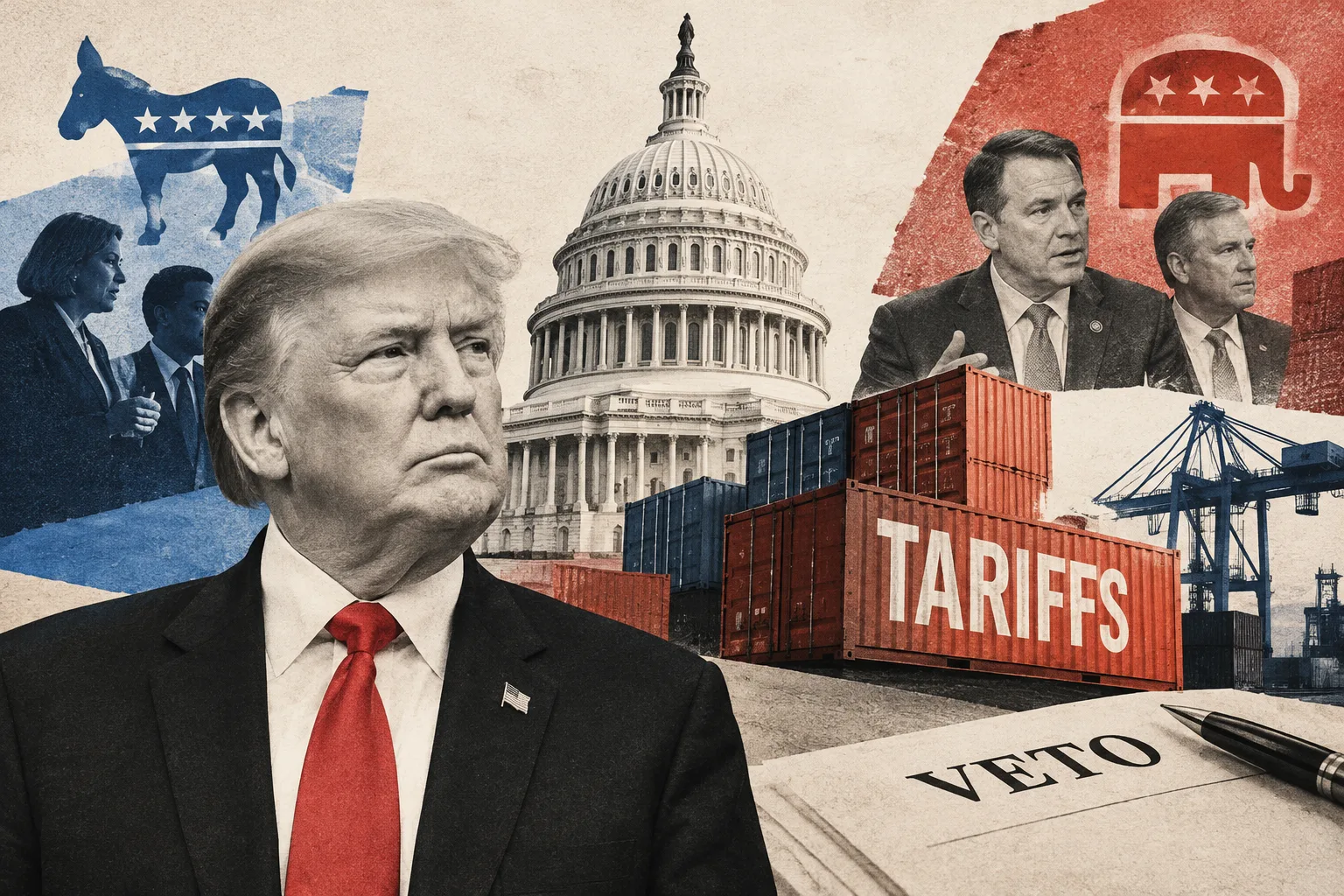
Democrats preparing to take control of Congress say they will target President Donald Trump’s tariffs, and some Republicans have signalled they may join them on individual measures. But any repeal faces a major obstacle: Trump could veto it, requiring two-thirds support in the Senate to override.
The Associated Press found that most of more than half a dozen congressional Republicans interviewed after the election were open to reviewing tariffs case by case. Several called for more predictable policy and a greater role for Congress, while stopping short of backing a broad rollback of presidential powers.
“A rethink is indeed in order,” said Senator Todd Young, an Indiana Republican, who said he would work across party lines for more consumer-friendly tariffs. Representative Michael Guest of Mississippi said he would consider proposals from Democrats, but opposed a blanket restriction on the president’s authority.
Canada’s tariffs could be an early test. Democrats have identified them as a priority, after the levies prompted Canadian retaliation and added to challenges for Republicans in this year’s elections. Senator John Kennedy, a Louisiana Republican who did not support earlier legislation to repeal the Canada tariffs, said they “don’t make sense to me”.
Young said the United States-Mexico-Canada Agreement renewal process should involve Congress. “The USMCA process seems to work if Congress is actively involved and not patted on the head,” he said.
Democrats are looking beyond Canada. Ron Wyden, the incoming Senate Finance Committee chairman, said winning Republican support to repeal those tariffs could build momentum for challenging others. Richard Neal, who is due to lead the House Ways and Means Committee, called Canada “a good starting point” and argued that Trump had used tariffs punitively.
Republicans remain divided over how far to go. Senator Josh Hawley of Missouri warned against a “dramatic pendulum swing”, while Senator Mike Rounds of South Dakota said Congress could reconsider or limit powers it had delegated to the executive branch. Some Republicans also support tariffs on countries such as China.
The political pressure follows election losses in which rising costs were a central issue. Republicans interviewed by AP cited tariffs’ effects on businesses and household budgets. But support among Republican voters is mixed: about half of those who backed Republican House candidates said Trump’s tariffs had helped the national economy, while roughly three in ten said they had hurt it.
Even if lawmakers agree on repeals, Trump’s veto power makes the path steep. Overriding a veto requires 67 Senate votes, a difficult threshold even with Democrats expected to hold 56 seats. Senator Rand Paul, a Republican who opposes tariffs, said repeal efforts would need to be attached to legislation the president could not easily reject.
Sign in to give this article a thumbs up or down.
From the discussion
Private test discussion. Comments are readers’ views and are not yet automatically fact-checked. Editing is available for 60 seconds after posting.
Sign in with a confirmed reader account and choose a username to read comments and participate.
Sorting applies to top-level comments; replies remain oldest first. New comments and likes can change the order. Refresh for the current ranking.
Loading comments…