Dutch central bank warns 2026 energy shock could keep inflation up into 2027
The Dutch central bank says the 2026 energy shock could keep feeding into food, goods and service prices into 2027 and beyond, even if oil and gas become cheaper. Its analysis says the eventual inflation impact remains uncertain.
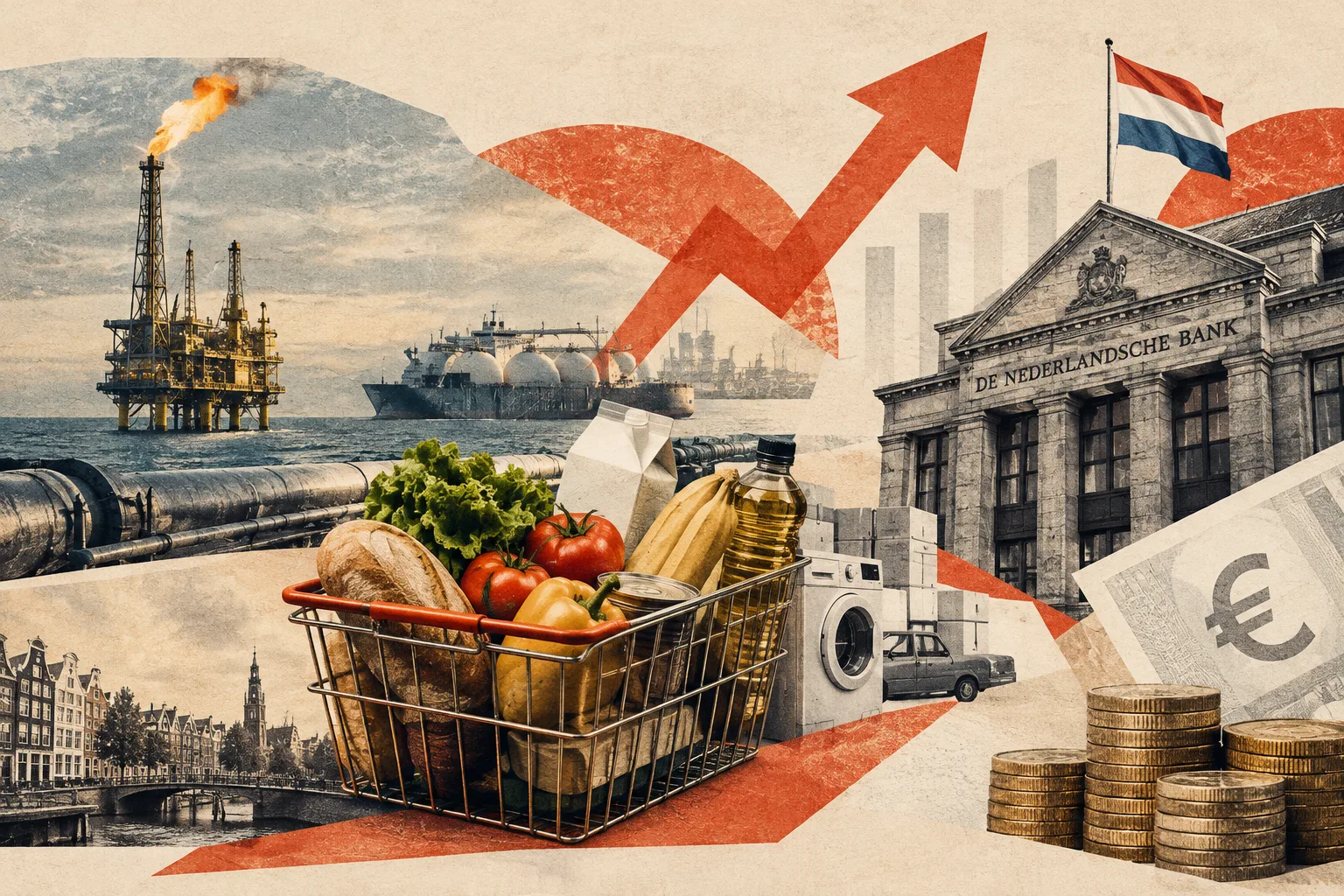
Higher energy prices may keep pushing up the cost of food, manufactured goods and services in the Netherlands well after oil and gas prices fall, the Dutch central bank has warned. The indirect effects of the 2026 energy shock have so far been limited, but De Nederlandsche Bank (DNB) says they can emerge with a delay and persist into 2027 and beyond.
The bank’s analysis, published on 26 November, explains that energy costs feed through supply chains as businesses renew contracts, replenish stocks and adjust prices. Industry is an important link in that process, alongside trade and transport. Food prices tend to respond sooner than industrial goods and services, whose prices can take longer to reflect higher costs.
DNB also points to possible “second-round” effects: workers may seek higher wages as living costs rise, and businesses may pass some of those wage costs on to customers. But the eventual inflationary impact remains uncertain, the bank says; it has not put a precise figure on how much extra inflation the current shock will cause.
Several factors could amplify the pressure. DNB says the energy shock is large and European gas stocks are relatively low. Oil-product and liquefied natural gas flows remain disrupted, despite some recovery in crude-oil transit through the Strait of Hormuz. Recent high inflation could also lead businesses to change prices more quickly and strengthen the feedback between prices and wages.
Other conditions may limit the effect. Households and businesses can use less energy or switch to alternatives, while stockpiles can be drawn down and extra supply may become available. DNB also says Dutch demand is weaker and the labour market less tight than during the 2022 energy shock, potentially leaving firms with less room to pass on costs and workers with less leverage to secure higher wages. Fixed energy contracts can delay the effect of higher gas and electricity prices on household bills.
The bank says monetary policy cannot produce more oil or gas, but becomes important if an initial supply shock spreads into wider price rises, wages and inflation expectations. It also warns that broad government compensation could stimulate demand and add to price pressure, arguing that temporary, targeted support for vulnerable households is more effective than broad compensation.
DNB plans to publish new economic forecasts in December, taking energy-market developments into account alongside the wider economic picture.
Sign in to give this article a thumbs up or down.
From the discussion
Private test discussion. Comments are readers’ views and are not yet automatically fact-checked. Editing is available for 60 seconds after posting.
Sign in with a confirmed reader account and choose a username to read comments and participate.
Sorting applies to top-level comments; replies remain oldest first. New comments and likes can change the order. Refresh for the current ranking.
Loading comments…