Dutch Defence signs €1.5bn-plus agreements with more than 10 companies
The Dutch Ministry of Defence has signed around 15 agreements with more than 10 companies, with a combined value exceeding €1.5 billion. They cover projects ranging from armoured vehicles and naval communications to satellite capabilities and air-defence technology.
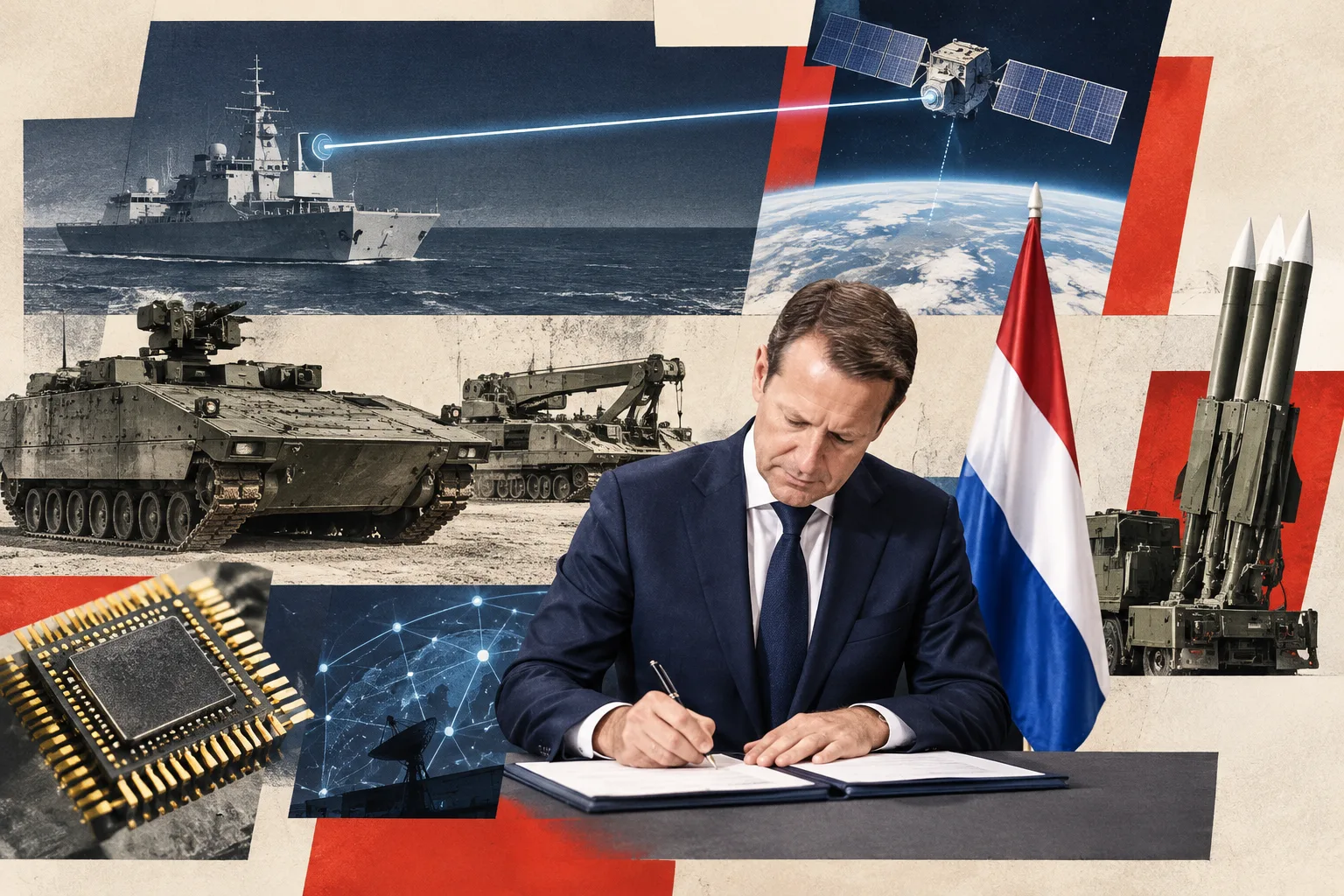
The Dutch Ministry of Defence has signed around 15 agreements with more than 10 companies, worth more than €1.5 billion in total, to deepen cooperation with industry and research institutions. The agreements span the armed forces and include equipment, communications and technology projects.
State Secretary for Defence Derk Boswijk signed them at the NEDS defence and security exhibition, which the government describes as the largest of its kind in the Benelux. The ministry says some partners are established suppliers, while others are new to Defence.
The agreements include a contract to develop a maritime laser communication terminal for ships. The system is intended to allow communications without transmitting radio signals. Defence also signed four contracts with German firm Flensburger Fahrzeugbau Gesellschaft, covering, among other things, tracked armoured and recovery vehicles.
Other arrangements include a technical agreement for the Netherlands to join the European CAVS programme for acquiring Patria armoured vehicles, and an agreement with satellite company ICEYE to provide satellite capabilities. The ministry says both it and ICEYE intend to expand their cooperation, but gives no further details of that plan.
With Dutch company Guardian Dynamics, Defence signed a letter of intent concerning a possible long-term partnership. The company is developing interceptor missiles for air defence. A letter of intent records an intention to pursue cooperation; it is not itself a confirmed purchase contract.
The ministry also listed agreements on software and sensors for Space Operations Command, systems to disrupt or neutralise an opponent’s communications and information systems, and battery technology. Boswijk said the aim was to build partnerships rather than rely only on customer-supplier relationships.
Sign in to give this article a thumbs up or down.
From the discussion
Private test discussion. Comments are readers’ views and are not yet automatically fact-checked. Editing is available for 60 seconds after posting.
Sign in with a confirmed reader account and choose a username to read comments and participate.
Sorting applies to top-level comments; replies remain oldest first. New comments and likes can change the order. Refresh for the current ranking.
Loading comments…