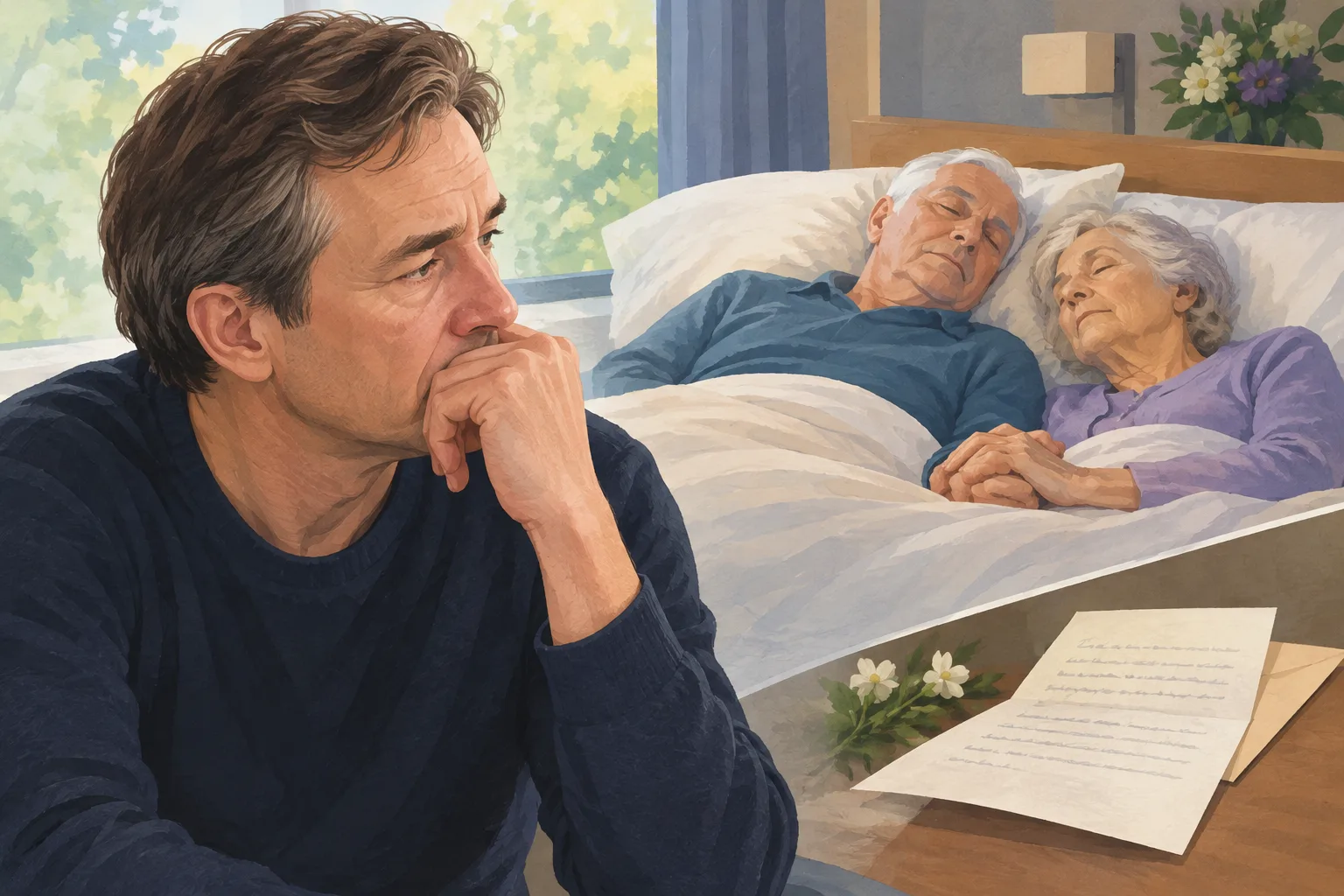
Dutch man describes loneliness after parents chose euthanasia together
A Dutch couple died together by euthanasia in 2024. Their son Bas says he supported their choice but was left grieving both parents at once, with no sibling to share the loss.
Review information is loading.
Jan and Els, a Dutch couple in their seventies, died together by euthanasia at a hospice on 3 June 2024. Their son, Bas, says he supported their decision but wished they would wait; afterwards, he felt profoundly alone grieving both parents at once.
In a BBC interview published on 8 November, Bas describes driving his parents to the hospice and trying in the months beforehand to persuade them to delay. His father had lived with pain for years, while his mother, Els, had dementia. Bas feared that waiting could allow her Alzheimer’s to progress until she was no longer considered able to make the decision herself.
At the hospice, he says, he briefly wondered whether to call off the appointment. He chose not to raise it, because he did not want to make his parents uncertain after supporting their decision. Doctors administered the medication while Jan and Els lay side by side, holding hands, the BBC reports.
Bas said losing both parents together left him without a sibling to share the grief with. He described feeling physically unwell for four or five weeks and said he would not recommend the experience to others, even though he believed euthanasia may have been the best option for his parents.
The couple had spoken openly with Bas about their plans, and he attended meetings with their doctors, according to the BBC. Two days before their deaths, he read them an eight-page letter thanking them for their life together. He said his father hugged him afterwards—a rare show of affection.
Euthanasia and dementia
Dutch government guidance says a person with dementia must be assessed against all six statutory due-care criteria. In the late stage of dementia, euthanasia is very rare and can be considered only where the person made a written request while still competent. Such a request does not guarantee euthanasia: a doctor must assess the person’s circumstances and whether the wish remains evident.
The guidance describes general rules; it does not establish the individual medical assessments made in Jan and Els’s case. The BBC reports that 9,958 people in the Netherlands died by euthanasia in 2024, including 427 people with dementia. It says 108 people—54 couples—died through duo-euthanasia that year, citing the Regional Euthanasia Review Committees.
Sign in to give this article a thumbs up or down.
About this discussion and AI questions
Private test discussion. Comments are readers’ views and are not yet automatically fact-checked. Editing is available for 60 seconds after posting.
Sign in with a confirmed reader account and choose a username to read comments and participate.
Sorting applies to top-level comments; replies remain oldest first. New comments and likes can change the order. Refresh for the current ranking.
Loading comments…