Dutch study documents harm linked to former legal gender-change rules
A study based on 28 interviews describes the harm linked to former Dutch conditions for changing legal gender, while cautioning that its findings cannot show how widespread those experiences were.
Review information is loading.
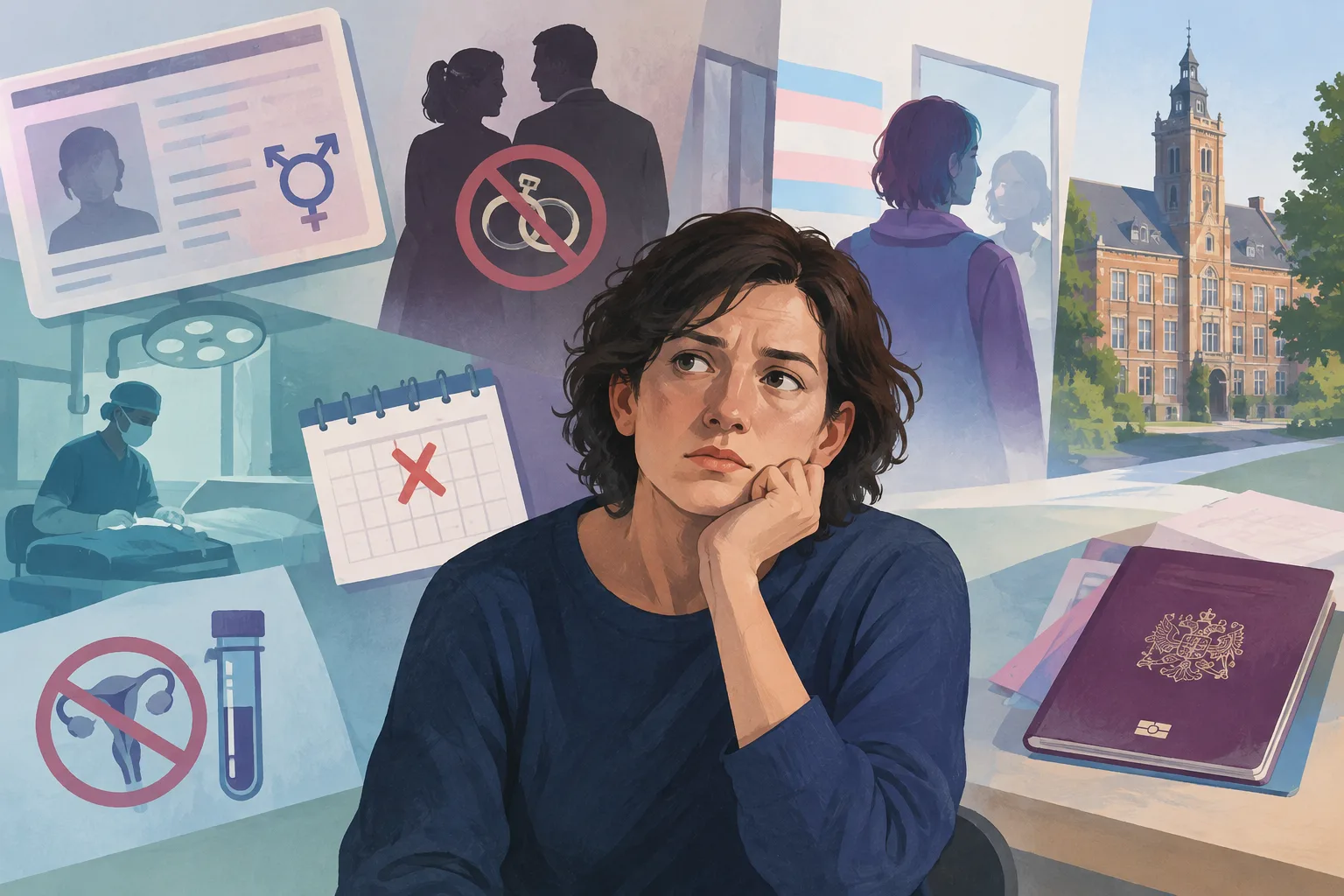
A Radboud University study presented on 8 October documents physical, psychological and social harm described by people who encountered the Netherlands’ former rules for changing legal gender registration. Researchers found that the conditions could force choices between obtaining matching documents and retaining control over marriage, medical treatment or fertility. [1] [2]
Under the former law, applicants had to be unmarried until 1 April 2001. Requirements for physical adaptation, insofar as medically or psychologically justified, and irreversible infertility remained until 1 July 2014. Some interviewees described undergoing major operations earlier than they wanted, or against their wishes, to obtain matching documents. Others delayed their transition or went years without updated documents because they would not meet the infertility requirement. [1] [2]
The report draws on 28 in-depth interviews conducted between June 2024 and February 2025: 24 with trans people and four with intersex people. Its authors, M. Van Bavel, M. Hülsken and L. Bosveld, say the participants are not representative of everyone affected. Although intersex people were formally outside the law’s intended scope, the researchers say some encountered the same medical requirements in practice. [2]
The authors distinguish criticism of compulsory conditions from criticism of care itself. Interviewees described gender-affirming care and legal recognition as essential, and sometimes lifesaving. [2]
The study was commissioned by the Ministry of Education, Culture and Science. In Radboud University’s announcement, State Secretary Judith Tielen said those affected should be heard and acknowledged, and that the report could help people learn from the period. [1]
Sign in to give this article a thumbs up or down.
About this discussion and AI questions
Private test discussion. Comments are readers’ views and are not yet automatically fact-checked. Editing is available for 60 seconds after posting.
Sign in with a confirmed reader account and choose a username to read comments and participate.
Sorting applies to top-level comments; replies remain oldest first. New comments and likes can change the order. Refresh for the current ranking.
Loading comments…