News Made Clear · Loading…
Category
Regions
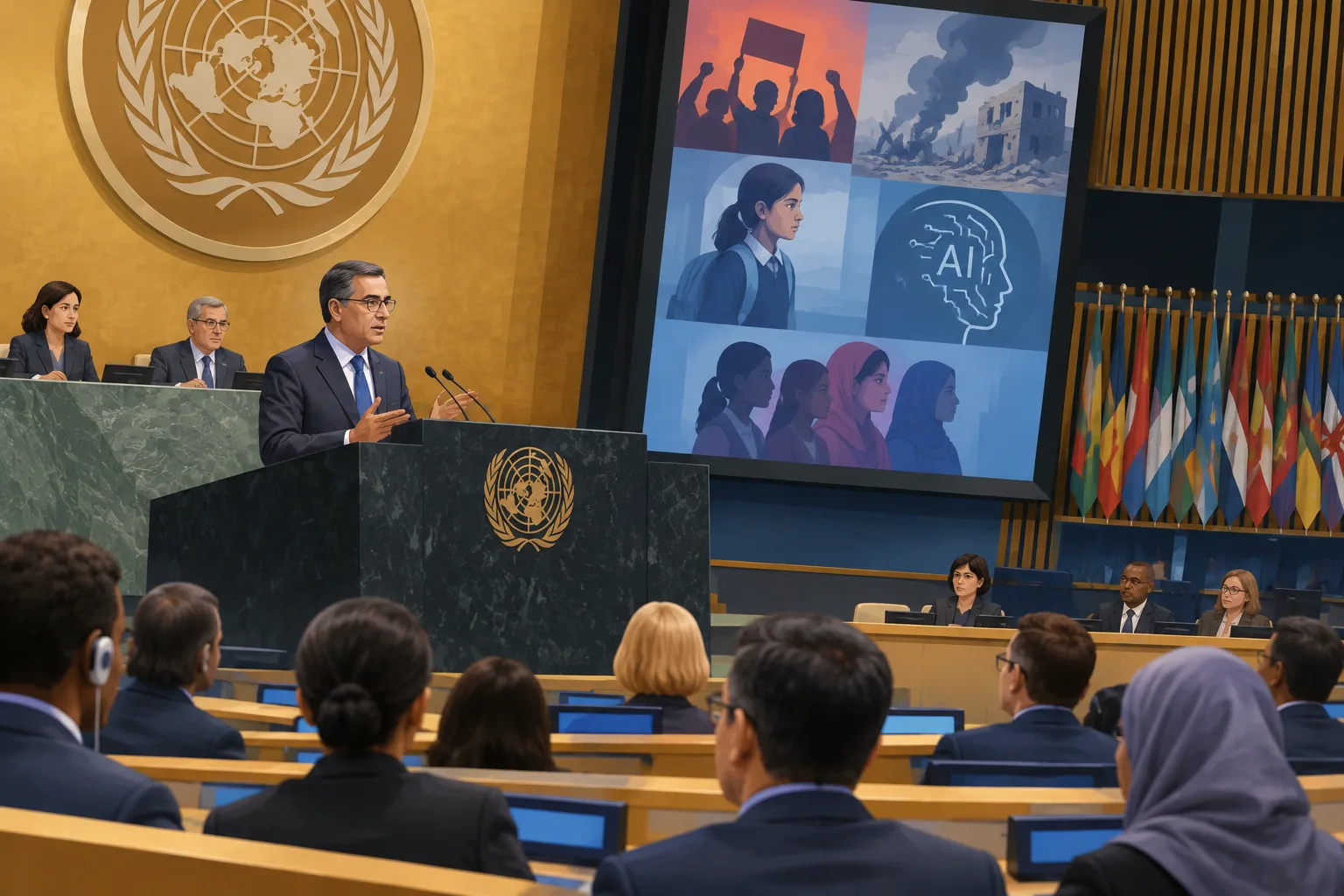
UN debate calls for stronger human-rights protections and funding
Loading statistics…
The General Assembly heard calls for stronger human-rights protections, adequate funding and safer participation as it considered the Human Rights Council’s annual report. Delegates also traded accusations over conflicts and the Council’s impartiality.
Review information is loading.
The UN General Assembly heard calls for stronger protection of human rights and more reliable funding as it considered the Human Rights Council’s annual report, against a backdrop of conflict, political disputes and proposed UN reforms.
Assembly President Khalilur Rahman said the debate should assess whether international commitments were making people safer and protecting their freedoms and dignity. He urged governments to involve civil society, national human rights institutions, young people and affected communities in early-warning systems, and warned that demands for stronger protection must be matched by the resources to provide it.
Sidharto R. Suryodipuro, president of the 47-member Human Rights Council, described its responses to urgent developments including protests in Iran, an aerial attack on a girls’ school in Minab and the situation around El Obeid. He also highlighted resolutions on artificial intelligence and the rights of women and girls in the digital sphere.
Suryodipuro said the Council was trying to manage financial constraints by streamlining mandates, combining resolutions and reducing reporting requirements. A new digital tool tracks more than 1,000 Council texts and 3,000 mandated activities to identify overlaps and resource implications, he said. He called for safe and substantive participation by developing countries and other actors, and urged states to implement recommendations from the Universal Periodic Review.
Delegates also used the debate to air sharply competing accounts of human-rights violations and the Council’s work. Georgia raised what it described as developments linked to Russia’s occupation of Abkhazia and Tskhinvali. Bahrain, speaking for the Gulf Cooperation Council, condemned Iranian missile and drone attacks against Gulf states; Yemen’s representative denounced Houthi attacks on civilians and infrastructure.
Israel accused Iran of supporting armed groups and threatening shipping through the Strait of Hormuz. Iran, in turn, accused the Council of selectivity over what it called unlawful US and Israeli military aggression. Ukraine’s representative said the Council should confront difficult questions consistently and impartially. These were statements by delegations at the debate, not findings adopted by the Assembly.
Other speakers challenged the Council’s approach from different directions. Russia accused some states of using human rights to advance political and economic agendas, while Cuba said developing countries faced disproportionate scrutiny. Myanmar’s representative warned that diplomatic engagement could legitimise the country’s military junta.
The European Union said the Council could not address persistent conflicts and rights violations alone. Iceland, speaking for the Baltic-Nordic Eight, called for predictable funding and closer coordination with the General Assembly’s Third Committee. The UN meeting coverage is labelled as information for the media, not an official record.
How do we know?
1 listed sources · explore evidence, limitations and provenance.
Sign in to give this article a thumbs up or down.
About this discussion and AI questions
Private test discussion. Comments are readers’ views and are not yet automatically fact-checked. Editing is available for 60 seconds after posting.
Sign in with a confirmed reader account and choose a username to read comments and participate.
Sorting applies to top-level comments; replies remain oldest first. New comments and likes can change the order. Refresh for the current ranking.
Loading comments…