ECB invites banks to help shape tokenised finance plans
The ECB says its Pontes service now enables DLT transactions to settle in central bank money and is asking market participants to help design Appia, a planned framework for more connected tokenised finance.
Review information is loading.
The European Central Bank is inviting banks and other market participants to help shape a new digital securities infrastructure, as it expands work to bring tokenised assets into the euro area’s financial system.
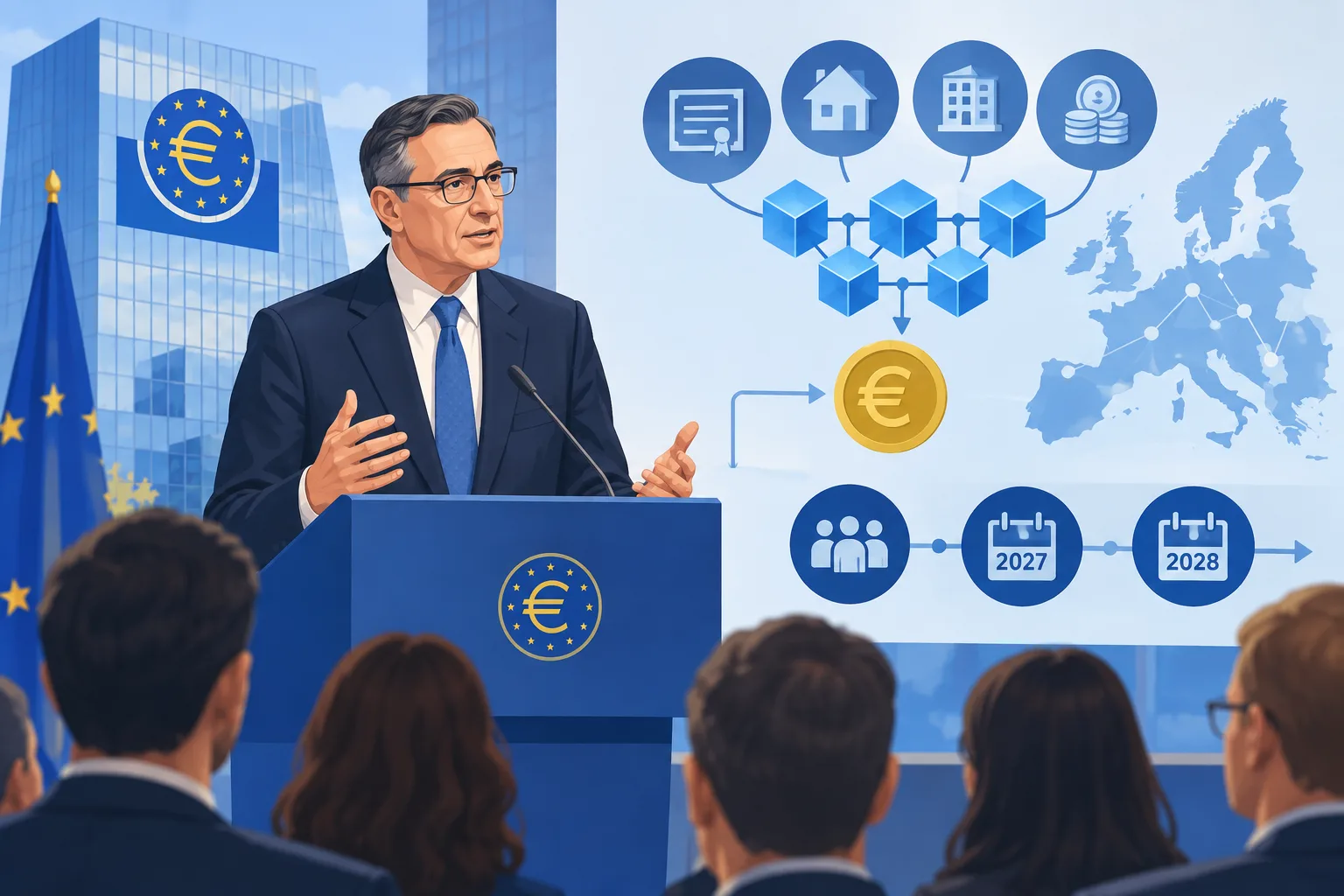
In a speech published on 21 October, ECB Executive Board member Piero Cipollone said the Eurosystem’s Pontes settlement service is live, allowing transactions involving distributed ledger technology (DLT) to settle in central bank money. The ECB is also developing Appia, a broader plan for an integrated European ecosystem for tokenised finance. [1]
The ECB says DLT-based assets issued in central securities depositories have been eligible as collateral in Eurosystem credit operations since March 2026. It argues that tokenisation could automate processes, shorten settlement cycles and make collateral easier to move, while warning that disconnected networks could deepen fragmentation in European capital markets. [1]
From pilot to market infrastructure
Pontes is intended to give tokenised transactions access to central bank money, which the ECB describes as a safe settlement asset. Under the EU’s DLT Pilot Regime, eligible infrastructures can connect to Pontes; the regime allows certain market participants to trade, record or settle tokenised securities under specified conditions. [1]
Appia is the longer-term effort to develop shared standards and interoperable networks. The ECB says it is engaging with banks and other stakeholders through an Appia Contact Group, work on European standards, consultations and public information sessions. It expects practical joint design work to begin in 2027, with an Appia blueprint due by 2028. [1]
The speech sets out the Eurosystem’s case for taking an active role: providing central bank money for settlement, accepting tokenised assets as collateral where eligible, and helping coordinate an integrated market. It also lists potential gains such as lower issuance costs, broader access for smaller businesses and more automated servicing. These are presented as opportunities, rather than outcomes already achieved. [1]
The ECB’s presentation says interest in tokenised issuance is growing and that European securities depositories are launching related services alongside existing infrastructure. It also points to activity in the United States, where SEC staff relief announced in December 2025 allows DTCC to tokenise existing securities for three years. [1]
Sign in to give this article a thumbs up or down.
About this discussion and AI questions
Private test discussion. Comments are readers’ views and are not yet automatically fact-checked. Editing is available for 60 seconds after posting.
Sign in with a confirmed reader account and choose a username to read comments and participate.
Sorting applies to top-level comments; replies remain oldest first. New comments and likes can change the order. Refresh for the current ranking.
Loading comments…