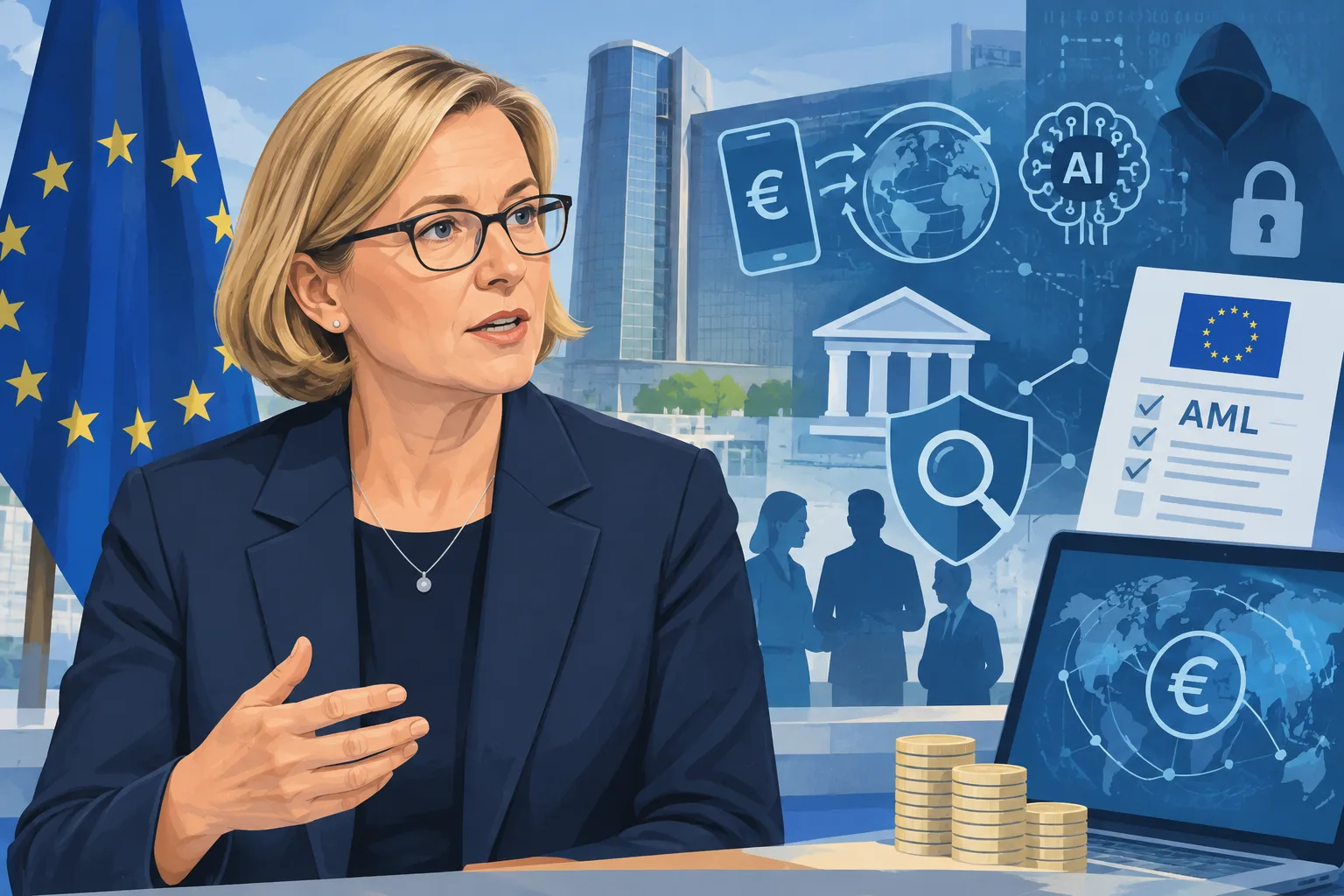
ECB official urges faster cooperation to tackle digital money-laundering risks
ECB Supervisory Board member Anneli Tuominen says digital finance is widening money-laundering vulnerabilities, calling for faster, closer cooperation between banking and anti-money-laundering supervisors ahead of new EU rules.
Review information is loading.
EU banking supervisors need to work faster and more closely together to counter money-laundering risks amplified by digital finance, European Central Bank Supervisory Board member Anneli Tuominen said in a speech in Helsinki on Thursday.
Tuominen said rapid digitalisation, cross-border payments and the growing use of artificial intelligence were expanding the ways criminals could exploit financial systems. Banks and supervisors also had to contend with risks from cyberattacks, outsourced technology services and complex transaction data, she said.
The speech comes as the EU prepares for a new anti-money-laundering rulebook to become fully applicable in July 2027. The EU’s Anti-Money Laundering Authority (AMLA), which began operating in July 2025, is due to start directly supervising about 40 high-risk groups or entities in January 2028. It will also oversee the wider system and develop common rules, Tuominen said.
The ECB does not supervise banks’ compliance with anti-money-laundering rules. Its role is prudential: it can take money-laundering risks into account when assessing matters such as a bank’s licence, ownership, management and overall financial health, drawing on information from anti-money-laundering authorities.
The ECB and AMLA signed a memorandum of understanding in 2025 to structure cooperation and information-sharing. Tuominen said information needed to flow in both directions to avoid gaps and conflicting approaches between supervisors.
She urged banks to strengthen operational resilience, invest in technology and cybersecurity, and ensure their management teams can understand digital risks. Supervisors, too, must upgrade their technology and expertise and adopt a faster, more risk-based approach, she said.
Tuominen cited estimates that money laundering amounts to between 2% and 5% of global gross domestic product. She also pointed to a Europol estimate that EU law enforcement seizes less than 2% of the annual proceeds of organised crime. Those figures were presented in the speech as estimates, not as measurements of money laundering detected by bank supervisors.
Sign in to give this article a thumbs up or down.
About this discussion and AI questions
Private test discussion. Comments are readers’ views and are not yet automatically fact-checked. Editing is available for 60 seconds after posting.
Sign in with a confirmed reader account and choose a username to read comments and participate.
Sorting applies to top-level comments; replies remain oldest first. New comments and likes can change the order. Refresh for the current ranking.
Loading comments…