ECB researchers highlight costly remittances and low awareness of SEPA
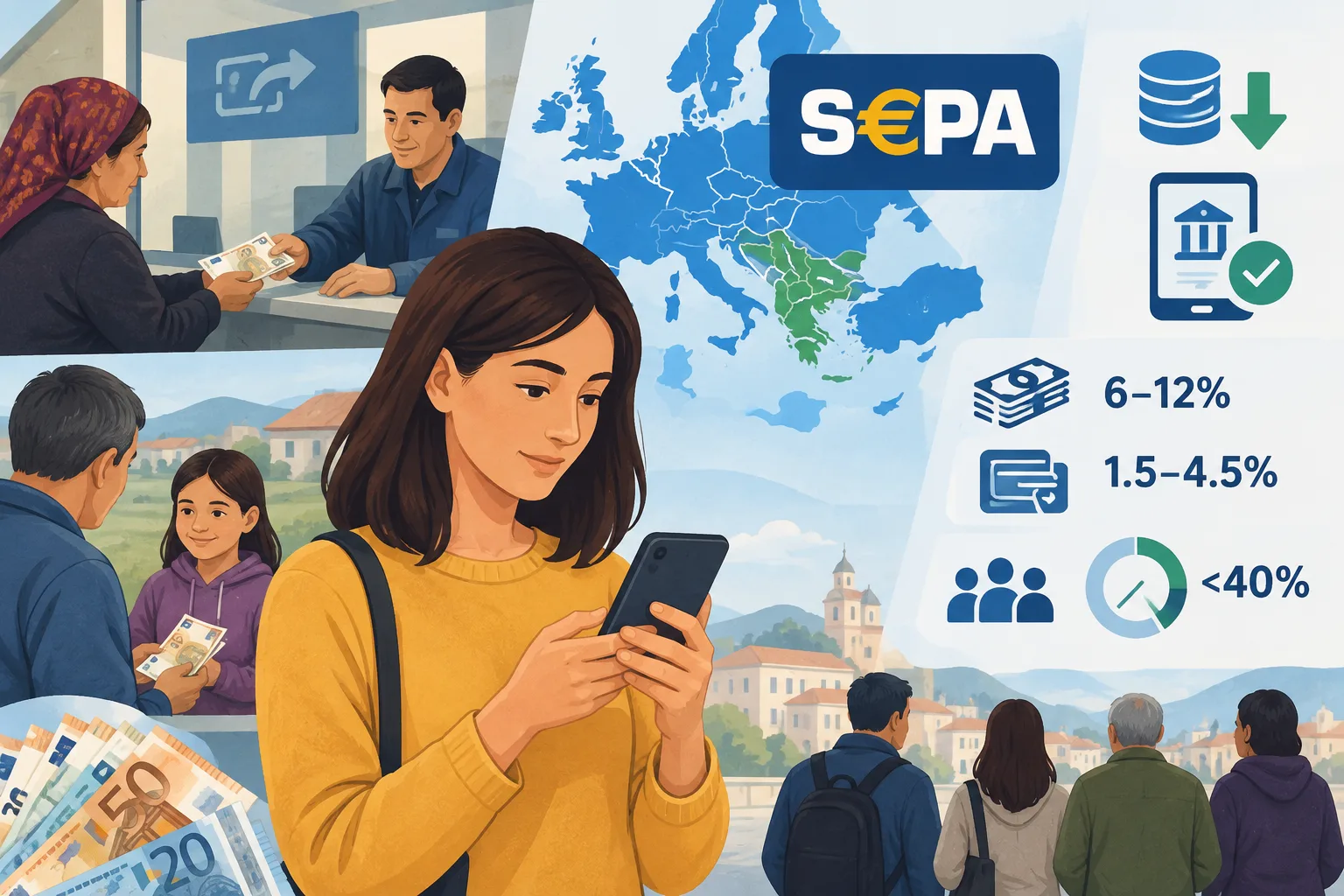
Many households sending money across south-eastern Europe still rely on costly cash-based channels, while fewer than 40% of consumers surveyed had heard of SEPA, an ECB blog reports.
Review information is loading.
Millions of people sending money across south-eastern Europe could pay less by using bank transfers through the Single Euro Payments Area (SEPA), but many households still use cash-based services and fewer than 40% of consumers surveyed said they had heard of the system, according to a European Central Bank blog post.
The post, published on 3 November by ECB and Oesterreichische Nationalbank researchers, draws on survey data from six countries: Bulgaria, Romania, Albania, Bosnia and Herzegovina, North Macedonia and Serbia. It says around a third of remittance recipients in the group receive money in cash through friends or relatives, and another third through physical money-transfer operators.
Fees vary by provider, route and payment method. The researchers say cash-to-cash transfers typically cost between 6% and 12%, while digital transfers from non-bank providers can cost 1.5% to 4.5%. Their fee figures cover selected routes from Germany to Bulgaria, Spain to Romania and Italy to Albania in the third quarter of 2025.
A 5% fee would amount to about €140 million on Bulgaria’s annual remittance inflows and €130 million on Albania’s, the authors calculate. They say SEPA transfers can reduce costs, particularly when recipients have euro-denominated accounts and avoid currency conversion.
SEPA is designed to make euro payments between participating countries as straightforward as domestic transfers. It now covers 41 countries, the authors say. Albania and North Macedonia joined its geographical scope in 2024, Serbia in 2025, while Bosnia and Herzegovina applied for membership in August 2026. Joining the geographical scope does not mean a fully operational payment system is immediately in place.
Access is also limited by account ownership. The blog reports that around half of people in Albania lack a current account or similar product; the figure is 25% in Romania and 17% in Bosnia and Herzegovina. It is lower in Bulgaria, Serbia and North Macedonia.
The authors found that SEPA awareness was higher among people with higher incomes, more education and stronger financial literacy. Consumers with tertiary education were about 17 percentage points more likely to have heard of SEPA than those with only primary education.
The researchers caution that greater awareness alone may not change how people send money. But they argue that even modest shifts towards lower-cost transfers could benefit households, alongside advantages in convenience, speed, reliability and security.
Sign in to give this article a thumbs up or down.
About this discussion and AI questions
Private test discussion. Comments are readers’ views and are not yet automatically fact-checked. Editing is available for 60 seconds after posting.
Sign in with a confirmed reader account and choose a username to read comments and participate.
Sorting applies to top-level comments; replies remain oldest first. New comments and likes can change the order. Refresh for the current ranking.
Loading comments…