ECB’s Vujčić says central and eastern Europe must build resilience without retreating from openness
ECB Vice-President Boris Vujčić says central and eastern Europe can strengthen resilience to economic shocks without retreating from the openness that helped drive its convergence.
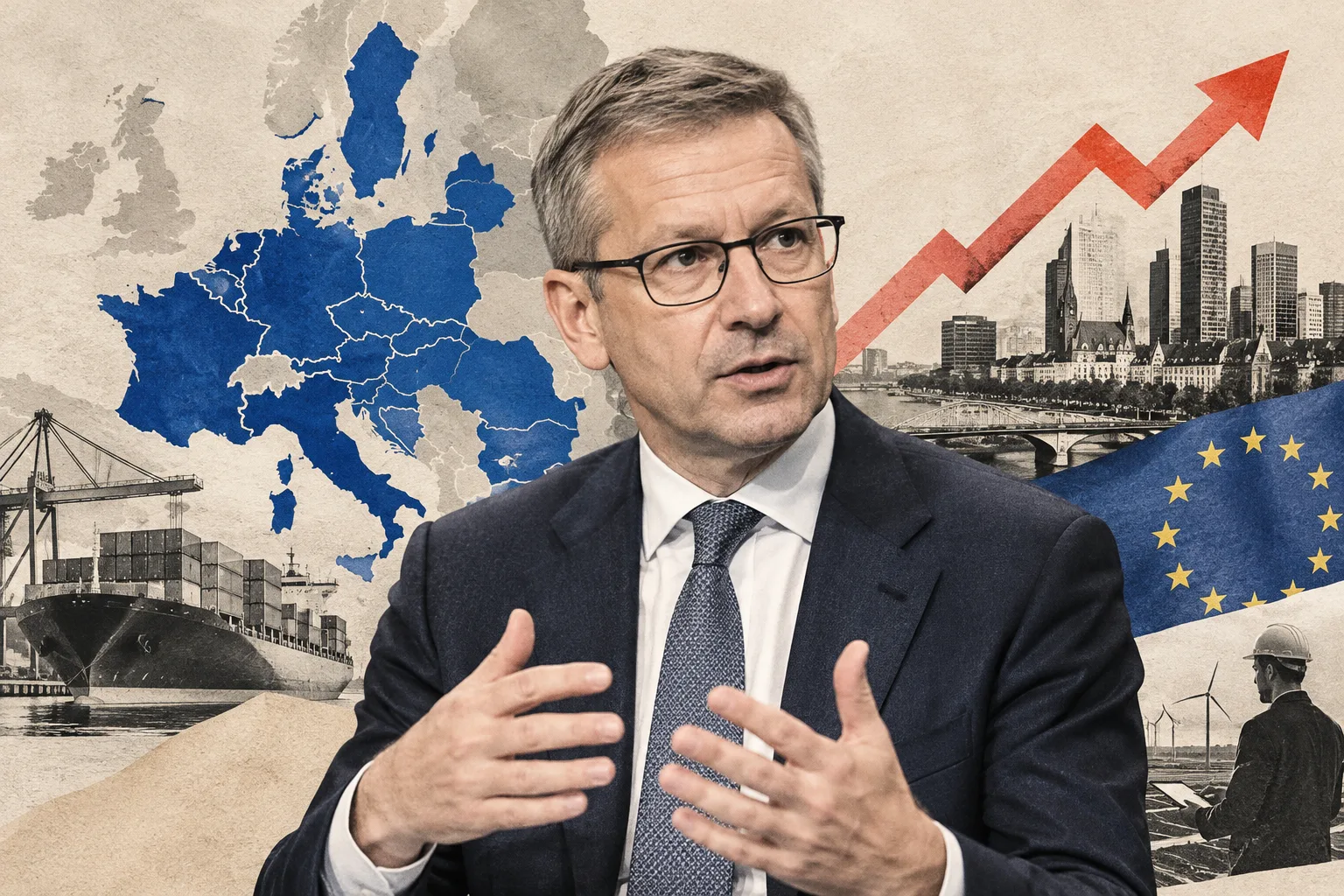
Central and eastern Europe’s integration with European and global markets helped incomes in the region more than double since the mid-1990s, but also left economies exposed to external shocks, European Central Bank Vice-President Boris Vujčić said on Tuesday. He argued that resilience depends not on retreating from openness, but on adapting while preserving it.
In a speech in Vienna, Vujčić said EU accession and access to the Single Market had supported the region’s economic convergence through trade, investment and technology transfer. The pandemic, Russia’s war against Ukraine, an energy shock and supply-chain disruptions have since tested that model, he said, alongside renewed trade tensions and conflict in the Middle East.
Vujčić set out four parts of resilience: credible monetary policy, public finances able to absorb downturns, sound financial systems and the capacity to adapt to structural change. He said central banks’ credibility and price stability can help stop an external price shock becoming persistent inflation. For countries with close trade and financial ties to the euro area, joining the currency bloc removes exchange-rate risk, though it does not shield them from other shocks.
On public finances, he said many central and eastern European economies still have comparatively low public debt, but deficits have risen across much of the region. He pointed to increased spending on social programmes, investment, public-sector wages, interest payments and defence. Low debt, he argued, is a buffer that needs to be maintained, backed by credible fiscal rules and institutions.
Banks in the region are generally well capitalised and profitable, with non-performing loans near historical lows in most countries, Vujčić said. But he warned that higher energy costs and geopolitical tensions could gradually weigh on firms’ ability to repay loans. Rapid credit growth and rising house prices in several countries also require attention, he added.
He called for deeper European financial markets to give businesses alternatives to bank lending and spread investment risk across borders. Completing banking union and advancing the savings and investments union would help, he said, particularly in central and eastern Europe, where capital markets and institutional investor bases remain relatively shallow.
On structural change, Vujčić said the region had reduced its reliance on Russian energy since the invasion of Ukraine by diversifying suppliers, building infrastructure and adjusting demand. He also urged greater diversification of supply chains, investment in innovation and skills, and stronger capacity to adapt to competition, including from China. He rejected self-sufficiency and decoupling as the answer, arguing that pulling back from global networks could reduce diversification and opportunities for growth.
Demographic change is a slower-moving challenge, he said. Ageing and the emigration of young, skilled workers have contributed to shrinking working-age populations, although many countries have recently shifted towards net immigration. Vujčić said immigration can help fill labour shortages, citing Ukrainian refugees’ integration into Poland’s labour market as an example.
The speech presents the ECB vice-president’s assessment of lessons from the region, rather than announcing new policy measures. Vujčić said the broader lesson was that openness and resilience can reinforce one another when economies reduce critical dependencies and retain the capacity to adapt.
Sign in to give this article a thumbs up or down.
From the discussion
Private test discussion. Comments are readers’ views and are not yet automatically fact-checked. Editing is available for 60 seconds after posting.
Sign in with a confirmed reader account and choose a username to read comments and participate.
Sorting applies to top-level comments; replies remain oldest first. New comments and likes can change the order. Refresh for the current ranking.
Loading comments…