ECB sees weaker food-price repricing after 2026 energy shock
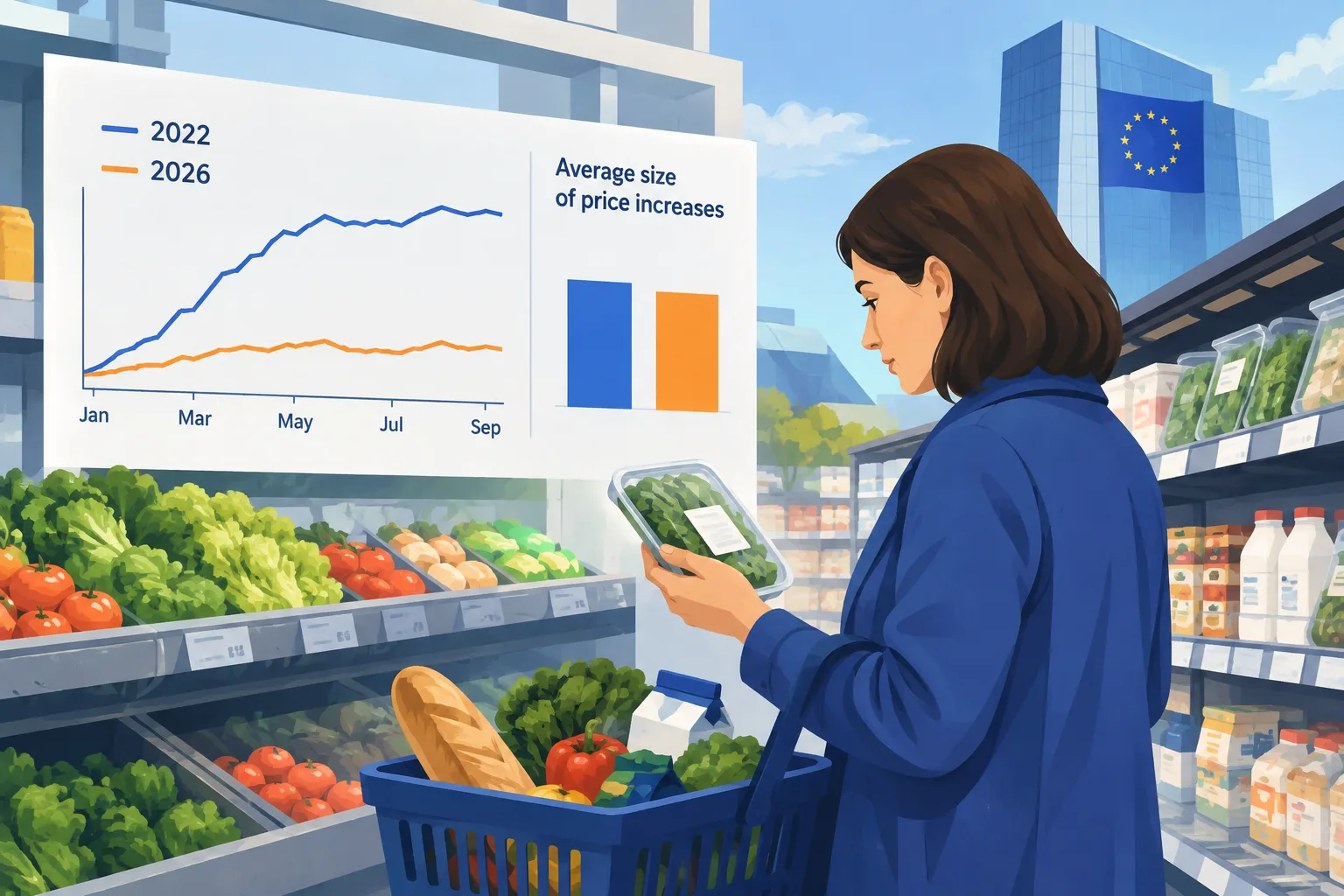
ECB data show food-price increases became more frequent after the 2026 energy shock, but the repricing wave had not continued to build by September as it did in 2022.
Review information is loading.
The European Central Bank says food-price repricing after the latest energy shock has so far been much weaker than during the 2022 inflation surge, offering little sign of a sustained, broad rise in how often euro-area retailers increase prices.
The ECB’s Daily Price Dataset tracks prices collected each day from online supermarkets. Its latest observations, for September 2026, show that food-price increases became more frequent in March, shortly after the shock, but did not continue to spread or rise as they did in 2022. The average size of increases changed relatively little, the bank said.
The dataset uses an AI-based classifier to map supermarket product descriptions to categories in the euro-area consumption basket. The ECB says it measures monthly repricing frequencies to smooth out short-lived changes such as sales, while daily collection allows estimates for the current month to be updated as it unfolds.
The bank’s analysis compares the frequency and size of price changes, excluding temporary sales. It says the pattern matters because inflation may reflect more frequent increases across many products, larger increases in a smaller number of items, or a combination of the two.
Food accounts for about a fifth of the expenditure in the euro-area basket used to calculate the Harmonised Index of Consumer Prices, according to the ECB, and a larger share for lower-income households. The bank says food prices can therefore influence households’ experience of inflation as well as policymakers’ assessment of whether a cost shock is feeding into persistent price pressures.
The ECB cautions that the effects of an energy shock depend both on the shock itself and on the economic conditions at the time. Its comparison does not establish how food prices will develop next; the latest data cover September.
Sign in to give this article a thumbs up or down.
About this discussion and AI questions
Private test discussion. Comments are readers’ views and are not yet automatically fact-checked. Editing is available for 60 seconds after posting.
Sign in with a confirmed reader account and choose a username to read comments and participate.
Sorting applies to top-level comments; replies remain oldest first. New comments and likes can change the order. Refresh for the current ranking.
Loading comments…