ECB tracker points to slightly faster underlying wage growth in early 2027
The ECB’s tracker indicates slightly faster underlying negotiated wage growth in the first three quarters of 2027 than in 2026, while warning that the forward-looking figures are incomplete and subject to revision.
Review information is loading.
The European Central Bank’s wage tracker points to slightly faster underlying negotiated wage growth in the first three quarters of 2027 than across 2026, but the forward-looking figures cover a shrinking share of employees and are not a forecast.
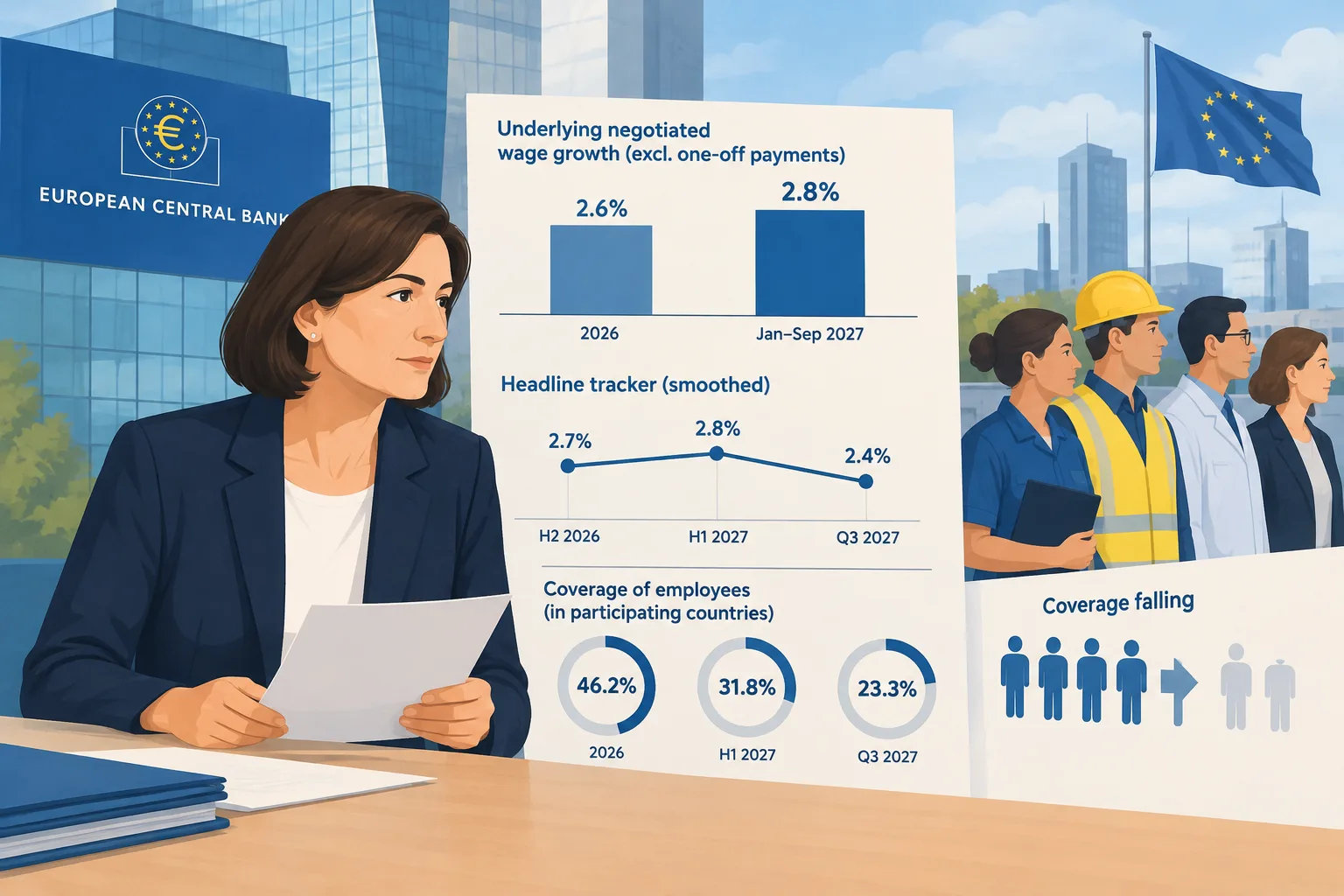
The tracker excluding one-off payments averages 2.8% for January to September 2027, compared with 2.6% for 2026. This measure is intended to reflect more lasting negotiated pay increases. The headline tracker, which smooths one-off payments over 12 months, stands at 2.7% in the second half of 2026 and 2.8% in the first half of 2027, before falling to 2.4% in the third quarter.
The ECB says the tracker uses information from active collective agreements and may be revised as more agreements are signed. Its forward-looking figures show what those agreements currently indicate; the bank cautions that they should not be interpreted as a forecast of wage growth.
Coverage falls from 46.2% of employees in participating countries for 2026 to 31.8% in the first half of 2027 and 23.3% in the third quarter. The ECB says coverage will increase as further wage agreements are signed. The tracker covers nine euro-area countries.
Sign in to give this article a thumbs up or down.
About this discussion and AI questions
Private test discussion. Comments are readers’ views and are not yet automatically fact-checked. Editing is available for 60 seconds after posting.
Sign in with a confirmed reader account and choose a username to read comments and participate.
Sorting applies to top-level comments; replies remain oldest first. New comments and likes can change the order. Refresh for the current ranking.
Loading comments…